

How It Works
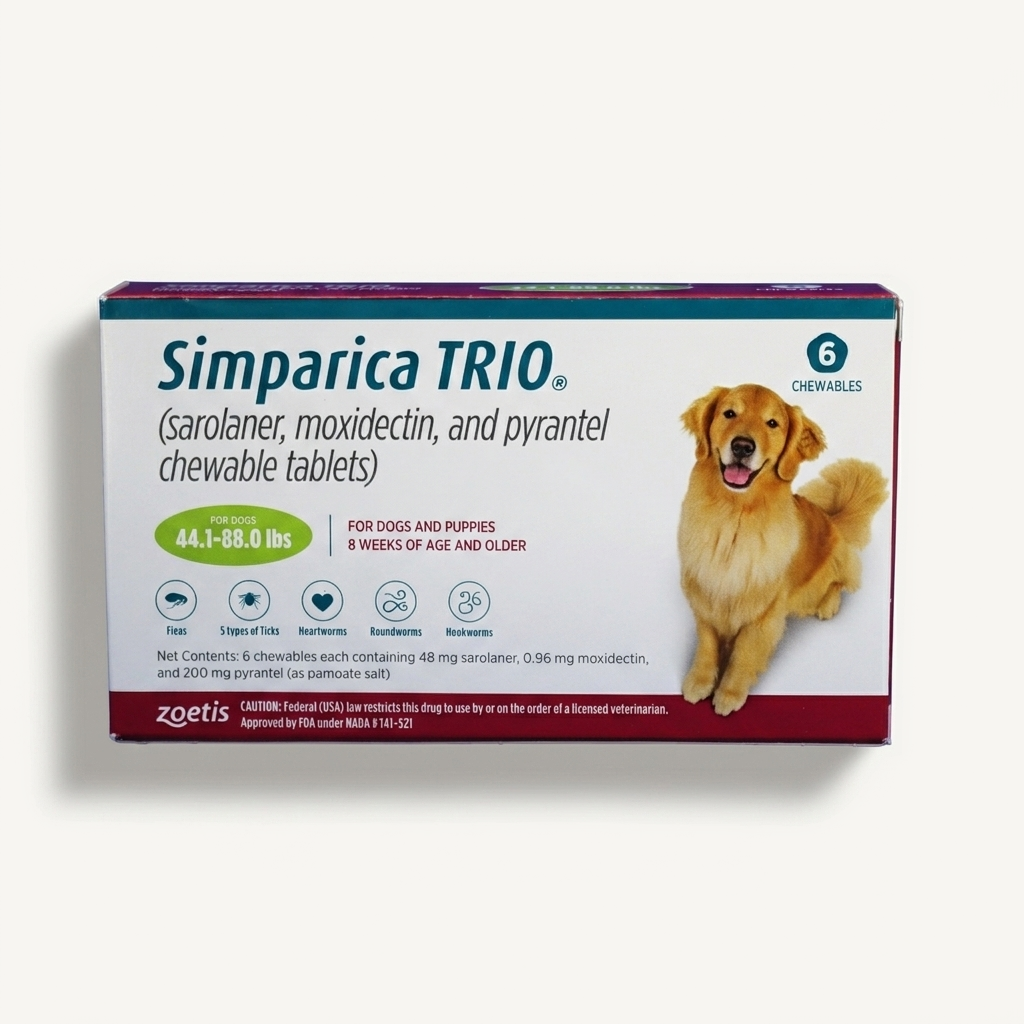
Simparica Trio works using a triple-action mechanism to control parasites in canines. Once a dog ingests the chewable tablet, the active ingredients are absorbed into the bloodstream and defend against common parasites. Three key drugs make up the medication:
- Sarolaner: Sarolaner belongs to the isoxazoline drug class and works by interfering with the nervous system of insects and arachnids, leading to the death of fleas and ticks.
- Moxidectin: Moxidectin is a member of the macrocyclic lactone drug class and targets the chloride channels of heartworms in their larval stages, which mosquitoes transmit to dogs. This kills the heartworm larvae before they reach maturity and migrate to the heart.
- Pyrantel: Pyrantel acts as a neuromuscular blocking agent for roundworms and hookworms. It causes worms to lose their physical grip on the dog’s intestinal wall, allowing them to be naturally expelled.
| Quick Facts | |
|---|---|
| Common Brands | Simparica Trio |
| Drug Class | Combination antiparasitic |
| Generic Status | No generic available |
| Availability | Prescription only |
Dosing
Simparica Trio dosage is based on the dog’s weight. It is considered critical to use the chewable tablet that corresponds with your dog’s weight range to ensure they receive the right concentration of active ingredients.
- Standard dosage: For ongoing antiparasitic management, standard guidelines call for one chewable tablet administered every 30 days.
- Administration: The chewable tablet can be administered with or without food. If your dog refuses to take the tablet alone, it is recommended to break up the tablet or mix it with food the dog likes.
- Missed dose: In the event of a missed dose, standard guidelines advise to give the dog their dose as soon as you remember, then reset the monthly dosing schedule based on the new start date.
- Vomiting after dosing: If your dog vomits within a few hours of administration, a replacement dose is recommended to ensure full antiparasitic protection.
Note: Dosing information below is educational only. Your vet will determine the specific dose based on your dog’s individual health needs. Always follow your vet’s instructions for exact dosing.
Uses
FDA-Approved Uses
Simparica Trio is FDA-approved for the following indications in dogs:
- Preventing heartworm (Dirofilaria immitis)
- Killing and preventing infestations of fleas
- Killing deer tick, American dog tick, lone star tick, brown dog tick, and Gulf Coast tick species
- Treating and controlling roundworm and hookworm intestinal parasites
- Preventing Lyme disease infections by killing deer ticks
Off-Label Uses
You may see Simparica Trio prescribed for uses that are not “FDA-approved.” This is a very common and legal practice called “off-label” prescribing, where a vet uses their clinical judgment to prescribe a drug for a different (but well-researched) purpose.
Common off-label uses for Simparica Trio commonly found in veterinary research and practice include:
- Mange treatment: The sarolaner component of Simparica Trio has shown efficacy in treating sarcoptic and demodectic mange in dogs.
- Ear mite infestations: Vets may recommend Simparica Trio to treat ear mites (Otodectes cynotis) in dogs.
- Asian longhorned tick: Simparica Trio is not a primary treatment label for the Asian longhorned tick in all regions, but research suggests the medication is effective at killing this emerging tick species.
Side Effects
Dogs generally tolerate Simparica Trio well, but some experience side effects as their bodies process the medication.
Common Side Effects
Common side effects from Simparica Trio include:
- Vomiting
- Diarrhea and loose stool
- Lethargy
- Decreased appetite
Serious Side Effects
Serious side effects are rare, but it’s important to know what to look for if they do occur. Serious side effects of Simparica Trio can include:
- Neurological reaction: Sarolaner, a member of the isoxazoline drug class, has been associated with muscle tremors, loss of coordination (ataxia), and seizures.
- Hypersensitivity: Dogs may experience an allergic reaction after consuming Simparica Trio. Key signs include facial swelling, hives, and intense itching.
- Hyper-salivation: Excessive drooling from your dog after they take Simparica Trio may indicate a negative neurological or gastrointestinal response.
Call your veterinarian immediately if your dog experiences any concerning or prolonged symptoms.
Pharmacist Tips
Test For Heartworm Beforehand
Per standard guidelines for Simparica Trio, the medication is only intended for dogs that test negative for heartworm. Giving the drug to a dog that is already infected can cause a dangerous reaction as the living worms die off rapidly.
Watch Them Eat The Tablet
It is advised to observe your dog consuming and swallowing the chewable tablet for each dosage. If they spit out or hide the tablet, they will not be protected from parasites.
Full Meals Can Help
To reduce the risk of your dog vomiting or experiencing diarrhea after consuming a Simparica Trio tablet, it is advised to give them their medication with a full meal.
Year-Round Vigilance Is Key
Parasites like ticks and heartworm-carrying mosquitoes can be active throughout the year. For this reason, vets typically recommend administering the chewable Simparica Trio tablets year-round.
Wash Your Hands
To prevent contamination, it is always advised to thoroughly wash your hands with soap and water after handling the Simparica Trio chewable tablets.
Drug Interactions
Simparica Trio is safely used alongside a wide range of veterinary medications, but precautions are still necessary. Known interactions with Simparica Trio include:
- Neurological medications: It is advised to speak to your veterinarian beforehand and administer Simparica Trio with caution for dogs taking medication for epilepsy and other seizure disorders.
- P-glycoprotein (P-gp) inhibitors: Medications like erythromycin, cyclosporine, and certain azole antifungals can interact with the moxidectin component of Simparica Trio. Speak with your veterinarian if you plan to combine these medications for your dog.
- Other antiparasitics: It is not advised to stack Simparica Trio with other oral heartworm or flea/tick medications unless your veterinarian specifically instructs you to do so. Mixing these medications increases the risk of neurological side effects.
Always give your vet and vet pharmacist a complete list of all your dog’s medications, vitamins, and supplements to check for potential interactions.
FAQs
How fast does Simparica Trio start killing fleas after my dog eats the chew?
Simparica Trio works quickly. It begins to kill fleas within 4 hours of ingestion, and can achieve full efficacy within 8 hours.
What is the difference between standard Simparica and Simparica Trio?
Standard Simparica only contains sarolaner and is primarily used to kill fleas and ticks. Simparica Trio adds two new components, moxidectin and pyrantel, to manage additional parasites like heartworm, roundworm, and hookworm.
Does this chew also protect my dog against intestinal tapeworms?
Simparica Trio does not directly kill tapeworms. However, the drug kills fleas — the primary carrier of tapeworm larvae — and, in doing so, helps prevent tapeworm infestations.
Can I give this to my dog on an empty stomach?
Yes, standard guidelines state your dog can safely consume a Simparica Trio tablet with food or on an empty stomach. Mixing the chewable with a full meal can reduce the risk of vomiting and diarrhea.
Can I give this medication to a pregnant, nursing, or breeding dog?
The safety of administering Simparica Trio to a pregnant, nursing, or breeding dog has not been evaluated. Standard guidelines suggest speaking to your veterinarian about alternative medications for dogs in these stages.
Why do you need a negative heartworm test before prescribing Simparica Trio?
If a dog has an active heartworm infection, giving them Simparica Trio can cause living larvae to quickly die en masse and produce a shock-like reaction with severe inflammation. A negative heartworm test prior to treatment ensures Simparica Trio is safe to administer to your dog.
How does this medication actually kill the parasites if it just goes into the stomach?
Simparica Trio is absorbed in the dog’s blood. When fleas or ticks bite the dog, the medication’s sarolaner component poisons the parasites to quickly cause paralysis and death. For internal worms, the moxidectin and pyrantel components interact with parasites directly within the digestive tract.
What should I do if I forget to give my dog their dose on time?
If you accidentally miss a dose, standard guidelines recommend giving your dog their chewable tablet as soon as you remember. You may then reset the monthly dosing schedule based on 30 days from the new dosing date.
Does Simparica Trio protect against the ticks that carry Lyme disease?
Yes, Simparica Trio has been specifically proven to kill the deer ticks (Ixodes scapularis) that are the primary vectors of Lyme disease.
Is it normal for my dog to experience mild diarrhea after taking this?
Yes, mild diarrhea is considered a normal side effect for dogs who consume Simparica Trio tablets. Mixing the chewable with a full meal for your dog can cut down on diarrhea and other gastrointestinal side effects.
Is it safe to switch my dog from NexGard directly to Simparica Trio next month?
Generally, yes, it is considered safe to switch your dog from NexGard to Simparica Trio. However, it is advised to wait until the previous medication’s coverage window has passed. It is recommended to talk to your veterinarian before switching any of your dog’s medications.
Comparable Medications
Simparica Trio, Simparica, Heartgard Plus, Nexgard Plus, Bravecto Chew, or Advantage Multi?
Simparica Trio is a chewable oral medication for dogs intended to kill fleas, ticks, heartworm, and intestinal worm parasites. Your veterinarian may recommend a different canine medication based on factors like your dog’s age, symptoms, and past reactions to other drugs. Alternatives to Simparica Trio include:
Simparica Chewable Tablets
From $32.99
Standard Simparica contains sarolaner to kill fleas and ticks, but lacks the moxidectin and pyrantel components of Simparica Trio. For this reason, the latter is considered a more comprehensive antiparasitic treatment solution. If you administer Simparica to your dog, guidelines state you will need additional medication for heartworm and intestinal worms.
Heartgard Plus Chewables
From $17.99
Heartgard Plus is a monthly chew for dogs that helps eliminate heartworm, roundworm, and hookworm infestations. However, it lacks any mechanisms to kill fleas and ticks. Simparica Trio offers broad-spectrum protection against fleas, ticks, and internal worms.
NexGard Plus Chewable Tablets
From $45.99
Like Simparica Trio, Nexgard Plus is a monthly chewable tablet that protects against fleas, ticks, and internal worms. Despite these similarities, only Simparica Trio has been shown to prevent Lyme disease by killing deer ticks within 8 hours of the dog ingesting their chewable.
Bravecto Chewables
From $74.99
Bravecto Chew and Simparica Trio are both antiparasitic chewable tablets for dogs. One Bravecto Chew can provide protection for up to 12 weeks, but it is mainly used to kill fleas and ticks. Simparica Trio's effects gradually taper off after 30 days, but the drug can also control heartworm and intestinal worms.
Advantage Multi
Advantage Multi is a topical medication for dogs primarily used to control heartworm and intestinal worms. It does not provide the same level of protection against fleas and ticks as Simparica Trio.
We Have Simparica Trio in Stock. Get Yours Today!
Important: Information on this page is for educational purposes only. Prescribing decisions are made by independent, licensed providers. TelyRx operates technology-enabled pharmacies and a telehealth platform that connects patients with licensed providers. Prescriptions, when provider-approved and issued, are filled and shipped by TelyRx-affiliated pharmacies. We do not employ physicians or make prescribing decisions. Learn more about our editorial standards here.