

How It Works
Normally, hormones like adrenaline (epinephrine) bind to beta receptors in the heart and blood vessels, signaling the heart to beat faster and harder.
Nadolol blocks this effect through:
- Heart rate reduction: It blocks adrenaline from reaching the heart’s beta receptors. This allows the heart to beat slower and regularly.
- Reduced force of contraction: It decreases the intensity with which the heart muscle pumps. This lowers the heart’s oxygen demand, which is why it is effective at preventing chest pain.
- Vascular relaxation: It helps dilate the blood vessels. When vessels are relaxed, blood can flow through them more easily, which helps lower blood pressure.
By reducing the heart’s workload, nadolol helps prevent the cardiovascular system from overexertion.
| Quick Facts | |
|---|---|
| Common Brands | Corgard |
| Drug Class | Non-selective beta-blocker |
| Generic Status | Generic version available |
| Availability | Prescription only |
Dosing
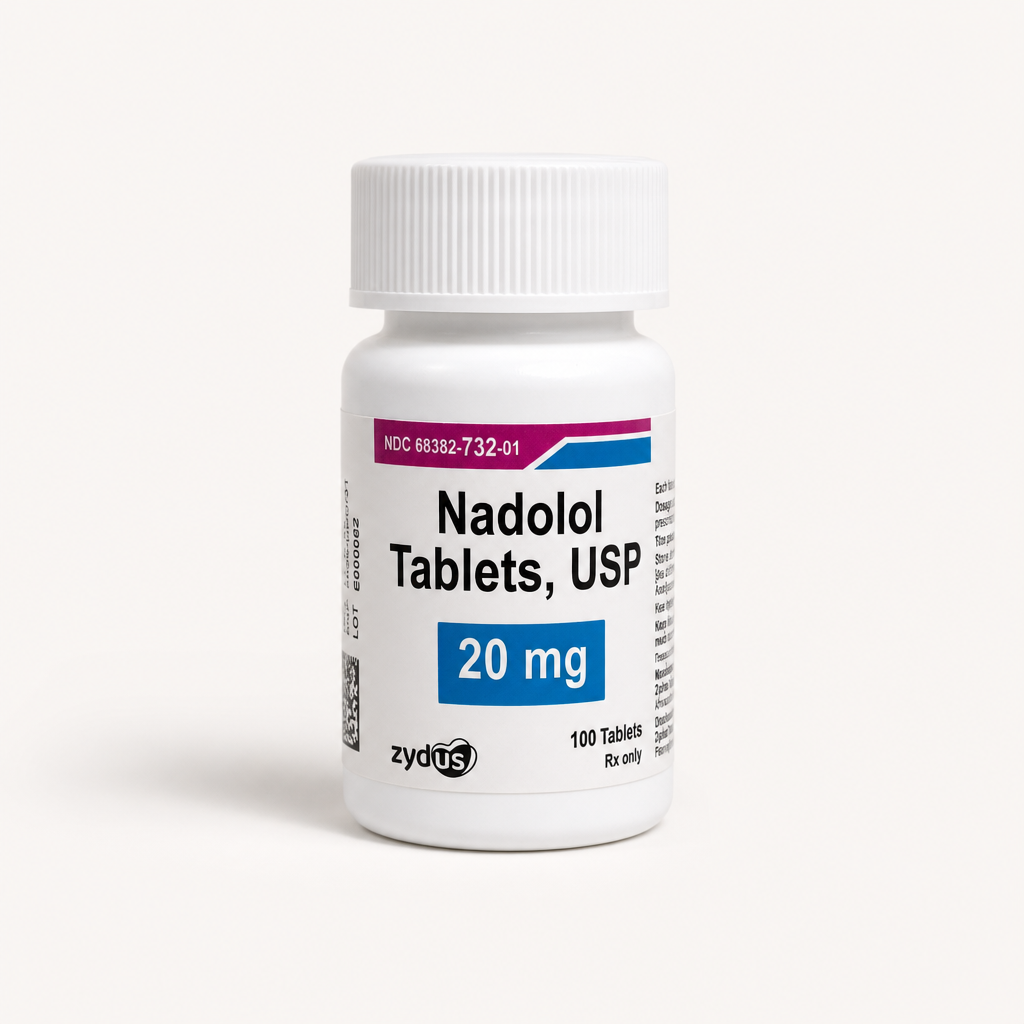
Nadolol is available in several strengths, typically in 20 mg and 80 mg tablets. It is generally taken once daily.
- High blood pressure: Most providers start patients on 40 mg once daily. If your blood pressure remains high, the dose may be increased gradually. Typical maintenance doses range from 40 mg to 80 mg daily.
- Chest pain (angina): Dosing usually begins at 40 mg once daily. Your doctor may increase this every few days based on how often you experience symptoms.
- Consistency with food: It is generally recommended to take nadolol at the same time every day. It can be taken with or without food, but being consistent helps maintain steady levels in your system.
- Monitor your vitals: Keep a log of your blood pressure and pulse at home. Bring this data to your provider during follow-up appointments.
Note: Dosing information below is educational only. Your prescribing physician will determine your specific dose based on your individual health needs. Always follow your healthcare provider’s instructions for exact dosing.
Uses
FDA-Approved Uses
The FDA approves nadolol tablets for:
- Hypertension: To lower high blood pressure in adults.
- Angina pectoris: For the long-term management of chronic chest pain.
Off-Label Uses
You may see nadolol tablets prescribed for uses that are not FDA-approved. This is a common and legal practice called off-label prescribing, where a doctor uses their clinical judgment to prescribe a drug for a different (but well-researched) purpose.
Nadolol tablets may be prescribed off-label for the following conditions:
- Migraine prevention: While not its primary use, nadolol is commonly prescribed to reduce the frequency and severity of migraine headaches.
- Tremors: It can help manage essential tremors or the physical shaking associated with situational anxiety.
- Hyperthyroidism: It may be used to control a fast heart rate and tremors caused by an overactive thyroid.
- Portal hypertension: Some specialists use it to prevent esophageal bleeding in patients with specific liver conditions.
Side Effects
Most people tolerate nadolol tablets well, but like all beta-blockers, it can cause some predictable changes in how you feel as your body adjusts.
Common Side Effects
- Dizziness or lightheadedness
- Feeling unusually tired or weak
- Slow heartbeat (bradycardia)
- Cold hands and feet
- Nausea or stomach upset
Serious Side Effects
Serious side effects are rare, but it’s important to know what to look for if they do occur. It’s generally accepted that you stop taking the medication and immediately call the doctor if you experience any of the following symptoms:
- Breathing problems: Because it is non-selective, it can cause airway muscles to tighten (bronchospasm). It is generally advised to seek help if you experience wheezing or severe shortness of breath.
- Heart failure symptoms: Providers typically advise watching for sudden weight gain, swelling in the ankles or feet, or trouble breathing while lying down.
- Mental health changes: Standard guidelines generally recommend contacting your doctor if you experience new or worsening depression, confusion, or vivid hallucinations.
- Severe allergic reactions: It is generally advised to watch for hives, facial or throat swelling, or a dangerous rash.
Call your doctor immediately if you experience any concerning or prolonged symptoms.
Pharmacist Tips
Do Not Stop Suddenly
This is the most critical safety rule for nadolol. Stopping cold turkey can cause your blood pressure to spike or lead to a heart attack. If you need to stop, your doctor will provide a schedule to slowly taper the dose over 1–2 weeks.
Move Slowly
Because beta-blockers lower your heart rate and blood pressure, you may feel dizzy when rising from a chair or bed. Providers typically advise moving slowly to give your body time to adjust.
Diabetes Alert
Nadolol can hide the signs of low blood sugar (hypoglycemia), such as a racing heart or tremors. If you have diabetes, it is generally accepted that you may need to check your sugar levels more frequently.
Check Your Cold Medicine
Some over-the-counter cold and allergy medicines contain decongestants (like pseudoephedrine) that can raise your blood pressure and work against nadolol.
Alcohol Caution
Drinking alcohol can increase the dizzying effects of nadolol. It is generally recommended to limit or avoid alcohol, especially when first starting the medication.
Drug Interactions
Nadolol tablets can interact with several other medications, affecting your heart rate or blood sugar.
Let your doctor know if you take:
- Blood pressure drugs: Taking nadolol with other antihypertensives, such as diltiazem or verapamil, can cause your heart rate to drop too low.
- Diabetes medications: They can enhance the blood sugar-lowering effects of insulin or glipizide while masking the warning signs of a crash.
- Asthma medications: Nadolol may block the effects of rescue inhalers like albuterol, making them less effective during a breathing crisis.
- Digoxin: Combining these can significantly slow your heart’s electrical activity.
Always give your doctor and pharmacist a complete list of all your medications, vitamins, and supplements to check for potential interactions.
FAQs
Is it normal for nadolol to make my hands and feet feel extremely cold?
Yes. Because nadolol slows the heart and relaxes blood vessels, it can reduce blood flow to your extremities. This is a common side effect of beta-blockers.
Can I use nadolol to prevent daily migraines like propranolol does?
Yes, doctors often prescribe nadolol off-label for migraine prevention, though propranolol is more commonly used for this purpose.
Do I need to take this pill with a meal?
Nadolol can be taken with or without food. However, taking it with food may help if you experience stomach upset or nausea.
Is it safe to use my rescue asthma inhaler while taking this drug?
It is generally advisable to talk to your doctor. Non-selective beta-blockers like nadolol can interact with asthma medications, potentially reducing inhaler effectiveness and causing breathing difficulties.
Can taking nadolol cause erectile dysfunction?
It is possible, though rare. Beta-blockers are sometimes associated with sexual side effects. If you notice changes in performance or desire, it is generally advised to discuss alternative medications with your provider.
Can I take ibuprofen or over-the-counter cold medicine while on this pill?
Standard guidelines typically advise caution. NSAIDs like ibuprofen can sometimes make blood pressure medications less effective. Many cold medicines contain stimulants that raise blood pressure. Check with your doctor first.
Does nadolol cause vivid nightmares the way other beta-blockers do?
Nadolol is less likely to cause nightmares than propranolol or metoprolol. This is because nadolol does not cross into the brain as easily.
Can I safely drink alcohol while taking this pill?
It is generally accepted that you should limit alcohol. Alcohol can increase the risk of dizziness and fainting while taking nadolol.
How long does it take for nadolol to lower my blood pressure?
You may notice a lower pulse within hours, but it often takes 1–2 weeks of consistent daily use to see the effect on your blood pressure.
Comparable Medications
Propranolol, Metoprolol, Carvedilol, or Amlodipine?
Here are some potential alternatives to nadolol tablets:
Propranolol
From $24.99
Both are non-selective beta-blockers used for migraines and heart health. The primary difference is that propranolol is usually taken multiple times a day, while nadolol is taken once a day. Nadolol also tends to cause fewer sleep disturbances.
Metoprolol Succinate ER
From $24.99
Metoprolol is a selective beta-blocker, meaning it targets the heart more than the lungs. It is often a safer choice for patients with mild asthma, whereas nadolol is non-selective.
Carvedilol
From $29.99
Carvedilol is a more modern beta-blocker that also blocks alpha receptors, providing even stronger vasodilation. It is commonly used for heart failure, while nadolol is typically recommended for hypertension and angina.
Amlodipine
From $27.99
This is a calcium channel blocker, not a beta-blocker. It lowers blood pressure effectively but does not slow the heart rate or prevent tremors, unlike nadolol.
We Have Nadolol Tablets in Stock. Get Yours Today!
Important: Information on this page is for educational purposes only. Prescribing decisions are made by independent, licensed providers. TelyRx operates technology-enabled pharmacies and a telehealth platform that connects patients with licensed providers. Prescriptions, when provider-approved and issued, are filled and shipped by TelyRx-affiliated pharmacies. We do not employ physicians or make prescribing decisions. Learn more about our editorial standards here.