

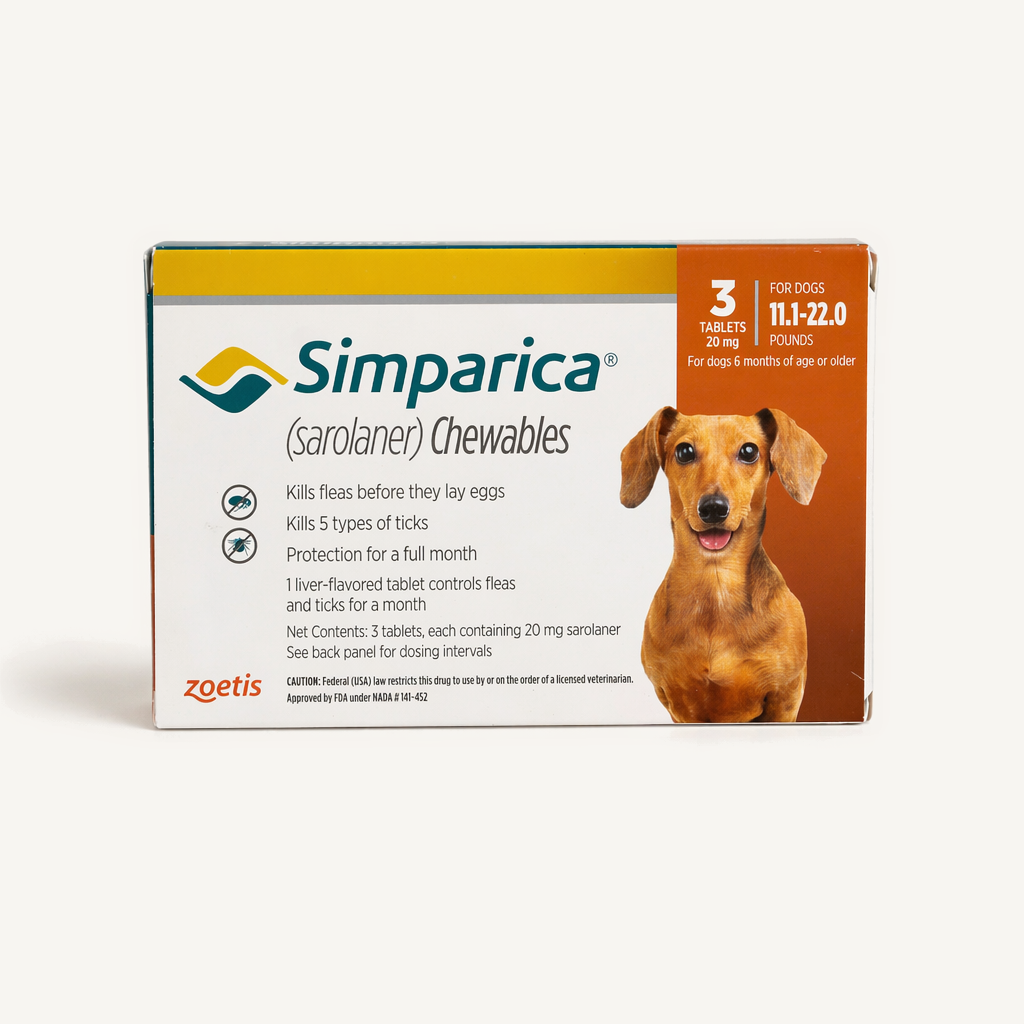
How It Works
Simparica works through the bloodstream to provide continuous protection from the inside out. Once your dog eats the chewable, the medication is absorbed and spreads throughout their body. This internal approach ensures that the active ingredient remains at a consistent level for the entire dosing period.
- Nervous system targeting: When a flea or tick bites your dog and begins feeding, it takes in a small amount of the medication. The drug then attacks the nervous system of the pest, which causes the parasite to become paralyzed and die.
- Fast flea relief: The medicine reaches its full strength quickly and begins killing fleas within 3 hours. By killing adult fleas before they can lay any eggs, the medication stops the flea life cycle and prevents a new infestation from starting in your home.
- Wide-ranging tick defense: The medication stays active in the blood at levels high enough to kill six different types of ticks. This includes deer ticks, which the medication kills before they can usually pass on the bacteria that cause Lyme disease.
- Continuous monthly protection: The medication is designed to stay in your dog’s system for up to 35 days.
| Quick Facts | |
|---|---|
| Common Brands | Simparica |
| Drug Class | Isoxazoline antiparasitic |
| Generic Status | No generic available |
| Availability | Prescription only |
Dosing
Simparica is a once-a-month chewable tablet. It is designed to be eaten by your dog, either as a whole treat or broken into smaller pieces and mixed with food. Here are factors to consider with Simparica dosage:
- Administration: Unlike some other flea and tick preventatives, Simparica does not need to be given with a meal. You can give it to your dog at any time of the day, with or without food.
- Recommended dose: The minimum recommended dose is 0.91 mg per pound of body weight. The tablets come in different strengths to match the weight of your dog.
- Weight ranges: It is important to use the correct tablet size for your dog’s specific weight. If your dog grows or loses weight, your veterinarian may need to adjust the prescription.
- Monthly schedule: For the best protection, give the medication every 30 to 35 days. If a dose is missed, give it as soon as you remember and restart your monthly schedule from that date.
- Canine use only: This medication is for dogs only. Standard guidelines suggest that you should never give this product to humans, cats, or other animals.
Note: Dosing information below is educational only. Your prescribing veterinarian will determine the specific dose based on your dog’s body weight. Always follow your healthcare provider’s instructions for exact dosing.
Uses
FDA-Approved Uses
Standard guidelines suggest that Simparica is most commonly used to prevent and treat flea infestations. By targeting and killing adult fleas quickly, it helps resolve current issues and prevents new pests from establishing themselves on the dog or in the home environment.
Additionally, Simparica is approved for the treatment and control of tick infestations. It is effective against six major tick species, including:
- Lone Star tick
- Gulf Coast tick
- American dog tick
- Black-legged (deer) tick
- Brown dog tick
- Asian longhorned tick
Because it kills deer ticks rapidly, the medication is also FDA-approved to block infections that may cause Lyme disease.
Off-Label Uses
You may see Simparica chewable tablets prescribed for uses that are not “FDA-approved.” This is a very common and legal practice called “off-label” prescribing, where a veterinarian uses their clinical judgment to prescribe a drug for a different (but well-researched) purpose.
- Sarcoptic mange: Providers may use Simparica to help treat and control mange infections on the skin.
- Ear mites: Evidence suggests this medication is effective at clearing up ear mite infestations in dogs.
Side Effects
Simparica is generally well-tolerated by most dogs. Many dogs take the medication for years without any issues. However, as with any medication, some pets may experience a reaction.
Common Side Effects
- Vomiting
- Diarrhea
- Low energy levels
- Decreased appetite
Serious Side Effects
Serious Simparica side effects are rare, but it’s important to know what to look for if they do occur.
- Neurologic signs: Simparica is part of a drug class that can affect the nervous system. While rare, some dogs may experience muscle tremors, difficulty walking, or seizures.
- Prolonged illness: Contact your veterinarian if vomiting or diarrhea does not stop or if your dog completely refuses to eat.
- Allergic reaction: Signs can include a skin rash, hives, or swelling of the face and mouth.
Call your veterinarian immediately if your dog experiences any concerning or prolonged symptoms.
Pharmacist Tips
Check Weight First
Always weigh your dog before starting a new pack to ensure you are using the correct dose.
Do Not Split Medication For Multiple Dogs
Do not split or divide tablets between multiple dogs, as the active ingredient may not be spread evenly through the chew. Splitting the medication to mix into food for one dog is fine as long as the entire chewable is given.
Watch for Ingestion
Make sure your dog chews and swallows the entire tablet; if they spit it out or vomit within a few hours, contact your vet for advice on re-dosing.
Wash Your Hands
Use soap and water to wash your hands after handling the chewable tablet.
Store Safely
Keep the blister packs in the original box at room temperature and away from children and pets.
Schedule Reminders
Use a calendar or phone app to stay consistent with the 30-day dosing schedule.
Drug Interactions
Simparica has been safely used alongside many common dog medications, including vaccines, heartworm preventatives, and antibiotics. No significant drug interactions have been reported for the standard Simparica product.
If you use Simparica Trio instead of the standard Simparica chewable tablets, there may be more interactions to consider due to the additional ingredients.
Always give your veterinarian a complete list of all your dog’s medications, vitamins, and supplements to check for potential interactions.
FAQs
How long does it typically take for Simparica to start killing fleas?
Studies show that the medication starts killing fleas within 3 hours. It usually kills 100% of adult fleas on the dog within 24 hours.
What is the difference between Simparica and Simparica Trio?
Standard Simparica only protects against fleas and ticks. Simparica Trio is a different product that also contains medicine to prevent heartworm disease and treat intestinal worms.
Will this medication stop parasites or ticks from biting my dog in the first place?
No. Pests must bite the dog and begin feeding to be exposed to the medication. However, the medicine works fast enough to kill them before they can lay eggs or spread most diseases.
Can I split the chewable in half if I have two smaller dogs?
No. You should not split these tablets. The medication is not always spread evenly through the flavored chew, so one dog might get too much while the other gets none or not enough.
Do I need to give this chew with a full meal?
No. Simparica can be given with or without food.
Does standard Simparica protect my dog against heartworms or tapeworms?
No. Standard Simparica chewable tablets do not protect against heartworms or tapeworms. If your dog needs heartworm protection, you should discuss Simparica Trio or a separate heartworm pill with your vet.
How long does one chew protect my dog against fleas?
Each chew provides protection for up to 35 days.
What should I do if my dog spits the chew out or throws it up after taking it?
If your dog vomits within a few hours of taking the pill, the medication may not have been absorbed. Contact your veterinarian to see if you should give another dose.
Does this medication kill all types of ticks?
Simparica is highly effective against the most common and dangerous ticks found in North America. It is FDA-approved to kill six specific types of ticks:
- Deer tick (black-legged tick)
- American dog tick
- Lone Star tick
- Brown dog tick
- Gulf Coast tick
- Asian longhorned tick
By killing these pests quickly, the medication helps prevent the spread of serious illnesses like Lyme disease.
Will my dog still need a topical liquid or a flea collar while taking Simparica?
Generally, no. This oral tablet provides complete protection against fleas and ticks. You do not usually need to use a liquid or collar at the same time.
Can I safely give this dog medication to my cat if I adjust the dosage for their weight?
No. This product is for use in dogs only. It is not safe for cats.
Does Simparica treat mange or ear mite infections?
While not FDA-approved for these uses, veterinarians may prescribe it off-label to treat mange and ear mites. Do not give the medication to your dog for off-label uses without talking to your veterinarian first.
Why do I need a prescription to buy this when I can get over-the-counter flea medicine?
Simparica is a prescription-strength medication that requires a veterinarian to ensure it is safe for your dog, especially since it should be used with caution in dogs with a history of seizures.
Comparable Medications
Simparica Trio (Sarolaner/Moxidectin/Pyrantel), NexGard (Afoxolaner), Heartgard Plus (Ivermectin/Pyrantel), or Frontline Plus (Fipronil)?
Your veterinarian may discuss several options for parasite protection.
Simparica Trio
From $34.99
This is a broader version of the Simparica medication. It protects against fleas and ticks, and also prevents heartworm and treats roundworms and hookworms.
NexGard
From $31.99
This is another flavored monthly chewable. It works in a similar way to Simparica. The main difference is that Simparica protects for 35 days and kills 6 types of ticks, while NexGard is labeled for 30 days and kills 4 types of ticks.
Heartgard Plus Chewables
From $17.99
This is a heartworm preventative. It does not kill fleas or ticks. It is often used alongside Simparica to provide full protection.
Frontline Plus
This is a topical liquid applied to the dog's skin that kills fleas and ticks. Unlike Simparica, it is an over-the-counter product. It does not require a prescription, but it can be less convenient because it can wash off or leave a greasy spot on the dog.
We Have Simparica Chewable Tablets in Stock. Get Yours Today!
Important: Information on this page is for educational purposes only. Prescribing decisions are made by independent, licensed providers. TelyRx operates technology-enabled pharmacies and a telehealth platform that connects patients with licensed providers. Prescriptions, when provider-approved and issued, are filled and shipped by TelyRx-affiliated pharmacies. We do not employ physicians or make prescribing decisions. Learn more about our editorial standards here.