

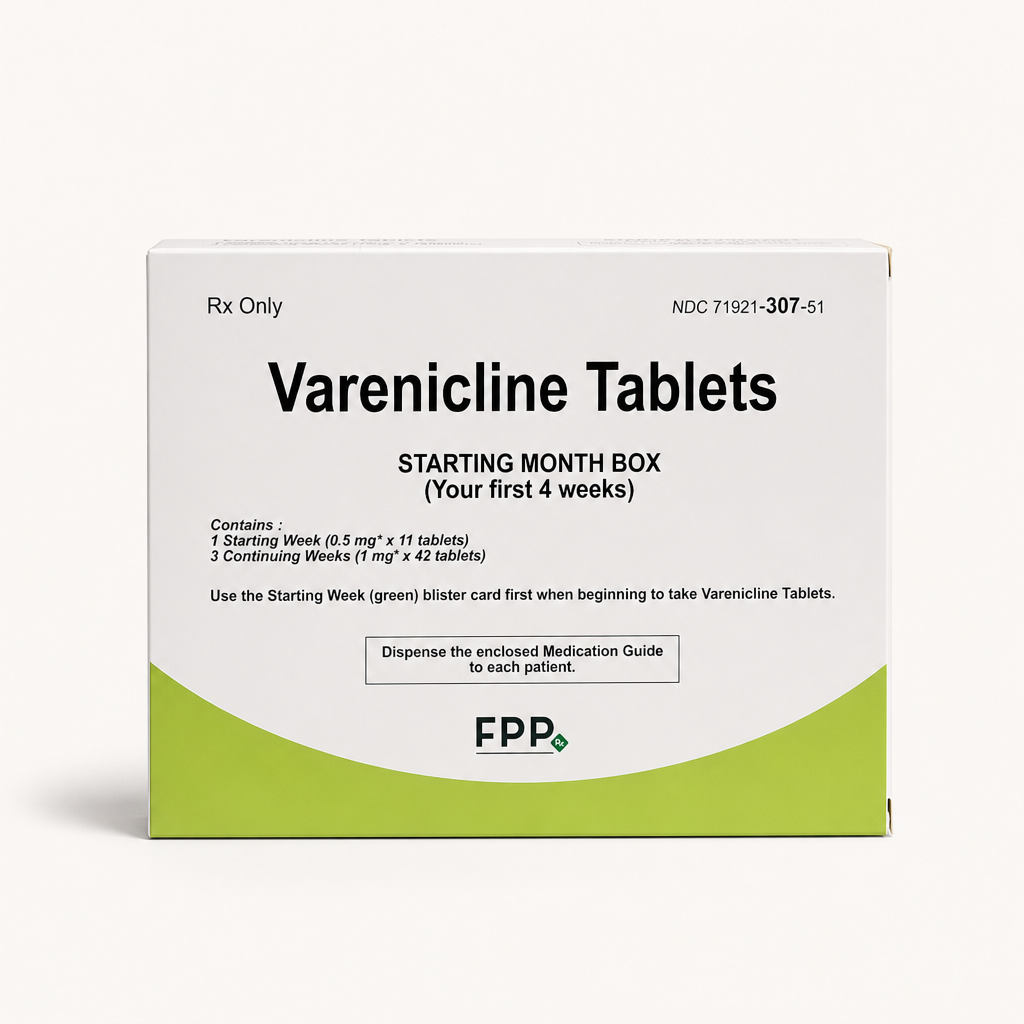
How It Works
Varenicline belongs to a class of drugs known as partial nicotinic receptor agonists. Nicotine is a stimulant. Varenicline also provides mild stimulation, which helps ease withdrawal symptoms and intense cravings that usually occur when nicotine levels drop.
Varenicline also blocks the stimulant effect of nicotine, diminishing the pleasure associated with smoking.
| Quick Facts | |
|---|---|
| Common Brands | Varenicline, Chantix (discontinued) |
| Drug Class | Partial nicotinic receptor agonist; smoking cessation aid |
| Generic Status | Generic version available |
| Availability | Prescription only |
Dosing
Varenicline in an oral medication. To help your body adjust and reduce the risk of initial side effects, you usually start with a low dose and increase it over the first week.
A common schedule involves taking a 0.5 mg tablet once daily for the first three days, followed by 0.5 mg twice daily for days four through seven. Starting on the eighth day, the dose may increase to 1 mg twice daily.
There are three common approaches to using this medication:
- Fixed quit approach: You set a quit smoking date and start the medication one week before that date.
- Flexible quit approach: You start the medication and then pick a date between day 8 and day 35 of treatment to quit smoking.
- Gradual quit approach: You start the medication and slowly decrease the number of cigarettes you smoke over 12 weeks. The aim is to be cigarette-free by the end of the treatment course.
Standard treatment typically lasts for 12 weeks. If you have successfully stopped smoking by the end of that period, a provider may recommend an additional 12 weeks of treatment to increase the chances of remaining tobacco-free long term.
Note: Dosing information below is educational only. Your prescribing physician will determine your specific dose based on your individual health needs. Always follow your healthcare provider’s instructions for exact dosing.
Uses
FDA-Approved Uses
Varenicline is FDA-approved for use as an aid to smoking cessation treatment in adults. It can help individuals stop smoking cigarettes by reducing cravings and withdrawal symptoms.
Off-Label Uses
You may see varenicline prescribed for uses that are not “FDA-approved.” This is a very common and legal practice called “off-label” prescribing, where a doctor uses their clinical judgment to prescribe a drug for a different (but well-researched) purpose.
There are scenarios in which a doctor may prescribe this medication off-label based on specific clinical needs or the goal of cessation from other forms of nicotine.
- Vaping cessation: While the original trials focused on combustible cigarettes, some providers may prescribe varenicline to help individuals quit electronic cigarettes or vaping devices.
- Smokeless tobacco cessation: Clinicians may recommend this medication to help those addicted to chewing tobacco or snuff manage their withdrawal symptoms.
Side Effects
Like all medications, varenicline can cause side effects. Many common symptoms are mild and improve over time as the body adjusts to the medication. However, other reactions can be more significant and require medical attention or a consultation with a provider to ensure the treatment remains safe and effective for the individual.
Common Side Effects
- Nausea
- Vivid or abnormal dreams
- Difficulty falling or staying asleep
- Constipation
- Gas
- Headache
- Tiredness
- Change in taste
Serious Side Effects
Serious side effects are rare, but it’s important to know what to look for if they do occur. Contact your doctor if you experience:
- Neuropsychiatric symptoms: Changes in mood or behavior, including aggression, hostility, agitation, depressed mood, or suicidal thoughts.
- Severe skin reactions: Rashes characterized by peeling, blisters, or painful red skin.
- Allergic reactions: Swelling of the face, lips, tongue, or throat, or difficulty breathing and wheezing.
- Seizures: Uncontrolled movements or loss of consciousness.
- Cardiovascular events: New or worsening chest pain, shortness of breath, or sudden weakness on one side of the body, particularly in those with existing heart conditions.
- Sleepwalking: Performing activities while asleep that may lead to injury or property damage.
Call your doctor immediately if you experience any concerning or prolonged symptoms.
Pharmacist Tips
Take With Food
Consuming your dose after a meal with a full glass of water helps reduce the likelihood of stomach upset or nausea.
Monitor Your Mood
Watching for any unusual changes in behavior or feelings of sadness is important, especially during the first few weeks of treatment.
Assess Your Alertness
Knowing how the medication affects your coordination is necessary before you drive or operate heavy machinery, as it can cause dizziness or sleepiness.
Limit Alcohol Intake
Reducing the amount of alcohol you drink is recommended because varenicline can increase the effects of intoxication or cause aggressive behavior.
Keep Smoking Initially
Continuing to smoke during the first week of treatment is standard for most plans, as the medication needs time to reach effective levels in the brain.
Store At Room Temperature
Keeping the tablets in a dry place between 68° F and 77° F ensures the medication remains stable and effective.
Drug Interactions
Varenicline has few known interactions with food, but it can interact with certain substances and other medications.
- Alcohol: Combining this medication with alcohol may result in increased intoxication, unusual behavior, or memory loss.
- Nicotine replacement therapy (NRT): Using nicotine patches or gum at the same time as varenicline may increase the frequency of side effects like nausea, headache, and dizziness.
- Insulin: When you stop smoking, your body’s response to insulin may change, requiring a dose adjustment for diabetes management.
- Warfarin: Quitting tobacco can affect how blood thinners work in the body, which may require more frequent monitoring of blood clotting levels.
- Theophylline: The clearance of this medication can change when someone stops smoking, potentially requiring a change in dosage.
Always give your doctor and pharmacist a complete list of all your medications, vitamins, and supplements to check for potential interactions.
FAQs
How long do I need to take varenicline before I stop smoking my last cigarette?
Standard guidelines suggest starting the medication for at least one week before your intended quit date. This allows the varenicline to begin blocking nicotine receptors and reducing cravings before you attempt to stop entirely.
What is the difference between generic varenicline and brand name Chantix?
Generic varenicline contains the same active ingredient and is required by the FDA to work in the same way as the brand-name version. While the brand-name version, Chantix, is no longer sold in the United States, the generic version remains available and is therapeutically equivalent.
Why did the FDA recall Chantix a few years ago, and is the generic version on the market today safe?
Manufacturers recalled Chantix in 2021 after finding nitrosamines. These are impurities that might increase cancer risk with long-term exposure. Current generic versions meet strict safety standards that limit these impurities to acceptable levels, making them a safe option for smoking cessation.
Are you supposed to keep smoking for the first week of taking varenicline?
Yes, most treatment plans involve continuing to smoke during the first seven days. This period allows the medication to build up in your system so that by your quit date, your cravings are already diminishing.
How does taking this pill stop the physical cravings for tobacco?
The medication attaches to the nicotine receptors in the brain. It provides a small amount of stimulation to prevent withdrawal symptoms while simultaneously blocking the pleasure you would normally get from a cigarette.
What happens if I smoke a cigarette after my official “quit date” while on this medication?
Even if a slip-up occurs, the medication is still working. Patients may find that the cigarette does not taste or feel as satisfying as it used to because the nicotine receptors are blocked. Smoking a single cigarette does not mean the treatment has failed.
Why does varenicline make me so nauseous?
Nausea is the most common side effect and is related to the medication’s interaction with the digestive system. Taking the dose with a full meal and water can help manage this discomfort.
Is it safe to use nicotine patches or chew nicotine gum at the same time as taking varenicline?
While not strictly prohibited, combining them can increase the intensity of side effects like nausea and vomiting. Providers typically recommend using varenicline on its own first to see if it manages cravings sufficiently.
How long do I have to stay on this medication to make sure I don’t relapse?
A standard course is 12 weeks. However, for those who have successfully quit by the end of that period, an additional 12 weeks is often recommended to strengthen the habit of being smoke-free and prevent future relapse.
Is it normal to feel irritable, depressed, or angry during the first few weeks of taking this?
Some mood changes can be a result of nicotine withdrawal itself. However, because varenicline can cause neuropsychiatric side effects, it is important to report any significant changes in mood or behavior to a healthcare provider immediately.
Can I take this medication if I have a history of depression or anxiety?
Individuals with a history of mental health conditions can take varenicline, but may require closer monitoring. It is essential to discuss your mental health history with your provider so they can watch for any worsening of symptoms during treatment.
Can taking varenicline cause weight gain like quitting smoking cold turkey often does?
Some weight gain is common when quitting smoking because nicotine is a stimulant and an appetite suppressant. Weight gain is possible with varenicline.
Is it safe to drink alcohol while taking this?
Limit or avoid alcohol. Varenicline can change how your body processes alcohol, leading to unpredictable behavior or increased intoxication.
Will varenicline help me quit vaping or using chewing tobacco, or is it only for cigarettes?
While FDA-approved for cigarettes, providers may prescribe varenicline off-label to help patients quit other forms of nicotine, including vaping and smokeless tobacco.
Comparable Medications
Varenicline vs Bupropion (Zyban/Wellbutrin), Chantix, or Varenicline Nasal Spray (Tyrvaya)?
Bupropion
Both varenicline and bupropion are non-nicotine prescription pills used for smoking cessation. Bupropion was originally developed as an antidepressant and works by affecting chemicals like dopamine and norepinephrine in the brain to reduce the urge to smoke. In contrast, varenicline specifically targets nicotine receptors. Clinical trials have generally shown that varenicline has a higher success rate for smoking cessation compared to bupropion.
Chantix
Chantix was the original brand-name version of varenicline, but has now been discontinued in the United States. The generic varenicline available today is therapeutically equivalent. This means the generic provides the same dosage and the same benefits for quitting smoking, typically at a lower cost.
Varenicline nasal spray
Although they share the same active ingredient, these two medications are used for different purposes. Varenicline tablets are used systemically to help people stop smoking. The nasal spray version, known by the brand name Tyrvaya, is used at a lower concentration to treat the signs and symptoms of dry eye disease. They are not interchangeable.
We Have Varenicline in Stock. Get Yours Today!
Important: Information on this page is for educational purposes only. Prescribing decisions are made by independent, licensed providers. TelyRx operates technology-enabled pharmacies and a telehealth platform that connects patients with licensed providers. Prescriptions, when provider-approved and issued, are filled and shipped by TelyRx-affiliated pharmacies. We do not employ physicians or make prescribing decisions. Learn more about our editorial standards here.