

How It Works
Tinidazole works by damaging the DNA of the bacteria or parasites causing the infection. This prevents the cells from repairing or replicating, ultimately leading to bacterial and parasite death.
| Quick Facts | |
|---|---|
| Common Brands | Tindamax |
| Drug Class | Nitroimidazole antibiotic, antiparasitic agent |
| Generic Status | Generic is available |
| Availability | Prescription only |
Dosing
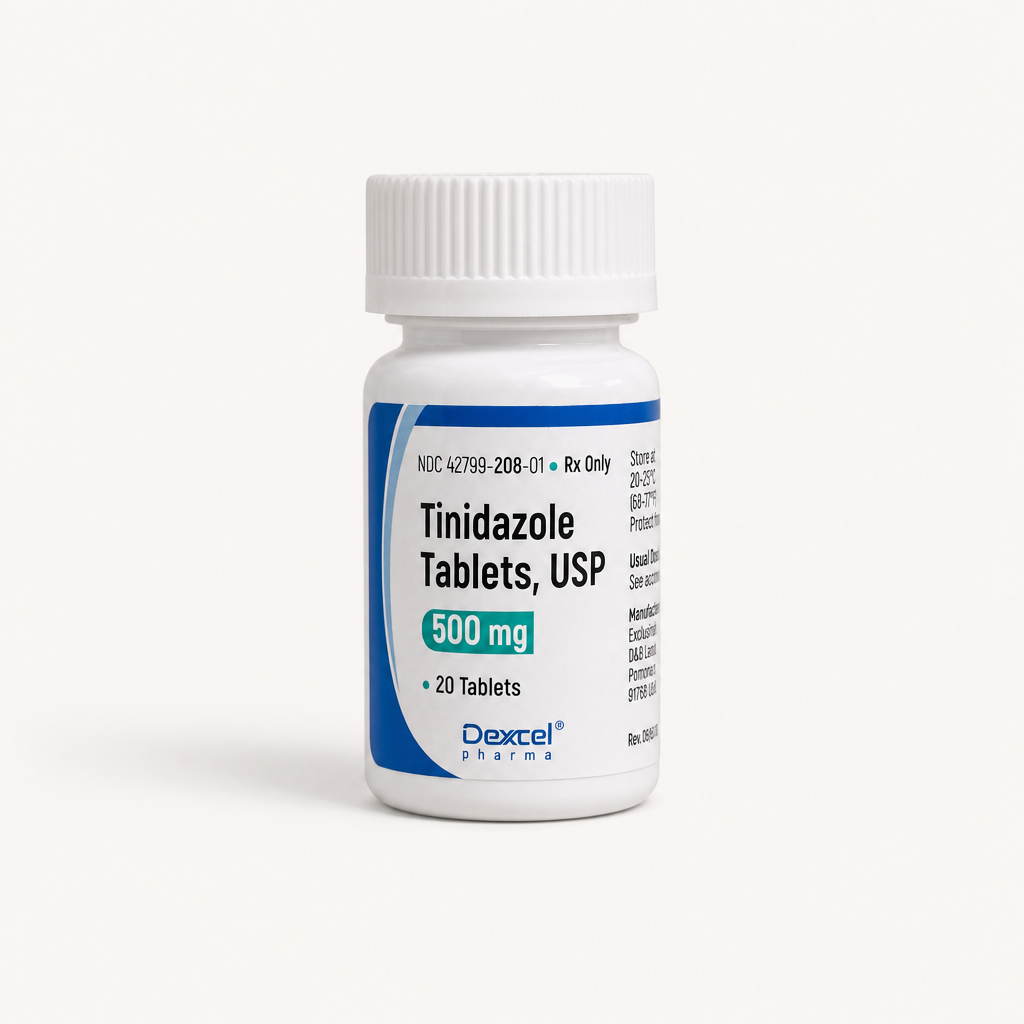
Tinidazole tablets come in two dosage strengths: 250 mg and 500 mg. It is usually taken once a day with food. The dosing regimen varies depending on the specific type of infection being treated.
- Trichomoniasis: The recommended dose is 2 g, taken with food. Any sexual partners should also undergo the treatment.
- Giardiasis: The recommended dose is 2 g, taken with food.
- Amebiasis: The recommended dose is 2 g once daily with food for 3 days.
- Bacterial vaginosis: The recommended dose is 2 g once daily with food for 2 days, or 1 g once daily with food for 5 days.
Complete the entire prescribed course of this medication, even if symptoms improve. Stopping treatment early can cause the infection to return and become resistant to treatment.
Note: Dosing information below is educational only. Your prescribing physician will determine your specific dose based on your individual health needs. Always follow your healthcare provider’s instructions for exact dosing.
Uses
FDA-Approved Uses
Tinidazole tablets are FDA-approved to treat certain bacterial and parasitic infections, including:
- Bacterial vaginosis (BV): A vaginal infection caused by a disruption in the normal balance of vaginal flora
- Trichomoniasis: A sexually transmitted infection (STI) caused by a parasite
- Giardiasis: An intestinal infection caused by a parasite
- Amebiasis: An intestinal infection caused by a parasite
Off-Label Uses
You may see tinidazole tablets prescribed for uses that are not “FDA-approved.” This is a very common and legal practice called “off-label” prescribing, where a doctor uses their clinical judgment to prescribe a drug for a different (but well-researched) purpose.
There are currently no common off-label uses for tinidazole tablets.
Side Effects
Like all medications, tinidazole tablets can cause side effects. Some common side effects may improve over time as your body adjusts to the medication. Other side effects may be serious and require medical attention.
Common Side Effects
- Metallic or bitter taste
- Nausea
- Weakness
- Fatigue
- Stomach upset or cramps
- Vomiting
- Loss of appetite
- Headache
- Dizziness
- Constipation
Serious Side Effects
Serious side effects are rare, but it’s important to know what to look for if they do occur. Stop using tinidazole tablets and call your doctor immediately if you experience:
- Severe allergic reactions: Symptoms include swelling of the face, lips, tongue, or throat (angioedema); difficulty breathing or swallowing; racing heart; severe rash or itching; and/or fever.
- Seizures: Some people have experienced seizures while taking tinidazole tablets. Symptoms include muscle twitching or spasms, stiffening of the arms and legs, anxiety, confusion, lightheadedness, falling, and loss of consciousness.
- Nerve damage: Tinidazole tablets may cause a type of nerve damage called peripheral neuropathy. Symptoms include pain, burning, tingling, numbness, or weakness in the hands, arms, legs, or feet.
- Blood disorders: Tinidazole may cause a temporary drop in white blood cell counts, which can increase the risk of infection.
- Vaginal yeast infections: Antibiotics like tinidazole can cause vaginal yeast infections. Symptoms include burning or swelling of the vagina and vulva, pain during sex or urination, vaginal rash, and a thick, white, odorless discharge.
Call your doctor immediately if you experience any concerning or prolonged symptoms.
Pharmacist Tips
Take Your Dose With Food
Taking tinidazole with food can lower the risk of unpleasant side effects, such as stomach upset, nausea, and cramping.
Avoid Alcohol
It is strongly advised to completely avoid drinking alcohol or eating any food with large amounts of ethanol or propylene glycol while taking tinidazole tablets and for at least 72 hours (3 days) after the final dose. Mixing the two can trigger nausea, vomiting, stomach cramps, flushing, and headaches.
Talk To Your Pharmacist If You Have Difficulty Swallowing
If you have trouble swallowing, some pharmacies can crush the medication and compound it into a liquid for you. Note: this custom oral suspension must be shaken well and is only good for one week.
When Treating Trichomoniasis, All Sexual Partners Should Be Treated At The Same Time
To prevent reinfection, it is also recommended to avoid sexual contact until the entire treatment course is finished and all your symptoms are gone.
STI and HIV Testing May Be Recommended
Trichomoniasis and bacterial vaginosis (BV) can increase your risk for other STIs.
Store At Room Temperature
Tinidazole tablets should be stored at 68°F to 77°F (20°C to 25°C) in a cool, dry place away from light.
Tell Your Provider If You’re Pregnant Or Breastfeeding
Tinidazole should not be during pregnancy. The medication passes into breast milk. Tell your provider if you are pregnant, breastfeeding, or planning to be, so they can advise whether it’s safe for you to use the medication.
Try To Avoid Missing A Dose
If you miss a dose of tinidazole tablets, take it as soon as you remember, unless it is almost time for your next dose. In that case, skip the missed dose and take your next dose at the regular time. Do not take double or extra doses.
Drug Interactions
Certain medications and substances can interact with tinidazole tablets, potentially altering how it works or increasing the risk of side effects. For example:
- Alcohol: Alcohol should not be consumed while taking tinidazole and for at least 3 days afterward, as it can cause a serious interaction with side effects like nausea, vomiting, flushing, and headache.
- Medicines or foods containing ethanol or propylene glycol: These should be avoided entirely while taking tinidazole and for at least 3 days afterward to prevent serious interactions.
- Disulfiram: Tinidazole should not be taken within 2 weeks of this treatment for alcohol use disorder, as it can lead to delusions or hallucinations.
- Blood thinners: When combined with medications like warfarin, tinidazole can increase the risk of bleeding.
- Lithium: Combining tinidazole with lithium can increase the amount of lithium in the blood, along with the risk of toxicity and serious side effects like confusion or tremors.
- Immune system suppressants: Tinidazole can interact with medications like cyclosporine and tacrolimus.
- Seizure medications: Tinidazole can interact with medications like phenytoin and fosphenytoin.
- Fluorouracil: This medication can interact with tinidazole.
- Cholestyramine: This medication can interact with tinidazole.
Always give your doctor and pharmacist a complete list of all your medications, vitamins, and supplements to check for potential interactions.
FAQs
What is the difference between tinidazole and metronidazole for treating bacterial vaginosis?
Tinidazole and metronidazole are both nitroimidazole antibiotics used to treat bacterial vaginosis. They differ in their dosing regimens. Tinidazole is taken once a day while metronidazole is taken up to three times daily.
Why must you avoid consuming alcohol while taking tinidazole?
Mixing alcohol with tinidazole triggers a severe reaction in the body that can include flushing, stomach cramps, nausea, vomiting, and headaches. To ensure safety, standard guidelines suggest completely avoiding alcoholic beverages and foods heavy in ethanol or propylene glycol for the entire duration of the treatment, plus at least 3 days after the final dose.
Does taking tinidazole cause a persistent metallic or bitter taste in your mouth?
Yes, this is a common side effect. Usually, this change in taste is temporary and goes away on its own as the medication clears from the body.
Should tinidazole tablets be taken on an empty stomach?
No, it is highly recommended to take tinidazole tablets with food. Taking tinidazole on an empty stomach increases the likelihood of gastrointestinal upset, including nausea, vomiting, and stomach cramps. Taking it with food can lessen these side effects.
How many days does tinidazole take to cure a trichomoniasis infection?
Tinidazole acts rapidly against parasites. Research demonstrates that 98% of individuals treated for trichomoniasis experienced complete resolution of symptoms within 6 days of taking their dose, but stick with the regimen prescribed by your doctor.
Why should sexual partners be treated simultaneously when tinidazole is prescribed for trichomoniasis?
Trichomoniasis is a highly transmissible sexually transmitted infection (STI). If a patient successfully clears the infection but their partner remains untreated, the partner can reinfect the patient. Treating all partners simultaneously — and avoiding sexual contact during treatment — is the best way to break the chain of transmission.
Can taking tinidazole lead to a secondary vaginal yeast infection?
Yes, this is a potential risk. Antibiotics like tinidazole work by killing harmful bacteria, but they can also inadvertently reduce the population of helpful, protective bacteria in the body. This disruption of the natural microbiome can create an environment in which yeast can overgrow.
Some people report developing a secondary vaginal yeast infection while taking tinidazole. Symptoms include intense itching, burning, and a thick, white discharge resembling cottage cheese.
Does tinidazole treat urinary tract infections or fungal yeast infections?
No, it does not. Tinidazole is an antibacterial and antiprotozoal medication. It is not an antifungal and cannot cure yeast infections. However, it is used to treat bacterial vaginosis.
Does tinidazole interact with oral contraceptive pills?
No, tinidazole is not known to interact with birth control pills. However, if tinidazole causes severe vomiting, it’s possible that any oral contraceptive pill may not be absorbed.
Comparable Medications
Tinidazole tablets, metronidazole, secnidazole, clindamycin, or fluconazole?
There are several medications your doctor can prescribe instead of tinidazole tablets. Here are a few possible alternatives below.
Metronidazole
From $22.99
An oral antibiotic used to treat bacterial and parasitic infections such as bacterial vaginosis, amebiasis, trichomoniasis, and giardiasis.
Secnidazole
An oral antibiotic used to treat bacterial vaginosis and trichomoniasis.
Clindamycin Capsules
From $46.99
An oral antibiotic used to treat bacterial infections, such as strep throat, bacterial vaginosis, pneumonia, and various skin, bone, and joint infections.
Fluconazole
From $24.99
An oral antifungal used to treat fungal and yeast infections such as oral thrush and vaginal yeast infections.
We Have Tinidazole Tablets in Stock. Get Yours Today!
Important: Information on this page is for educational purposes only. Prescribing decisions are made by independent, licensed providers. TelyRx operates technology-enabled pharmacies and a telehealth platform that connects patients with licensed providers. Prescriptions, when provider-approved and issued, are filled and shipped by TelyRx-affiliated pharmacies. We do not employ physicians or make prescribing decisions. Learn more about our editorial standards here.