

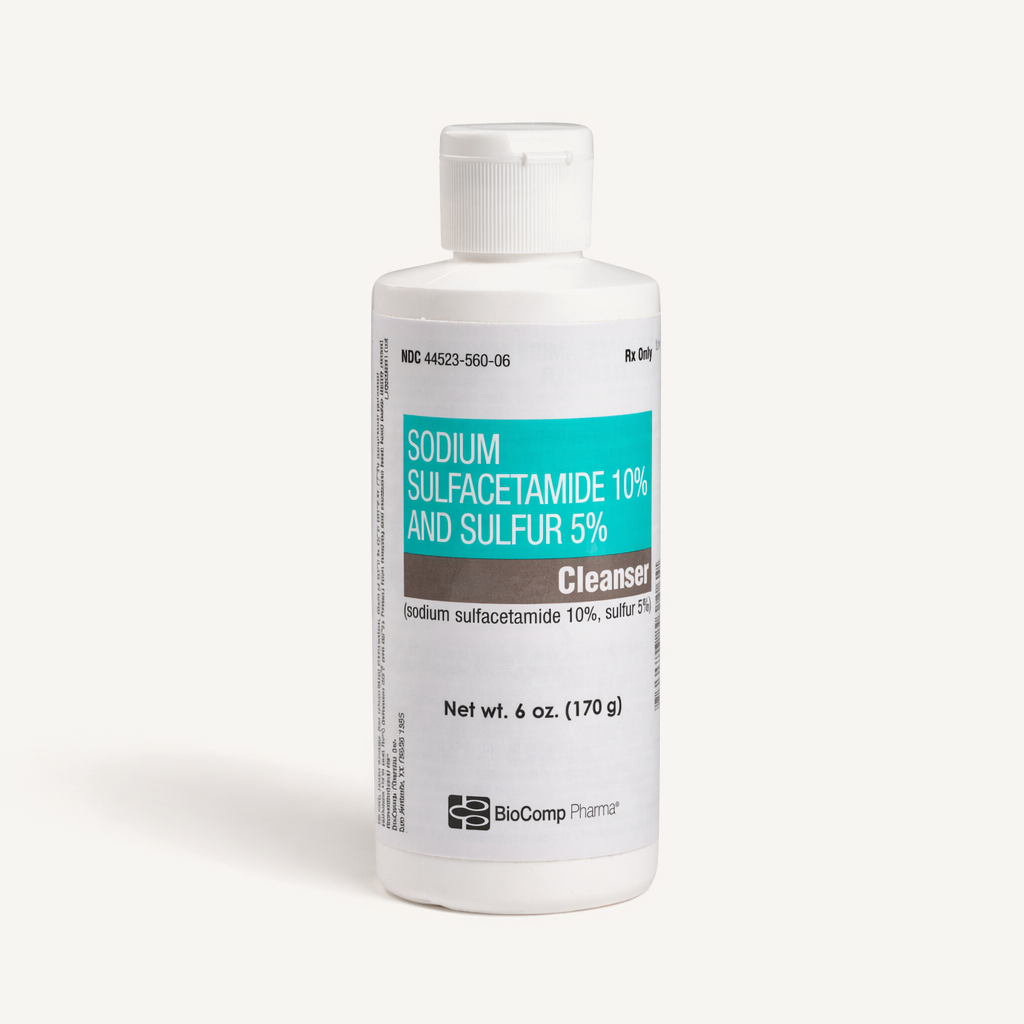
How It Works
Sodium sulfacetamide treats bacterial skin conditions by interfering with bacterial folic acid synthesis. This helps kill bacteria and reduce inflammation.
| Quick Facts | |
|---|---|
| Common Brands | N/A |
| Drug Class | Sulfonamide antibiotics |
| Generic Status | Generic is available |
| Availability | Prescription only |
Dosing
Providers generally recommend applying a thin film of sodium sulfacetamide lotion to the affected area. It is usually recommended that you apply the lotion at the same time each day and complete the full course of prescribed therapy, even if skin conditions improve. Stopping usage before your prescribed course is complete can cause infection recurrence and treatment resistance.
Note: Dosing information below is educational only. Your prescribing physician will determine your specific dose based on your individual health needs. Always follow your healthcare provider’s instructions for exact dosing.
Uses
FDA-Approved Uses
Sodium sulfacetamide is FDA-approved to treat acne and seborrheic dermatitis.
Off-Label Uses
You may see sodium sulfacetamide prescribed for uses that are not “FDA-approved.” This is a common and legal practice called “off-label” prescribing, where a doctor uses their clinical judgment to prescribe a drug for a different (but well-researched) purpose.’
In this way, doctors may incorporate sodium sulfacetamide into broader skincare regimens for people with inflammatory skin conditions.
Side Effects
Like all medications, sodium sulfacetamide can cause side effects. Some common side effects may improve over time as your body adjusts to the medication. Other side effects may be serious and require medical attention.
Common Side Effects
- Mild skin irritation
- Dry skin
- Redness at the application site
Serious Side Effects
Serious side effects are rare, but it’s important to know what to look for if they do occur.
- Allergic reactions: Severe responses can include skin rash, itching, hives, difficulty breathing, or swelling of the face, mouth, or throat. Seek immediate medical attention if you are having an allergic reaction to sodium sulfacetamide.
- Lupus-like syndrome: This side effect can present as joint pain, swelling, or stiffness. It may also cause a butterfly-shaped rash on the face, rashes that get worse in the sun, fever, and unusual weakness or fatigue.
- Skin peeling: Sodium sulfacetamide may cause irritation that leads to blistering, peeling, or loosening of the skin. Peeling can sometimes occur inside the mouth.
- Secondary infections: Prolonged use of sodium sulfacetamide can occasionally lead to bacterial resistance or the development of new infections.
Call your doctor immediately if you experience any concerning or prolonged symptoms.
Pharmacist Tips
Wash Hands
Always wash your hands thoroughly before and after applying sodium sulfacetamide lotion.
Avoid Your Eyes
Be careful to keep sodium sulfacetamide lotion out of your eyes. If contact happens, rinse your eyes with cool tap water.
Apply Correctly
Follow the usage instructions and spread a thin film of the medication onto the affected area. Typically, the lotion should be applied after you’ve washed the skin.
Complete Course
Continue using sodium sulfacetamide for the full amount of time directed by your care team, even if you think your skin condition is better.
Drug Interactions
Certain medications and substances can interact with sodium sulfacetamide, potentially altering its effectiveness or increasing the risk of side effects.
- Silver-containing products: Skin products containing silver can interact with sodium sulfacetamide.
- Other skincare products: When using a prescription lotion like sodium sulfacetamide, it is best to consult your doctor about any other skincare products you use to ensure there is no harmful interaction.
Always give your doctor and pharmacist a complete list of all your medications, vitamins, and supplements to check for potential interactions.
FAQs
Why is sodium sulfacetamide contraindicated for patients with a sulfa allergy?
Sodium sulfacetamide belongs to a group of medications called sulfonamide antibiotics. Patients with a history of sulfa sensitivity are at risk for severe allergic responses to sodium sulfacetamide, including rash, swelling, or difficulty breathing. Check with your doctor about the safety of using sodium sulfacetamide, and seek prompt medical attention for any indications of an allergic reaction.
Does sodium sulfacetamide bleach clothing, towels, or pillowcases like benzoyl peroxide?
It is uncommon for sodium sulfacetamide to permanently stain clothing, towels, or bedding. The lotion may leave a mark or temporarily discolor fabrics, but this typically goes away when the fabric is washed.
Why is it recommended to remove all silver jewelry before applying topical sodium sulfacetamide?
Silver-containing skin products are known to interact with sodium sulfacetamide. Providers typically recommend avoiding silver near the application site to prevent potential interactions.
Can applying sodium sulfacetamide cause a temporary discoloration of the skin or facial hair?
Clinical research has observed potential side effects such as redness, dryness, and skin irritation, but discoloration of the skin or facial hair is not listed as a common side effect of sodium sulfacetamide.
How many times a day should a sodium sulfacetamide facial wash be used to manage seborrheic dermatitis?
Sodium sulfacetamide facial wash should be used according to the frequency indicated on the prescription label unless instructed otherwise by your doctor.
Does sodium sulfacetamide contain any topical steroids or steroid hormones?
Sodium sulfacetamide is not a steroid or steroid hormone. It is classified as a sulfonamide antibiotic that disrupts bacterial growth.
Is sodium sulfacetamide effective against fungal skin infections?
Sodium sulfacetamide is used to address bacterial skin infections, not fungal infections.
How long does sodium sulfacetamide generally take to clear a flare-up of adult acne?
Sodium sulfacetamide helps reduce the number of skin lesions, but the timeline varies by patient. To treat skin infections, providers recommend using the medication for the full prescribed course.
Is it safe to use topical sodium sulfacetamide during pregnancy or while breastfeeding?
Little is known about the potential risks of using sodium sulfacetamide during pregnancy or while breastfeeding, so risk cannot be ruled out. Consult with your doctor before using this lotion if you are pregnant, planning to become pregnant, or breastfeeding.
Can sodium sulfacetamide be used with topical retinoids like tretinoin or adapalene?
It is important to check with your health care provider about your full skincare regimen, including whether you can use sodium sulfacetamide with topical retinoids or other skincare products.
How should sodium sulfacetamide formulations be stored?
Guidelines indicate that sodium sulfacetamide lotion should be stored at room temperature (between 68°F and 77°F). Make sure the container is fully closed after using the lotion.
Comparable Medications
Metronidazole, Sodium Sulfacetamide And Sulfur, Benzoyl Peroxide, Erythromycin?
Metronidazole Topical
From $49.99
This is a topical medication that may be prescribed to treat rosacea.
Sodium sulfacetamide and sulfur
This combination formulation includes sulfur, which is intended to help replace damaged skin with new growth.
Benzoyl Peroxide Topical Wash
From $34.99
This topical medication works to kill bacteria and may be prescribed for acne or rosacea.
Erythromycin Gel
From $48.99
Erythromycin is another topical medication that is prescribed to treat acne by killing bacteria on the skin.
We Have Sodium Sulfacetamide in Stock. Get Yours Today!
Important: Information on this page is for educational purposes only. Prescribing decisions are made by independent, licensed providers. TelyRx operates technology-enabled pharmacies and a telehealth platform that connects patients with licensed providers. Prescriptions, when provider-approved and issued, are filled and shipped by TelyRx-affiliated pharmacies. We do not employ physicians or make prescribing decisions. Learn more about our editorial standards here.