

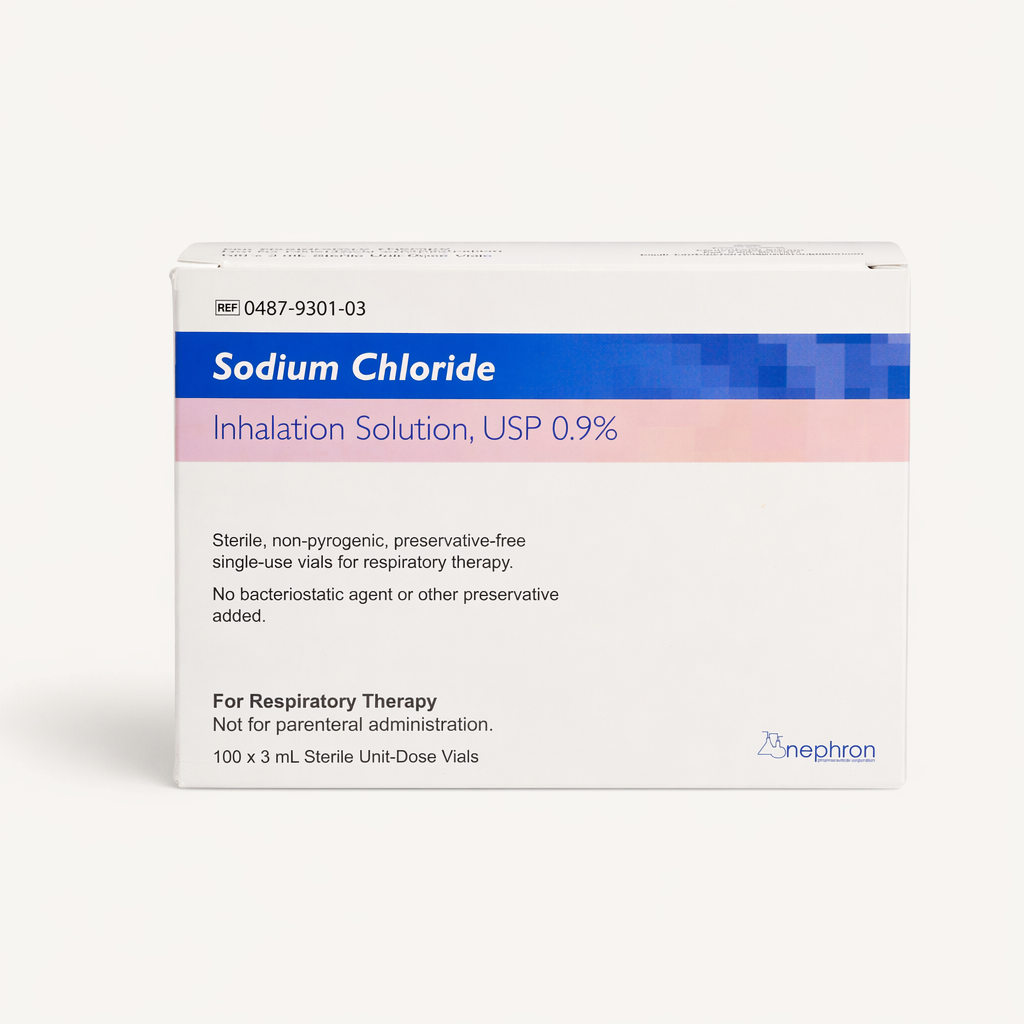
How It Works
Sodium chloride is a mucolytic, a medical term for a mucus thinner. When you inhale the saline mist, the salt content acts like a sponge, drawing extra water into the lungs and airways. This makes the mucus thinner and less sticky, so it’s easier to expel with less effort. Moistening the airways also makes it more comfortable to breathe.
| Quick Facts | |
|---|---|
| Common Brands | HyperSal, NebuSal, PulmoSal |
| Drug Class | Mucolytic, respiratory agent |
| Generic Status | Generic is available |
| Availability | Prescription and over-the-counter |
Dosing
The recommended dosage and frequency for sodium chloride inhalation solution vary depending on the severity of your breathing condition. Providers may recommend administering the treatment multiple times daily.
Your provider or pharmacist can walk you through exactly how to use the nebulizer, but here are some general steps:
- Wash your hands with soap and water.
- Place the nebulizer on a flat surface and connect the components.
- Check the sodium chloride solution to ensure it is clear and free of particles. Confirm that it is not expired.
- Twist off the cap of the sodium chloride vial.
- Empty the solution into the nebulizer cup.
- Turn on the nebulizer and sit upright.
- Place the mouthpiece in your mouth between your teeth, or place the face mask over your face.
- Start inhaling slowly and continue doing so until there is no more mist.
- Clean and disinfect your nebulizer.
Note: Dosing information below is educational only. Your prescribing physician will determine your specific dose based on your individual health needs. Always follow your healthcare provider’s instructions for exact dosing.
Uses
FDA-Approved Uses
Sodium chloride inhalation solution is FDA-approved for use with a nebulizer to help thin and loosen mucus in the airways, making it easier to clear secretions and breathe more comfortably. It may also be used to dilute other inhaled medications before nebulizer administration.
Off-Label Uses
You may see sodium chloride inhalation solution prescribed for uses that are not “FDA-approved.” This is a very common and legal practice called “off-label” prescribing, where a doctor uses their clinical judgment to prescribe a drug for a different (but well-researched) purpose.
Common off-label uses include:
- Non-cystic fibrosis bronchiectasis: Nebulized hypertonic or isotonic saline may be used to help loosen and clear mucus in patients who have difficulty coughing up sputum. Treatment is often given with a bronchodilator beforehand to reduce the risk of airway irritation.
- Primary ciliary dyskinesia: Hypertonic saline inhalation may be used to support mucus clearance.
Side Effects
Like all medications, sodium chloride inhalation solution can cause side effects. Some common side effects may improve over time as your body adjusts to the medication. Other side effects may be serious and require medical attention.
Common Side Effects
- Coughing
- Throat irritation
- Salty or unpleasant taste in the mouth
- Runny nose
Serious Side Effects
Serious side effects are rare, but it’s important to know what to look for if they do occur. Stop using sodium chloride inhalation solution and call your doctor immediately if you experience severe allergic reactions. Symptoms include swelling of the face, lips, tongue, or throat; difficulty breathing or swallowing; racing heart; severe rash or itching; and/or fever.
Call your doctor immediately if you experience any concerning or prolonged symptoms.
Pharmacist Tips
Inspect The Solution Before Each Dose
Before pouring the solution into your nebulizer cup, check to make sure it is completely clear and colorless. If the liquid is cloudy, discolored, or contains particles, throw it away and open a fresh vial.
The Vials Are Designed For Single-Use Only
They do not contain preservatives to ward off bacteria. You should open a vial only when you are immediately ready to use it. Discard any leftover liquid, even if there’s some left in the vial or nebulizer cup.
Clean Your Nebulizer After Each Use
This helps prevent lung infections. Follow the specific cleaning guidelines provided by the nebulizer’s manufacturer.
The Solution Is For Inhalation Use Only
Do not ingest the liquid orally, inject it, or apply it to other areas of the body. Ensure you are sitting upright and breathing slowly and deeply until the machine stops producing mist.
Store At Room Temperature
Sodium chloride inhalation solution should be stored in its original vials at 59°F to 86°F (15°C to 30°C) in a cool, dry place away from light.
Tell Your Provider If You’re Pregnant Or Breastfeeding
They can advise whether this medication is safe for you to use.
Try To Avoid Missing A Dose
If you miss a dose of sodium chloride inhalation solution, take it as soon as you remember, unless it is almost time for your next dose. In that case, skip the missed dose and only take your next dose as usual. Do not take double or extra doses of sodium chloride to make up for a missed one.
Drug Interactions
Sodium chloride for nebulization is not expected to cause many interactions. However, it may still interact with certain medicines or supplements.
Avoid mixing sodium chloride with other nebulized medications in the same machine unless your healthcare provider explicitly advises you to do so.
Always give your doctor and pharmacist a complete list of all your medications, vitamins, and supplements to check for potential interactions.
FAQs
What is the practical difference between the 0.9%, 3%, and 7% concentrations of sodium chloride?
The 0.9% concentration is known as “normal saline” and is most often used to moisten the airways and gently ease breathing. The higher strengths (like 3%, 6%, 7%, and 10%) have a higher salt content. They thin and loosen thick mucus deep in the chest, which can help with conditions like cystic fibrosis.
Why should I use my albuterol inhaler before using this saline nebulizer?
Sodium chloride is sometimes used as a part of a broader treatment plan alongside other medications like albuterol. Your provider will give you specific instructions on the order in which to use your inhalers and nebulizers to ensure the medications are absorbed effectively.
Is it normal for this treatment to trigger a coughing fit as soon as I start inhaling it?
Yes, a mild cough is a common side effect of this treatment. The medication works by drawing water into your lungs to loosen sticky mucus, which naturally triggers a productive cough to help your body clear the mucus (sputum) from your airways.
Can I mix this liquid in the same nebulizer cup as my other breathing medications?
Avoid mixing sodium chloride with other nebulized medications without asking your provider or pharmacist first.
How long does a standard nebulizer treatment usually take to finish?
A standard nebulizer session involves taking slow, deep breaths until no more mist comes out of the machine. Depending on how much liquid is in the nebulizer cup, this process may take between 10 and 20 minutes.
Do I need to store these plastic vials in the refrigerator?
No, the vials do not require refrigeration. Store them at room temperature, ideally between 59°F and 86°F. Be sure to keep them away from excessive heat and avoid freezing them.
What should I do if my throat or chest suddenly feels tight while inhaling the mist?
If you suddenly experience chest tightness, throat tightness, wheezing, or difficulty breathing, you should stop the treatment immediately. Seek medical attention right away, as these may be signs of a serious reaction.
Can I make my own saline solution at home to save money?
It is heavily advised against. Prescription sodium chloride inhalation solutions are sterile and preservative-free to protect your lungs. Homemade solutions carry a high risk of bacterial contamination, which can cause severe lung irritation or dangerous respiratory infections.
How many times a day should I use this nebulizer treatment?
There is no single standardized dosage regimen. The frequency of your treatments will depend on your individual health needs. Your prescribing healthcare provider will determine the exact dosing schedule that is right for you.
How do I clean and disinfect the nebulizer cup after using saltwater?
It is important to clean your nebulizer machine after every use. Follow the cleaning and disinfecting instructions in your nebulizer manual to ensure that it is thoroughly sanitized.
Will using this inhalation solution cause my blood pressure to spike due to the high sodium content?
Blood pressure spikes are not a common side effect of inhaled sodium chloride. However, the solution can occasionally cause feelings of restlessness or a racing heart. If you have underlying cardiovascular issues, discuss them with your healthcare provider before starting treatment.
Is it safe to use this specific breathing treatment if I am currently pregnant or breastfeeding?
If you are pregnant, planning to become pregnant, or breastfeeding, inform your healthcare provider. They will review your medical history and let you know if using sodium chloride inhalation solution is the safest option for you.
Does this treatment kill the bacteria in my lungs, or just help me cough it out?
Sodium chloride is a mucolytic and has no antibacterial properties. It does not kill bacteria. It is designed to add moisture to the mucus in your lungs, thinning it out so that you can more easily cough it up.
Comparable Medications
Sodium chloride inhalation solution, hypertonic saline, albuterol (ProAir/Ventolin), dornase alfa (Pulmozyme), budesonide (Pulmicort)?
There are several medications that may be used in respiratory treatment plans, depending on the underlying condition and treatment goals.
Hypertonic saline
A stronger concentration of saline used to help draw water into the airways and loosen thick mucus. It is often used for airway clearance in conditions such as bronchiectasis or cystic fibrosis.
Albuterol HFA
From $43.99
A short-acting bronchodilator used to relax airway muscles and improve breathing. It does not thin mucus but may be used before saline treatments to help open the airways.
Dornase alfa
An inhaled medication that breaks down DNA in mucus, helping reduce thickness of airway secretions. It is primarily used in cystic fibrosis.
Budesonide
An inhaled corticosteroid used to reduce airway inflammation and help prevent asthma symptoms. It does not directly affect mucus clearance.
We Have Sodium Chloride Inhalation Solution in Stock. Get Yours Today!
Important: Information on this page is for educational purposes only. Prescribing decisions are made by independent, licensed providers. TelyRx operates technology-enabled pharmacies and a telehealth platform that connects patients with licensed providers. Prescriptions, when provider-approved and issued, are filled and shipped by TelyRx-affiliated pharmacies. We do not employ physicians or make prescribing decisions. Learn more about our editorial standards here.