

How It Works
Ropinirole functions by acting as a substitute for dopamine in the brain. Because it has a similar structure to this natural chemical, it can bind to dopamine receptors and assist the brain in reacting as if dopamine were present.
The medication manages Parkinson’s disease and RLS by balancing the chemical environment in the parts of the brain responsible for coordination.
By activating dopamine receptors, ropinirole helps reduce the physical signs of Parkinson’s disease, such as tremors and muscle rigidity. For those with restless legs syndrome, the medication helps calm the overactive sensory signals that cause discomfort and the urge to move.
The extended-release version releases the drug slowly over 24 hours to maintain a constant level of medication in the blood.
| Quick Facts | |
|---|---|
| Common Brands | Requip (IR), Requip XL (ER) |
| Drug Class | Dopamine agonist |
| Generic Status | Generic version available |
| Availability | Prescription only |
Dosing
Ropinirole dosing is individualized. Providers typically recommend a “start low and go slow” approach to allow the body to adjust, beginning a person on one dose, then increasing it over time. Ropinirole is available in the following doses:
- Immediate-release (IR) tablets: 0.25 mg, 0.5 mg, 1 mg, 2 mg, 3 mg, 4 mg, and 5 mg.
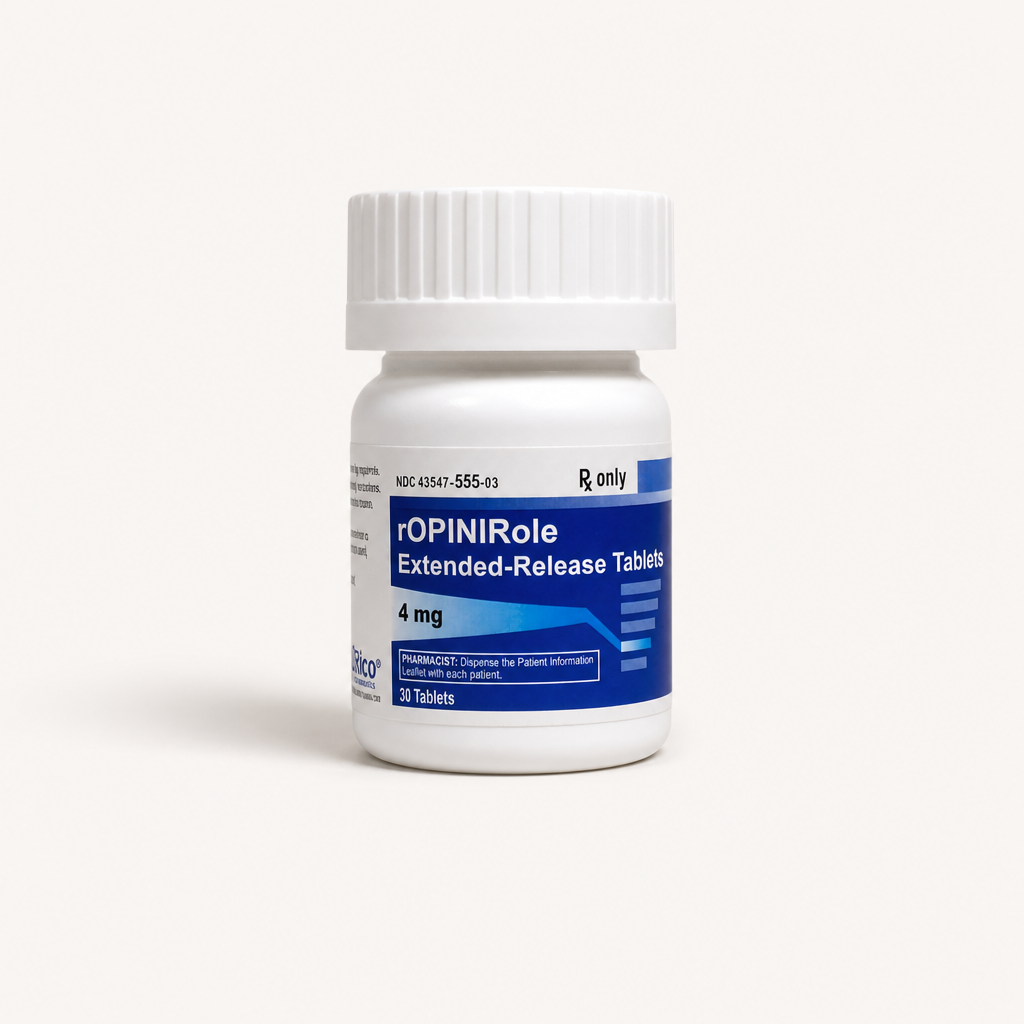
- Extended-release (ER) tablets: 2 mg, 4 mg, 6 mg, 8 mg, and 12 mg.
The frequency and timing of your dose may depend on which form you are taking and the specific condition being managed.
- For Parkinson’s disease (IR): The immediate-release tablets are usually taken three times daily. Standard guidelines suggest starting at 0.25 mg per dose and increasing the amount over several weeks.
- For Parkinson’s disease (ER): The extended-release tablets are taken once daily. These must be swallowed whole to ensure the medicine is released slowly over 24 hours.
- For restless legs syndrome: Ropinirole IR is generally taken once a day, typically one to three hours before bedtime. The maximum recommended dose for this condition is generally 4 mg per day.
Note: Dosing information below is educational only. Your prescribing physician will determine your specific dose based on your individual health needs. Always follow your healthcare provider’s instructions for exact dosing.
Uses
FDA-Approved Uses
Ropinirole is FDA-approved for the treatment of Parkinson’s disease. This includes managing tremors, stiffness, and slowed movement.
Additionally, the immediate-release version is FDA-approved for the treatment of moderate-to-severe primary restless legs syndrome (RLS).
Off-Label Uses
You may see ropinirole prescribed for uses that are not “FDA-approved.” This is a very common and legal practice called “off-label” prescribing, where a doctor uses their clinical judgment to prescribe a drug for a different (but well-researched) purpose.
Providers may sometimes prescribe ropinirole off-label to help manage side effects caused by other medications, such as restlessness caused by some antidepressants.
Side Effects
It is common for the body to go through a bit of an adjustment period when you first start taking ropinirole. You might notice some mild side effects as your system gets used to the medication, though many of these typically fade on their own over time.
Common Side Effects
- Nausea and vomiting
- Dizziness or lightheadedness
- Extreme sleepiness
- Upset stomach
- Feeling unusually weak
- Swelling in the legs
- Increased sweating
Serious Side Effects
Serious side effects are rare, but it’s important to know what to look for if they do occur. Call your doctor immediately if you experience:
- Sudden sleep attacks: Falling asleep suddenly during daily activities like driving.
- Orthostatic hypotension: A sudden drop in blood pressure when standing up, causing fainting.
- Hallucinations and confusion: Seeing or hearing things that are not there.
- Compulsive behaviors: Intense urges to gamble, spend money, or eat excessively.
- Worsening of RLS symptoms: Symptoms starting earlier in the day or becoming more intense.
- Withdrawal symptoms: High fever or muscle stiffness if stopped too quickly.
Call your doctor immediately if you experience any concerning or prolonged symptoms.
Pharmacist Tips
Take With Food
If you experience nausea, try taking your dose with a small snack to settle your stomach.
Rise Slowly
To avoid dizziness or fainting, take your time moving from a lying or sitting position to standing.
Swallow Whole
Do not crush, chew, or split extended-release (ER) tablets, as this can release too much medication at once.
Avoid Alcohol
Drinking alcohol while taking this medication can significantly increase dizziness and the risk of sudden sleepiness.
Watch for Behavior Changes
Tell a family member or friend to watch for changes in your behavior, such as new urges to gamble or shop excessively.
Do Not Stop Abruptly
Always talk to your doctor before stopping this medicine, as it requires a slow taper to prevent serious withdrawal.
Drug Interactions
Ropinirole can interact with certain substances, especially those that affect the liver or the central nervous system. For example:
- Cigarette smoking: Smoking can make ropinirole less effective.
- Hormone therapy: Medications with estrogen can increase ropinirole levels in the blood.
- Antipsychotics: Some mental health medications can block the effects of ropinirole.
- Stomach medications: Drugs like metoclopramide can interfere with ropinirole.
- Ciprofloxacin: This antibiotic can increase the amount of ropinirole in your system.
Always give your doctor and pharmacist a complete list of all your medications, vitamins, and supplements to check for potential interactions.
FAQs
What is the difference between the immediate-release (IR) and extended-release (ER) versions of ropinirole?
The IR version is taken multiple times a day for Parkinson’s or once a day for RLS. The ER version is taken once a day for Parkinson’s and releases slowly over 24 hours.
How long does it typically take for this medication to stop the crawling feeling in my legs at night?
Most people feel effects within 1.5 to 2 hours after a dose.
Is it normal to feel nauseous after taking my scheduled dose?
Nausea is a common side effect that often improves as your body gets used to the drug.
Can I take ropinirole with a meal or a snack to prevent stomach upset?
Yes. Taking it with food does not change how it works and can help reduce nausea.
If I forget my dose, should I double up the next day?
No. Never take a double dose. If you miss a dose, resume your regular schedule.
Is it true this medication can cause unusual side effects like compulsive behaviors?
Yes. In some people, it can trigger intense urges to gamble, shop, eat, or engage in other impulsive acts.
Can I safely split or crush the extended-release tablets if they are too large to swallow?
No. This destroys the slow-release mechanism.
How long does it usually take to see a noticeable improvement in Parkinson’s disease tremors or stiffness?
It may take a month or longer to reach the dose that provides the most benefit.
Will drinking alcohol or having a glass of wine make the sleepiness significantly worse?
Alcohol increases drowsiness and the risk of a sudden drop in blood pressure.
Does ropinirole commonly cause weight gain?
It is not a direct side effect, but compulsive eating behaviors can lead to weight gain.
Is there a risk that my restless legs syndrome will actually get worse if I take this every night?
Yes. Some people experience augmentation, where symptoms start earlier in the day.
What happens if I stop taking ropinirole without tapering the dose down first?
Stopping abruptly can cause dangerous withdrawal symptoms like high fever and muscle rigidity.
Can I take over-the-counter sleep aids like melatonin at the same time?
Check with your provider first, as combining medications that cause sleepiness can be dangerous.
Does ropinirole interact with blood pressure pills or antidepressant medications?
Yes. It may cause blood pressure to drop too low or interfere with the action of antidepressants.
Are generic ropinirole tablets just as effective as the brand names Requip and Requip XL?
Yes. They are required to have the same active ingredients and effectiveness.
Why do I have to slowly increase my dose over several weeks instead of starting at the target dose?
This helps minimize side effects like nausea and dizziness.
Comparable Medications
Pramipexole (Mirapex), Carbidopa/Levodopa (Sinemet), Gabapentin (Neurontin), or Rotigotine (Neupro Patch)?
Pramipexole
A similar dopamine agonist that treats both Parkinson's and RLS.
Carbidopa/levodopa
A common treatment for Parkinson's. It converts into dopamine in the brain.
Gabapentin
Not a dopamine medication. Often used for RLS if dopamine agonists are not tolerated.
Rotigotine
A dopamine agonist delivered through a patch for continuous 24-hour release.
We Have Ropinirole IR/ER in Stock. Get Yours Today!
Important: Information on this page is for educational purposes only. Prescribing decisions are made by independent, licensed providers. TelyRx operates technology-enabled pharmacies and a telehealth platform that connects patients with licensed providers. Prescriptions, when provider-approved and issued, are filled and shipped by TelyRx-affiliated pharmacies. We do not employ physicians or make prescribing decisions. Learn more about our editorial standards here.