

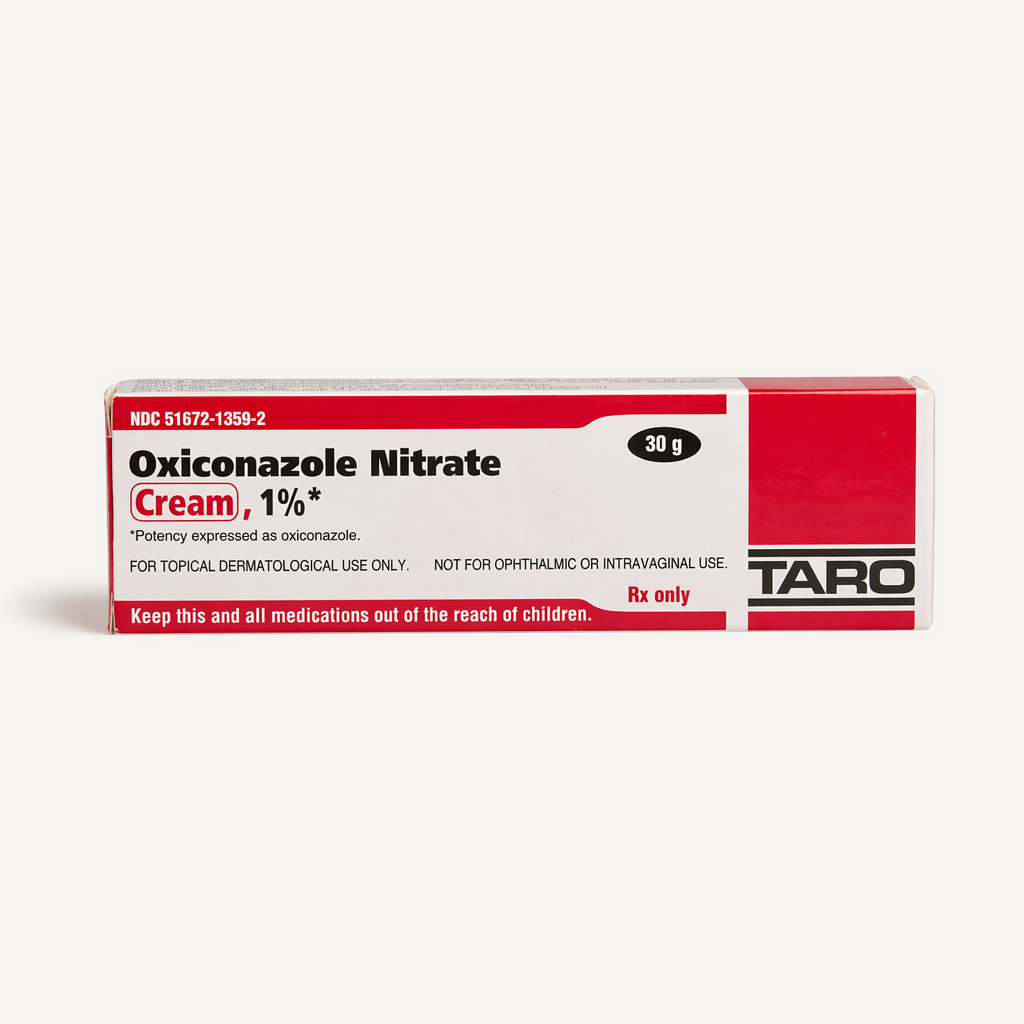
How It Works
Oxiconazole nitrate works by inhibiting the synthesis of ergosterol, an essential building block of fungal cell membranes. Without ergosterol, fungi cells eventually die.
By preventing the growth and survival of fungi, oxiconazole nitrate reduces the skin’s inflammatory response. This helps reduce redness, scaling, and the burning sensation associated with fungal infections of the skin.
| Quick Facts | |
|---|---|
| Common Brands | Oxistat |
| Drug Class | Azole antifungal (imidazole derivative) |
| Generic Status | Generic version available (cream formulation) |
| Availability | Prescription only |
Dosing
The choice between oxiconazole nitrate cream or lotion often depends on the location of the infection. Lotions are used on hairy areas or large surface areas. Dosage depends on the condition being treated.
- Treatment for jock itch and ringworm: Per standard guidelines, people with jock itch or ringworm are advised to apply a thin layer of topical medication to the affected area once or twice daily for 2 consecutive weeks.
- Treatment for athlete’s foot: For treating athlete’s foot, providers typically recommend applying the topical once or twice a day continuously for 1 month. This longer treatment course helps ensure the infection is cleared from the thicker skin on the feet.
- Treatment for tinea versicolor: Doctors usually recommend their patients with tinea versicolor to apply the topical once or twice daily for 2 weeks.
- Proper application: Per standard guidelines, patients are advised to first wash and thoroughly dry the infection site before application. Use enough medication to cover the infection and roughly 1 inch of surrounding skin. After application, wash your hands to prevent the spread of fungus to other areas of their body.
Note: Dosing information below is educational only. Your prescribing physician will determine your specific dose based on your individual health needs. Always follow your healthcare provider’s instructions for exact dosing.
Uses
FDA-Approved Uses
Oxiconazole nitrate is FDA-approved for topical treatment of the following:
- Tinea pedis (athlete’s foot)
- Tinea corporis (ringworm)
- Tinea cruris (jock itch)
- Tinea versicolor
Off-Label Uses
You may see oxiconazole nitrate prescribed for uses that are not “FDA-approved.” This is a very common and legal practice called “off-label” prescribing, where a doctor uses their clinical judgment to prescribe a drug for a different (but well-researched) purpose.
Common off-label uses of oxiconazole nitrate currently found in clinical research and practice include:
- Cutaneous candidiasis: While oxiconazole nitrate is not primarily indicated for localized yeast infections of the skin, some providers may prescribe the topical if other treatments have failed.
- Otomycosis: Specialists may use a small amount of oxiconazole nitrate to treat fungal infections of the external ear canal, though close medical supervision is required.
Side Effects
Oxiconazole nitrate acts locally, so patients tend to tolerate the topical well, and the risk of systemic side effects is low. However, issues may still arise.
Common Side Effects
Common side effects of using oxiconazole nitrate cream or lotion medication include:
- Pruritus, or itching at the application site
- Mild, temporary burning or stinging after the topical is applied
- Mild redness or irritation of the treated skin (erythema)
Serious Side Effects
Serious side effects are rare, but it’s important to know what to look for if they do occur. Serious side effects of using oxiconazole nitrate may include:
- Contact dermatitis: Oxiconazole nitrate can cause contact dermatitis at the site of application. Symptoms include severe blistering, oozing, or intense swelling on or around the treated area.
- Folliculitis: Some patients report small, red, pus-filled bumps around the hair follicles in the infected area after applying oxiconazole nitrate lotion or cream.
- Severe allergic reaction: As with a wide range of medications, oxiconazole nitrate can lead to anaphylaxis for people who are allergic to one or more of the topical’s active ingredients.
Call your doctor immediately if you experience any concerning or prolonged symptoms.
Pharmacist Tips
Consistency Is Key
Fungal spores are resilient and may survive the first few days of topical treatment. Complete the full course of treatment to prevent the infection from returning.
Wear Breathable Clothing
Fungi thrive in warm, damp environments. While treating jock itch or athlete’s foot, patients are advised to wear loose cotton clothing and moisture-wicking socks to keep the area dry.
Avoid Bandaging
It is not recommended to wrap or seal the application site with airtight bandages unless your doctor specifically instructs you to do so. Covering with bandages, also known as occlusion, can increase absorption and cause skin breakdown around the infection.
Shake The Lotion
If using oxiconazole nitrate in 1% lotion form, patients are advised to shake the bottle well before each application. This helps ensure the medication is evenly distributed.
External Use Only
Oxiconazole nitrate cream and lotion is specifically intended for superficial skin application. Per standard guidelines, patients are advised to avoid letting the topical come into contact with their eyes, nose, mouth, or vagina.
Drug Interactions
Oxiconazole nitrate is applied topically to the skin’s outer surface, and the risk of absorption into the bloodstream is low. However, some interactions can occur. Known interactions with oxiconazole nitrate include:
- Other topical products: Patients are advised to avoid applying other creams, lotions, or ointments — including cosmetics and sunscreen — to the same areas where they’ve applied oxiconazole nitrate. These other topicals can interfere with the medication’s absorption, especially if applied at the same time as oxiconazole nitrate.
- Topical steroids: It is not advised to use hydrocortisone or other steroid creams on the same area as oxiconazole nitrate unless your doctor specifically instructs you to do so. Steroids can mask fungal infections, allowing them to spread by suppressing the body’s immune response.
Always give your doctor and pharmacist a complete list of all your medications, vitamins, and supplements to check for potential interactions.
FAQs
What is the difference between oxiconazole nitrate cream and oxiconazole nitrate lotion?
Oxiconazole nitrate cream and lotion share the same active ingredient and are both 1% formulations. The cream is thicker, so patients generally prefer it for dry or scaly skin. The lotion is thinner and spreads more easily over large areas, and many find it more comfortable for hairy areas like the chest and scalp.
Can oxiconazole nitrate be applied to the face or scalp to treat fungal infections?
Yes, oxiconazole nitrate can be applied to the face or scalp if a provider has diagnosed a fungal infection in these areas. Oxiconazole nitrate does not contain a steroid, so the risk of thinning skin in areas like the face is low.
How many times a day should oxiconazole nitrate be applied for the treatment of severe athlete’s foot?
For treating athlete’s foot with oxiconazole nitrate, doctors typically recommend a 1-month course with one to two applications per day. If patients commit to the daily regimen, this course can clear severe athlete’s foot infections.
Does oxiconazole nitrate treat vaginal yeast infections or oral thrush?
No, oxiconazole nitrate is not meant to treat vaginal yeast infections or oral thrush. The topical is formulated for external use on the skin only. Your doctor can recommend a different medication for internal use and application.
Should you cover the application site with a bandage?
No, it is not advised to cover the application site with a bandage after using oxiconazole nitrate topical cream or lotion. This can cause excessive medication absorption and potentially lead to skin breakdown.
Is oxiconazole nitrate effective against tinea versicolor?
Yes, oxiconazole nitrate is effective against tinea versicolor. The topical medication is FDA-approved to treat the discolored patches associated with this fungal infection.
What should I do if there’s no improvement after two weeks of utilizing oxiconazole nitrate?
If you have completed your oxiconazole nitrate treatment course and are still experiencing symptoms, standard guidelines recommend contacting your provider. This can indicate a resistant fungal strain or a skin condition like eczema or psoriasis that requires different treatment.
Can applying oxiconazole nitrate cause contact dermatitis?
Yes, contact dermatitis around the application site is a known side effect of using oxiconazole nitrate topical medication. Symptoms of this condition include severe blistering, oozing, or intense swelling around the treated area.
Is it safe to use oxiconazole nitrate during pregnancy or while breastfeeding?
The effects of oxiconazole nitrate on pregnant and breastfeeding patients have not been fully established, so risk cannot be ruled out. Oxiconazole nitrate is known to pass into breast milk. Speak with your doctor about the potential risks of using any new medication if you are pregnant, planning to become pregnant, or breastfeeding.
Does oxiconazole nitrate provide any antibacterial or antiviral treatment for impetigo or herpes?
No, oxiconazole nitrate does not treat impetigo or herpes. This topical medication is antifungal. It does not provide any antibacterial or antiviral properties.
Comparable Medications
Oxiconazole Nitrate, Clotrimazole, Terbinafine, Clotrimazole/Betamethasone, or Nystatin?
Oxiconazole nitrate is a topical medication used to treat fungal infections like athlete’s foot, ringworm, jock itch, and tinea versicolor. Your doctor may recommend an alternative to oxiconazole nitrate based on the condition being treated, as well as other factors like your age and medical history. Alternatives to oxiconazole nitrate include:
Clotrimazole
This is an over-the-counter antifungal medication often used as a first-line treatment for fungal infections. While often effective, clotrimazole is less potent than oxiconazole nitrate and typically requires more daily applications for certain fungal conditions.
Terbinafine
From $57.49
Sold under the brand name Lamisil, terbinafine is an allylamine medication used to treat athlete's foot and ringworm. It tends to act faster for certain fungal infections, but oxiconazole nitrate has a broader spectrum of activity against certain yeasts.
Clotrimazole / Betamethasone Lotion
From $179.99
Sold under the brand name Lotrisil, the clotrimazole/betamethasone combination topical contains an antifungal and a steroid. It can reduce itching more quickly, but it can also lead to skin thinning. Oxiconazole nitrate is a pure antifungal that is safer for long-term use, with no risk of thinning or other steroid side effects.
Nystatin Ointment
From $28.99
Nystatin is primarily used for yeast infections, and is ineffective against the dermophytic fungal infections that cause ringworm and athlete's foot. Oxiconazole nitrate has a wider treatment profile that covers yeast and dermophytic infections.
We Have Oxiconazole Nitrate in Stock. Get Yours Today!
Important: Information on this page is for educational purposes only. Prescribing decisions are made by independent, licensed providers. TelyRx operates technology-enabled pharmacies and a telehealth platform that connects patients with licensed providers. Prescriptions, when provider-approved and issued, are filled and shipped by TelyRx-affiliated pharmacies. We do not employ physicians or make prescribing decisions. Learn more about our editorial standards here.