

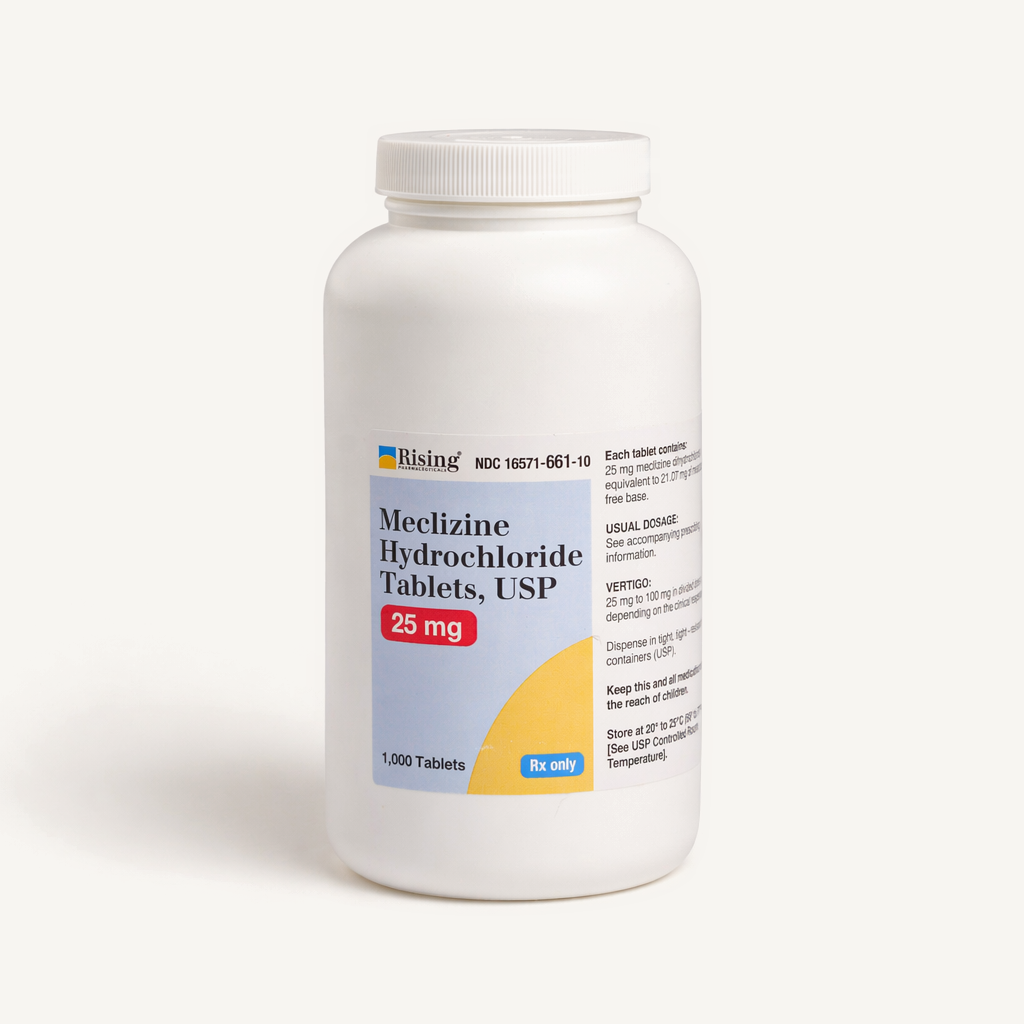
How It Works
Meclizine suppresses nausea by preventing histamine from binding to receptors in the brain region that control nausea.
Additionally, meclizine can calm the inner ear and the balance-regulating system in the brain. This can relieve dizziness and discomfort associated with vertigo and motion sickness.
| Quick Facts | |
|---|---|
| Common Brands | Antivert, Bonine for Motion Sickness, Dramamine Motion Sickness Less Drowsy |
| Drug Class | Antihistamine, Antiemetic |
| Generic Status | Generic is available |
| Availability | Prescription only and over-the-counter (OTC) |
Dosing
For motion sickness, standard guidelines recommend an oral dose of 25-50 mg once daily. Providers recommend taking this dose about one hour before travel or the start of an activity that may trigger motion sickness.
For treating vertigo, which requires a prescription form of meclizine, the typical daily dosage ranges from 25 mg to 100 mg. This total amount is usually divided into multiple smaller doses taken throughout the day.
Meclizine is supplied in both standard oral tablets and chewable tablets of various strengths, including 12.5 mg, 25 mg, and 50 mg. Your doctor can recommend a specific formulation and dosage schedule.
Note: Dosing information below is educational only. Your prescribing physician will determine your specific dose based on your individual health needs. Always follow your healthcare provider’s instructions for exact dosing.
Uses
FDA-Approved Uses
The FDA approves meclizine as an over-the-counter treatment for nausea, vomiting, and dizziness caused by motion sickness. It is also FDA-approved as a prescription medication to manage the symptoms of vertigo, a condition in which you or your surroundings feel as if they are moving or spinning.
Off-Label Uses
You may see meclizine prescribed for uses that are not “FDA-approved.” This is a common and legal practice called “off-label” prescribing, where a doctor uses their clinical judgment to prescribe a drug for a different (but well-researched) purpose.
For example, healthcare providers may prescribe meclizine off label to treat nausea and vomiting associated with morning sickness during pregnancy.
Side Effects
Like all medications, meclizine can cause side effects. Some common side effects may improve over time as your body adjusts to the medication. Other side effects may be serious and require medical attention.
Common Side Effects
- Drowsiness or sleepiness
- Dry mouth
- Headache
- Fatigue or tiredness
- Vomiting
- Constipation
- Difficulty urinating
- Blurred vision
Serious Side Effects
Serious side effects are rare, but it’s important to know what to look for if they do occur.
- Severe allergic reactions: Symptoms of an allergic reaction to meclizine can include trouble breathing, wheezing, hives, a fast heart rate, and swelling of the face, lips, tongue, or throat. Seek immediate medical attention for an allergic reaction to meclizine.
- Decreased alertness and coordination: Meclizine may cause extreme sleepiness and dizziness that can impair your ability to think, focus, or react safely to your environment.
- Worsening of glaucoma: Individuals with glaucoma may experience a worsening of their condition, including sudden eye pain, vision loss, or seeing halos around lights.
- Urinary issues: Meclizine can exacerbate symptoms of an enlarged prostate, leading to difficulty urinating.
- Overdose symptoms: Accidentally taking too much meclizine can cause extreme sleepiness, a fast heartbeat, flushing, and vision changes.
Call your doctor immediately if you experience any concerning or prolonged symptoms.
Pharmacist Tips
Plan In Advance
If you are using meclizine to prevent motion sickness, take your dose about an hour before you start traveling or begin the activity that triggers symptoms.
Chew Chewable Tablets Completely
If your provider prescribes a chewable tablet, ensure you chew or crush it completely before swallowing. Do not swallow chewable tablets whole.
Take With Food If Needed
You can take meclizine with or without food, but taking it with a meal or milk may help reduce the chances of having an upset stomach.
Avoid Driving
Because meclizine can make you sleepy and dizzy, avoid driving, operating machinery, or performing tasks that require concentration until you know how the medication affects your body.
Avoid Alcohol
Do not drink alcohol while taking meclizine, as combining the two can severely impair coordination and heighten the risk of extreme drowsiness.
Check With Your Doctor If You Have Asthma
Discuss the use of meclizine with your healthcare provider if you have lung problems like asthma, emphysema, or chronic bronchitis, as the medication can worsen breathing issues.
Drug Interactions
Certain medications and substances can interact with meclizine, potentially altering how it works or increasing the risk of side effects.
- Central nervous system depressants: Medications that cause sleepiness, such as sleep aids, anxiety medications, and benzodiazepines, can interact with meclizine to worsen dizziness, drowsiness, and confusion.
- Other antihistamines: Taking meclizine at the same time as other allergy, cough, or cold medications that contain antihistamines can raise your risk of an overdose and lead to agitation and behavior changes.
- Opioid pain medications: Providers recommend against using opioid pain relievers with meclizine because of the potential for overlapping sedative interactions.
- Antidepressants and antipsychotics: Certain mental health medications, such as amitriptyline, fluoxetine, and tranylcypromine, may alter how meclizine is processed in the body.
- Muscle relaxants and seizure medications: Drugs used to relax muscles during surgery or to control seizures, like phenobarbital, can combine with meclizine to cause significant fatigue and sedation.
Always give your doctor and pharmacist a complete list of all your medications, vitamins, and supplements to check for potential interactions.
FAQs
How long before travel or motion should you take meclizine to prevent motion sickness?
Providers typically recommend taking meclizine about one hour before you start traveling or engaging in an activity that might cause motion sickness.
What is the difference between over-the-counter Bonine and prescription Antivert?
Bonine is an over-the-counter brand of meclizine typically used to prevent and treat nausea and dizziness caused by motion sickness. Antivert is a brand of prescription-strength meclizine specifically approved to treat the symptoms of vestibular vertigo.
Does meclizine treat nausea caused by food poisoning, stomach viruses, or chemotherapy?
Standard guidelines indicate that meclizine is primarily for nausea related to motion sickness and vertigo. In some cases, it is prescribed off-label for morning sickness. It is not considered a standard treatment for nausea caused by food poisoning, stomach viruses, or chemotherapy.
Is it safe to consume alcohol while taking a dose of meclizine?
Avoid alcohol while taking meclizine. Combining alcohol with meclizine can increase the risk of excess sleepiness and impair your thinking and reaction time.
How does meclizine interact with other central nervous system depressants, like sleep aids?
Taking meclizine alongside drugs that depress the central nervous system (such as sleep aids and some anxiety medications) can worsen side effects such as sleepiness and confusion.
Can taking meclizine exacerbate symptoms of an enlarged prostate or urinary retention?
Clinical data indicate that meclizine can worsen the symptoms of having an enlarged prostate gland. This may make it more difficult to pass urine.
How many times a day should meclizine be used for vestibular vertigo?
For the treatment of vestibular vertigo, guidelines recommend taking meclizine 4 times per day (about every 6 hours). Always follow the specific dosing schedule recommended by your doctor.
Can meclizine cause heart palpitations?
A fast heartbeat is a potential side effect of meclizine. It can also occur if someone takes too much of this medication.
Is meclizine considered safe for use during pregnancy to treat morning sickness?
Based on available data, providers suggest that meclizine does not appear to raise the risk for birth defects or pregnancy complications. In fact, it may be suggested as a treatment for morning sickness. However, patients should always consult their healthcare provider before using meclizine.
Should chewable meclizine tablets be taken with food or water?
Chewable meclizine tablets should be fully chewed before swallowing. These tablets can be taken with or without food and liquids. Some people find taking them with food helps prevent stomach discomfort.
How does meclizine affect people with asthma or COPD?
Reported data indicate that meclizine can worsen symptoms for individuals with lung conditions such as asthma, emphysema, or chronic bronchitis.
Comparable Medications
Meclizine, Dimenhydrinate (Dramamine Original Formula)?
Dimenhydrinate
While both OTC meclizine and dimenhydrinate are over-the-counter antihistamines used for motion sickness, data suggest that meclizine is less likely to cause sleepiness. In addition, the effects of meclizine typically last 8 to 24 hours, whereas dimenhydrinate typically must be taken every 4 to 6 hours.
We Have Meclizine in Stock. Get Yours Today!
Important: Information on this page is for educational purposes only. Prescribing decisions are made by independent, licensed providers. TelyRx operates technology-enabled pharmacies and a telehealth platform that connects patients with licensed providers. Prescriptions, when provider-approved and issued, are filled and shipped by TelyRx-affiliated pharmacies. We do not employ physicians or make prescribing decisions. Learn more about our editorial standards here.