

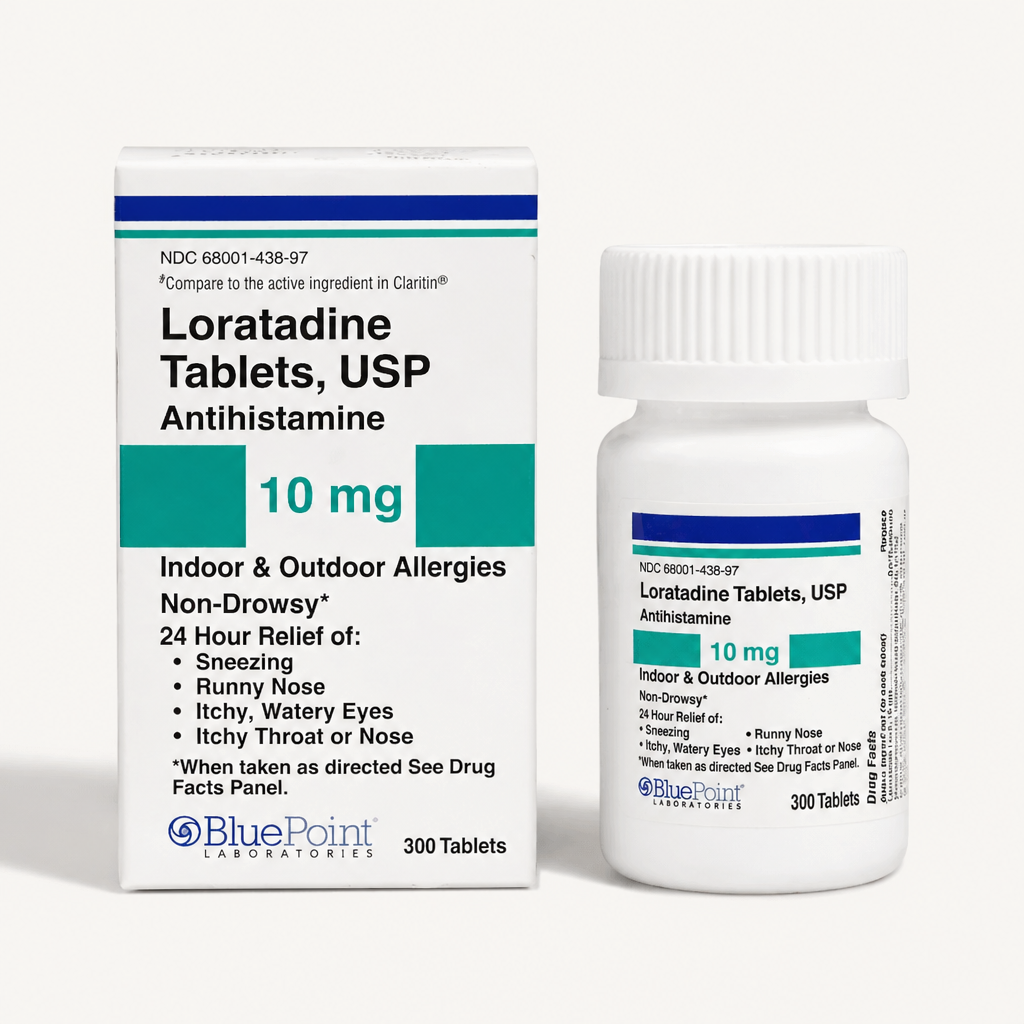
How It Works
Histamines are natural chemicals your immune system produces when an allergen is detected. When histamines bind with H1 receptors, they signal the body to produce defense mechanisms against the allergen, such as swelling, itching, and mucus production.
Loratadine works by blocking H1 receptors and preventing histamines from binding with them. Since the histamines cannot send their signals, the body will not produce the same reactions to the allergen.
| Quick Facts | |
|---|---|
| Common Brands | Claritin, Alavert |
| Drug Class | Antihistamine |
| Generic Status | Generic version available |
| Availability | OTC |
Dosing
Loratadine is formulated to provide relief from allergy symptoms for up to 24 hours. It is intended for once-daily use.
- Standard dose: The standard loratadine dose for adults is 10 mg per day.
- Oral tablet: Patients are advised to swallow oral loratadine tablets with water.
- Orally disintegrating tablet: Patients are advised to place the tablet on their tongue and allow it to dissolve.
- Chewable tablet: Per standard guidelines, it is recommended to completely chew or crush the tablet before swallowing.
- Liquid: Since standard household spoons are not considered an accurate way to measure liquid doses, providers generally recommend administering liquid loratadine with a calibrated oral syringe or medication cup.
Note: Dosing information below is educational only. Your prescribing physician will determine your specific dose based on your individual health needs. Always follow your healthcare provider’s instructions for exact dosing.
Uses
FDA-Approved Uses
Loratadine is FDA-approved to treat the seasonal and perennial nasal symptoms of allergic rhinitis, which include sneezing, runny nose, itchy/watery eyes, and an itchy nose or throat. The medication is also FDA-approved to relieve itching and reduce the number and size of hives associated with chronic urticaria.
Off-Label Uses
You may see loratadine prescribed for uses that are not “FDA-approved.” This is a very common and legal practice called “off-label” prescribing, where a doctor uses their clinical judgment to prescribe a drug for a different (but well-researched) purpose.
Common off-label uses for loratadine currently found in clinical research and practice include:
- Adjunct treatment for eczema: While loratadine is not a primary treatment for eczema, providers may recommend it to manage the intense itching associated with atopic dermatitis.
- Mild allergic reactions: Some providers use loratadine to manage minor skin reactions to food or other contact allergens in cases when systemic antihistamine support is needed.
Side Effects
People typically tolerate loratadine well, but issues can still arise.
Common Side Effects
Common side effects of taking loratadine include:
- Headache
- Drowsiness
- Fatigue
- Dry mouth
Serious Side Effects
Serious side effects are rare, but it’s important to know what to look for if they do occur. Serious side effects of taking loratadine can include:
- Liver or kidney issues: While rare, some patients have reported liver dysfunction after taking loratadine. Symptoms like jaundice (yellowing of the skin and eyes) warrant immediate medical attention.
- Accidental overdose: Symptoms of an accidental overdose of loratadine include a racing heart, poor coordination (ataxia), and agitation.
- Severe allergic reaction: As with many other types of medication, loratadine can produce a severe reaction in people who are allergic to one or more of the drug’s ingredients. Symptoms include hives, wheezing, difficulty breathing, and swelling of the face or tongue.
Call your doctor immediately if you experience any concerning or prolonged symptoms.
Pharmacist Tips
Consistency Is Important
If you have chronic allergies, taking loratadine daily is considered more effective at keeping your symptoms under control than taking the medication on an “as needed” basis.
Check For Drowsiness
While loratadine does not cause as much drowsiness as many older antihistamines, you may still feel tired after taking the medication. This can impact safety if you need to drive or operate machinery soon after taking your dose.
Check The Ingredients
Some chewable and orally disintegrating tablet forms of loratadine contain aspartame, which is a source of the amino acid phenylalanine. This can cause complications and health risks for people with phenylketonuria, a medical condition that makes the body unable to break down phenylalanine fully.
Doubling Up Is Never Advised
Per standard guidelines, patients are cautioned against taking loratadine alongside another antihistamine like diphenhydramine without consulting a professional. Doubling up these medications increases your risk of side effects like seizures and confusion.
Try With Food
Standard guidelines state loratadine can be taken with or without food. However, patients who experience gastrointestinal discomfort after taking loratadine on an empty stomach may be able to alleviate these issues with a light meal or snack at dosage time.
Drug Interactions
Loratadine has several known interactions with other medications and substances. These interactions include:
- Other antihistamines: Combining loratadine and other antihistamines significantly increases your risk of side effects and over-sedation.
- Central nervous system depressants: Medications for anxiety, sleep, or pain can have an additive effect when taken alongside loratadine. This potentially increases the risk of drowsiness.
- Alcohol: Alcohol is a central nervous system depressant that can heighten the sedative side effects of loratadine. Providers generally recommend abstaining from or limiting alcohol consumption while taking loratadine.
Always give your doctor and pharmacist a complete list of all your medications, vitamins, and supplements to check for potential interactions.
FAQs
What exactly does loratadine do to stop my allergies?
Loratadine blocks H1 histamine receptors in your body. This prevents histamines from binding to the receptors and signaling the body to produce swelling, hives, and other immune system responses to allergens.
Is loratadine truly “non-drowsy,” or will taking it still make me feel sleepy?
Loratadine is labeled as a non-drowsy or less-drowsy antihistamine, meaning it is less likely to cause drowsiness than older antihistamines. However, individual responses to loratadine vary, and some people still feel drowsy after taking the medication.
How long does it take for loratadine to kick in and stop my sneezing?
Loratadine typically begins to alleviate sneezing and other allergy symptoms within 1 to 3 hours of administration. People usually feel the medication’s full effect within 8 to 12 hours.
Can I take a loratadine every single day, or do I need to take breaks?
Yes, standard guidelines state loratadine is considered safe for daily use to manage chronic allergies. Talk to your doctor to determine if this regimen is safe for you.
Is it safe to take this allergy medicine if I am pregnant or actively breastfeeding?
Many providers refer loratadine as the safest antihistamine option for pregnant patients. However, patients are still advised to talk to their doctor before taking loratadine or any other medication for the first time while pregnant and breastfeeding.
Is it safe to drink alcohol after taking my daily loratadine pill?
Providers generally advise patients to limit or avoid consuming alcohol while taking loratadine. Alcohol can intensify loratadine’s sedative side effects and make you feel excessively drowsy.
Can I take over-the-counter Tylenol or Advil at the same time as loratadine?
Yes, standard guidelines state it is safe to take over-the-counter Tylenol or Advil at the same time as loratadine. These pain relievers are not known to interact with loratadine on a significant level.
What happens if I accidentally take two pills in one day?
Taking more than one loratadine pill per day can increase the risk of side effects like rapid heart rate, confusion, and agitation. If you are concerned about an accidental double dose, seek medical care.
Does taking this allergy medicine every day cause severe dry mouth or dry eyes?
Dry mouth is a listed side effect of loratadine. However, a small percentage of people who take the medication report dry mouth, and the symptoms are usually mild.
Can I use a nasal spray like Flonase while taking a loratadine pill?
Yes, standard guidelines state it is safe to use a nasal spray like Flonase at the same time you take a loratadine pill. Providers may recommend using a nasal corticosteroid such as Flonase alongside an oral antihistamine such as loratadine for more comprehensive allergy control.
Comparable Medications
Loratadine, Cetirizine, Fexofenadine, Claritin-D, or Diphenhydramine?
Loratadine is an over-the-counter antihistamine widely used to manage hay fever and hives. Other anti-allergy medications are available, and your doctor may recommend an alternative to loratadine based on your medical history and severity of symptoms. Loratadine alternatives include:
Cetirizine Tablets
From $22.99
Sold under the brand name Zyrtec, cetirizine is an over-the-counter antihistamine like loratadine. While cetirizine often works more quickly to alleviate allergy symptoms, it carries a higher risk of drowsiness than loratadine.
Fexofenadine Tablets
From $22.99
Fexofenadine, sold under the brand name Allegra, is a non-drowsy antihistamine similar to loratadine in terms of formulation and efficacy. Since fexofenadine is even less likely to cause drowsiness than loratadine, providers typically recommend it to patients who are particularly sensitive to sedative side effects.
Claritin-D
A combination medication containing loratadine and pseudoephedrine, a nasal decongestant. While it effectively manages allergies and reduces congestion, Claritin-D is usually not recommended for people with high blood pressure or heart conditions.
Diphenhydramine
Sold under the brand name Benadryl, diphenhydramine is a first-generation antihistamine known for high efficacy and a significant risk of drowsiness. Providers generally recommend using diphenhydramine for short-term, acute symptom relief rather than for long-term maintenance.
We Have Loratadine in Stock. Get Yours Today!
Important: Information on this page is for educational purposes only. Prescribing decisions are made by independent, licensed providers. TelyRx operates technology-enabled pharmacies and a telehealth platform that connects patients with licensed providers. Prescriptions, when provider-approved and issued, are filled and shipped by TelyRx-affiliated pharmacies. We do not employ physicians or make prescribing decisions. Learn more about our editorial standards here.