

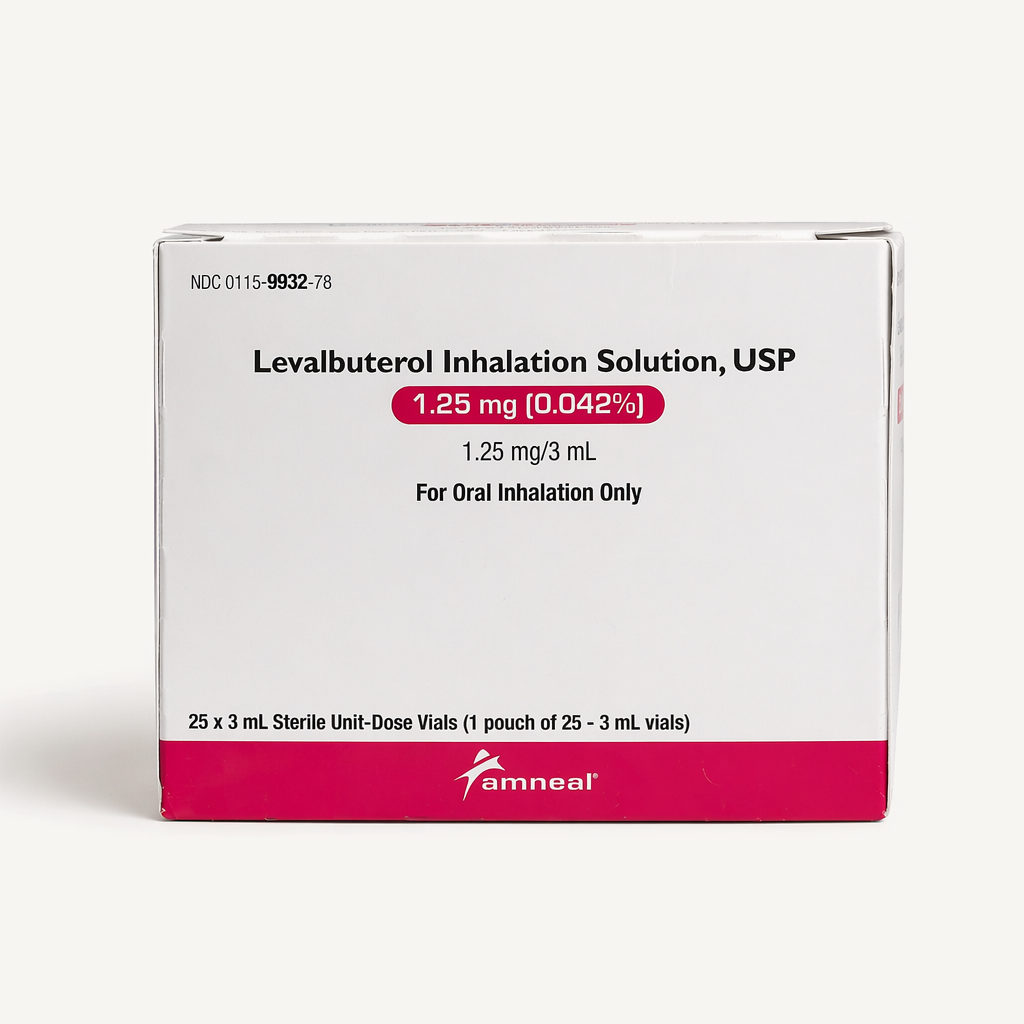
How It Works
Levalbuterol belongs to a class of drugs known as selective beta-2 adrenergic agonists. Its primary mechanism of action involves targeting the beta-2 receptors located on the smooth muscle cells of the airways. When the medication binds to these receptors, it triggers a chemical process that causes the muscles to relax.
What makes levalbuterol unique is its molecular structure. Standard albuterol is a mixture that contains two mirror-image molecules: the (R)-isomer and the (S)-isomer. Research indicates that the (R)-isomer is responsible for the beneficial opening of the airways, while the (S)-isomer may be inactive or even contribute to side effects like increased heart rate.
Levalbuterol contains only the (R)-isomer. By providing a purified dose of the active component, levalbuterol aims to provide the same breathing relief as albuterol but with a lower risk of the jittery feeling or racing heart that many patients find uncomfortable.
| Quick Facts | |
|---|---|
| Common Brands | Xopenex, Xopenex HFA |
| Drug Class | Short-acting beta-agonist (SABA); Bronchodilator |
| Generic Status | Generic version available |
| Availability | Prescription only |
Dosing
Levalbuterol inhalation solution comes in several dosage strengths:
- 0.31 mg/3 mL
- 0.63 mg/3 mL
- 1.25 mg/3 mL
- 1.25 mg/0.5 mL (concentrate)
The standard dose for adults is typically 0.63 mg administered three times a day, every 6 to 8 hours. For patients with more severe symptoms, a dose of 1.25 mg three times a day may be recommended.
The medication is used with a standard jet nebulizer connected to an air compressor. Each treatment is inhaled over a period of approximately 5 to 15 minutes until the mist stops. Following the exact frequency directed by a provider is essential, as overuse can lead to decreased effectiveness and increased heart-related risks.
Note: Dosing information below is educational only. Your prescribing physician will determine your specific dose based on your individual health needs. Always follow your healthcare provider’s instructions for exact dosing.
Uses
FDA-Approved Uses
Levalbuterol is FDA-approved for the treatment or prevention of bronchospasm in adults who have reversible obstructive airway disease, such as asthma.
Off-Label Uses
You may see levalbuterol prescribed for uses that are not “FDA-approved.” This is a very common and legal practice called “off-label” prescribing, where a doctor uses their clinical judgment to prescribe a drug for a different (but well-researched) purpose.
Providers may prescribe levalbuterol for the following off-label uses:
- COPD exacerbations: While specifically labeled for asthma, providers commonly recommend levalbuterol for patients with chronic obstructive pulmonary disease (COPD) to manage acute shortness of breath.
- Exercise-induced bronchospasm (EIB): Clinicians sometimes suggest a nebulizer treatment shortly before physical activity for patients who suffer from severe airway constriction during exercise.
Side Effects
Like all medications, levalbuterol can cause side effects. Many common symptoms are mild and improve over time as the body adjusts to the medication. However, other reactions can be more significant and require medical attention or a consultation with a provider to ensure the treatment remains safe and effective for the individual.
Common Side Effects
- Nervousness or tremors
- Headache
- Dizziness
- Sore throat or runny nose
- Increased heart rate or palpitations
- Muscle aches or cramps
- Nausea or vomiting
Serious Side Effects
Serious side effects are rare, but it’s important to know what to look for if they do occur. Contact your doctor if you experience:
- Paradoxical bronchospasm: In rare instances, this medication can cause an immediate tightening of the airways right after use.
- Heart complications: Significant increases in blood pressure, chest pain, or a dangerously irregular heart rhythm.
- Hypokalemia: A significant drop in blood potassium levels, which can lead to muscle weakness or heart issues.
- Severe allergic reaction: Symptoms include hives, rash, or swelling of the face, lips, tongue, or throat.
Call your doctor immediately if you experience any concerning or prolonged symptoms.
Pharmacist Tips
Maintain Equipment Cleanliness
Rinsing the nebulizer cup and mouthpiece with warm water after every use and letting them air dry helps prevent bacterial growth and clogs.
Monitor the Foil Pouch
Storing vials in their foil pouch protects them from light. Once a pouch is opened, the vials are supposed to be used within two weeks.
Check the Color
The solution is expected to be clear and colorless. If the liquid in the vial becomes discolored or cloudy, it is best to discard it and use a new one.
Avoid Mixing Medications
Refrain from mixing levalbuterol with other medications in the nebulizer cup unless a doctor specifically instructs otherwise.
Use a Mouthpiece or Mask
Make sure the mask fits snugly or the mouthpiece is held firmly between the teeth to help the maximum amount of mist reach the lungs.
Drug Interactions
Levalbuterol can interact with other substances, which may change how the medication works or increase the risk of side effects. For example:
- Beta-blockers: Medications like atenolol or propranolol can block the effects of levalbuterol and may cause severe narrowing of the airways.
- Diuretics: Using water pills with levalbuterol can increase the risk of low potassium levels (hypokalemia).
- Digoxin: Levalbuterol may decrease the levels of digoxin in the blood, potentially making the heart medication less effective.
- Antidepressants: Monoamine oxidase inhibitors (MAOIs) or tricyclic antidepressants used within the last two weeks can increase the cardiovascular effects of levalbuterol.
Always give your doctor and pharmacist a complete list of all your medications, vitamins, and supplements to check for potential interactions.
FAQs
What is the practical difference between using levalbuterol and standard albuterol in a nebulizer?
The main difference is that levalbuterol is a purified version containing only the active R-isomer of albuterol. While both are effective at opening airways, levalbuterol may be preferred for sensitive patients because it causes fewer heart-related side effects, such as a racing pulse or jitters.
Is it normal to experience a fast heart rate or shaky hands with this medication?
These are known side effects of beta-agonists. While they can be uncomfortable, they are often temporary. If the heart rate feels especially fast or chest pain occurs, seek medical attention.
How many times a day can I use levalbuterol during a flare-up?
Use levalbuterol as directed by your provider. Standard guidelines suggest using it up to three times a day, or every 6 to 8 hours. If the medication is required more frequently to breathe comfortably, contacting a provider is recommended, as this may indicate that the condition is worsening.
Do I need to dilute the liquid in the vial before putting it into the nebulizer cup?
Most levalbuterol vials come pre-diluted in a 3 mL solution and are ready for immediate use. Only the concentrated 0.5 mL version requires dilution with sterile saline. Check the prescription label for instructions.
How long does a breathing treatment with levalbuterol usually take to finish?
A typical treatment takes between 5 and 15 minutes. Inhalation continues until the nebulizer begins to sputter and the mist stops.
Is it safe to mix levalbuterol with other nebulizer medications in the exact same cup?
Providers generally recommend against mixing medications unless they have specifically prescribed a combination therapy. Mixing can sometimes change the stability or effectiveness of the drugs.
Why do the vials come wrapped in a foil pouch, and how long are they good for once that pouch is opened?
The foil protects the medication from light, which can break down the active ingredients. Vials are intended to be used within two weeks once the foil is opened.
How quickly will my wheezing or shortness of breath improve after starting the levalbuterol solution?
Most patients begin to feel relief within 5 to 10 minutes, with the full effect occurring within 60 to 90 minutes.
How do I clean the nebulizer cup and mouthpiece after using this?
Wash the parts with mild dish soap and warm water, rinse thoroughly, and let them air dry in a clean area. Following the manufacturer’s disinfection instructions is also helpful.
What should I do if there is a small amount of liquid left in the cup after the machine stops?
It is normal for a tiny amount of residual volume to remain in the cup. Once the machine stops producing a steady mist, the treatment is considered complete.
Does this nebulizer medication replace my daily preventative steroid inhaler?
Generally, no, but ask your provider for specific instructions. Levalbuterol is a rescue medication for quick relief. It does not treat the underlying inflammation. Standard practice is to continue using a daily controller or steroid medication as prescribed.
Is it safe to use the levalbuterol solution if I am currently pregnant or breastfeeding?
Studies have not fully determined safety, so risk cannot be ruled out. A personalized assessment from a doctor is the best course of action.
Does levalbuterol actually reduce the inflammation in my lungs?
No. Levalbuterol only relaxes the muscles around the airways. It does not reduce the swelling or mucus production associated with long-term asthma or COPD.
Comparable Medications
Albuterol solution (Proventil/Ventolin), Budesonide (Pulmicort Respules), or Ipratropium Bromide (Atrovent)?
There are several medications that your doctor can prescribe in place of levalbuterol. Here are a few possible alternatives below.
Albuterol solution
A short-acting rescue medication that works within minutes. Albuterol is a mixture of two molecular forms, whereas levalbuterol contains only the active form. While they are equally effective at opening the airways, levalbuterol is often chosen for patients who experience excessive heart palpitations or anxiety when using albuterol.
Budesonide
An inhaled corticosteroid used daily to prevent inflammation from starting. These medications serve completely different roles. Levalbuterol is a bronchodilator used for quick relief of symptoms. They are often used together in a treatment plan, with the levalbuterol used first to open the airways so the budesonide can reach deeper into the lungs.
Ipratropium Bromide Inhalation Solution
From $39.99
An anticholinergic medication that also helps open the airways but works on different pathways than levalbuterol. Ipratropium is often used for COPD and may take slightly longer to work than levalbuterol but can provide longer-lasting relief for certain types of airway constriction.
We Have Levalbuterol Nebulizer in Stock. Get Yours Today!
Important: Information on this page is for educational purposes only. Prescribing decisions are made by independent, licensed providers. TelyRx operates technology-enabled pharmacies and a telehealth platform that connects patients with licensed providers. Prescriptions, when provider-approved and issued, are filled and shipped by TelyRx-affiliated pharmacies. We do not employ physicians or make prescribing decisions. Learn more about our editorial standards here.