

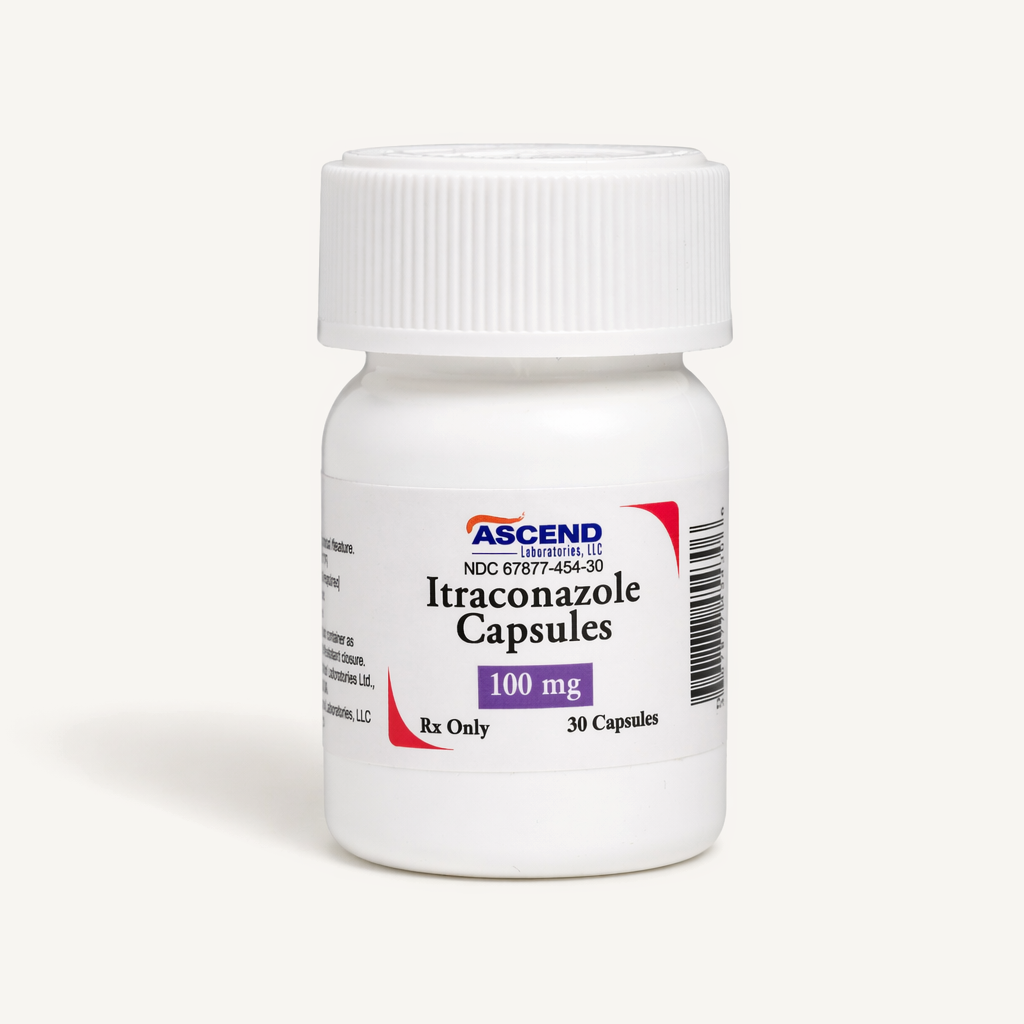
How It Works
Itraconazole works by weakening the membranes of fungal cells, causing them to become unstable and unable to reproduce. This eventually leads to cell death, decreasing the fungal cell population over time and allowing your immune system to clear the remaining infection.
| Quick Facts | |
|---|---|
| Common Brands | Sporanox, Tolsura |
| Drug Class | Azole antifungal |
| Generic Status | Generic version available |
| Availability | Prescription only |
Dosing
Itraconazole can be used to treat various fungal conditions, so the dosage is tailored to each patient’s diagnosis and symptoms.
- Onychomycosis: For stubborn nail fungus, providers often recommend a continuous daily dose of itraconazole for several months. Another option may be pulse therapy, where the patient takes the medication for one week, then discontinues for three weeks as part of a four-week cycle.
- Systemic infections: For serious fungal infections like histoplasmosis, doctors often prescribe doses of 200 to 600 mg per day. Patients may be able to split these doses throughout the day.
- Skin infections: Short-term courses of 100 mg to 200 mg per day for one to two weeks are common for skin infections like ringworm and athlete’s foot.
Note: The dosing information below is for educational purposes only. Your prescribing physician will determine your specific dose based on your individual health needs. Always follow your healthcare provider’s instructions for exact dosing.
Uses
FDA-Approved Uses
Itraconazole is FDA-approved to treat the following
- Onychomycosis: Fungal infections of the toenails and fingernails.
- Blastomycosis: Pulmonary (lung) and extrapulmonary infections
- Histoplasmosis: Pulmonary and disseminated, non-meningeal forms
- Aspergillosis: Pulmonary and extrapulmonary forms in patients who cannot take or tolerate amphotericin B therapy.
- Oropharyngeal/esophageal candidiasis: Primarily treated with itraconazole oral solution.
Off-Label Uses
You may see itraconazole prescribed for uses that are not “FDA-approved.” This is a very common and legal practice called “off-label” prescribing, where a doctor uses their clinical judgment to prescribe a drug for a different (but well-researched) purpose.
Common off-label uses for itraconazole currently found in clinical research and practice include:
- Vaginal yeast infection: Doctors do not typically use itraconazole as first-line treatment for vaginal yeast infections, but the drug may be effective for resistant or recurrent cases.
- Pityriasis versicolor: Itraconazole may be effective against this common fungal condition that produces small, discolored patches on the skin.
- Sporotrichosis: Doctors may recommend the drug to treat this condition, which is commonly referred to as “rose gardener’s disease.”
- Coccidiodomycosis: Itraconazole may also be effective against this fungal infection, commonly known as “valley fever.”
Side Effects
Systemic antifungal medications like itraconazole can produce strong side effects.
Common Side Effects
Common side effects of taking itraconazole include:
- Nausea, vomiting, diarrhea, and constipation
- Headache and dizziness
- Skin rash with mild itching or redness
- Swelling in the arms and legs (edema)
- A temporary, unpleasant, or metallic taste
Serious Side Effects
Serious side effects are rare, but it’s important to know what to look for if they do occur. Serious side effects of taking itraconazole can include:
- Congestive heart failure: Itraconazole can decrease the heart’s strength, leading to symptoms like shortness of breath, sudden weight gain, and extreme fatigue.
- Hepatotoxicity: Rare cases of serious liver injury, including liver failure, have been reported. Symptoms include jaundice (yellowing) of the eyes and skin, dark urine, and strong pain isolated to the upper right abdomen.
- Hearing loss: Some patients who take itraconazole report tinnitus (ringing in the ears) and temporary hearing loss.
- Peripheral neuropathy: Itraconazole has been linked to this type of nerve damage that causes tingling and numbness in the hands and feet.
Call your doctor immediately if you experience any concerning or prolonged symptoms.
Pharmacist Tips
Take Capsules With Food
Per standard guidelines, patients are advised to take their itraconazole capsule with a full meal. Extra acid in the stomach is essential for the capsule to dissolve and be absorbed as intended.
Acid Is Key
People who take acid-reducing medication are advised to take their itraconazole dose(s) with an acidic beverage, such as orange juice. This helps the itraconazole absorb without interfering with the patient’s acid-reducing treatment.
Complete The Course
Your symptoms may begin to resolve quickly after you begin taking itraconazole, but it is important to complete the treatment course. Stopping treatment prematurely can make recurrent fungal conditions harder to treat.
Watch For Sudden Weight Changes
Patients should monitor their weight and watch for sudden weight gain, which can be a sign of heart failure.
Drug Interactions
Itraconazole is a systemic medication that interacts with a range of other drugs and substances. Known interactions with itraconazole include:
- Statin medicines: Taking itraconazole alongside statin medications like simvastatin or lovastatin can lead to dangerously high levels of the statin medication in your bloodstream. This in turn increases your risk of rhabdomyolysis, or muscle breakdown.
- Acid reducers: Proton pump inhibitors like omeprazole and H2 blockers like famotidine can decrease stomach acid and affect how your body absorbs itraconazole, making the antifungal treatment less effective.
- Blood thinners: Itraconazole can increase the effects of blood thinners like warfarin and anticoagulants like Eliquis or Xarelto, leading to complications.
- Heart rhythm medications: Combining itraconazole with medications like quinidine or dofetilide can lead to dangerous heart rhythm issues.
- Herbal supplements: Herbal supplements like St. John’s wort can significantly lower the amount of itraconazole in your blood and hinder treatment progress.
Always give your doctor and pharmacist a complete list of all your medications, vitamins, and supplements to check for potential interactions.
FAQs
Why is it recommended to take itraconazole with an acidic beverage?
An acidic environment is ideal for itraconazole capsules to dissolve. If your stomach acid levels are low, an acidic drink like orange juice can help your body absorb the medicine.
Does itraconazole interact with proton pump inhibitors or antacids like omeprazole?
Yes, itraconazole has known interactions with proton pump inhibitors and antacids like omeprazole, among a range of other medications. Omeprazole reduces stomach acid, which itraconazole needs to dissolve. Providers typically suggest alternative medications or timing dosages throughout the day to decrease the likelihood of interaction.
Does itraconazole cause hearing loss, and is it reversible?
Hearing loss is a rare but established side effect of taking itraconazole. Studies have shown that hearing loss often resolves once the patient stops taking the medication. However, cases of permanent hearing loss have been documented.
Is itraconazole effective for treating viral infections or bacterial infections?
No, itraconazole is not effective for treating viral or bacterial infections. It is an antifungal medication.
Does itraconazole interact with cholesterol-lowering statin medications like simvastatin or lovastatin?
Yes, itraconazole interacts with statin medications like simvastatin and lovastatin. The drug increases statin medication levels in the blood, which can lead to serious muscle damage.
Is itraconazole safe for use during pregnancy or while breastfeeding?
Itraconazole is not considered safe for pregnancy. The drug is also contraindicated for onychomycosis in pregnant patients. Data is limited regarding itraconazole’s effects on breastfeeding patients. Itraconazole passes into breast milk in small amounts. Patients who are breastfeeding are advised to discuss the risks and benefits with their healthcare provider.
Does itraconazole interact with any herbal supplements or vitamins?
Yes, itraconazole has known interactions with herbal supplements like St. John’s wort. These supplements can lower the concentration of itraconazole in your bloodstream and make the antifungal treatment ineffective.
Comparable Medications
Itraconazole, Terbinafine, Fluconazole, or Amphotericin B?
Itraconazole is a potent antifungal medication used to treat a wide range of fungal conditions, both localized and systemic. Based on factors like your medical history and severity of symptoms, your doctor may recommend an alternative to itraconazole instead. Itraconazole alternatives include:
Terbinafine
From $57.49
Sold under the brand name Lamisil, terbinafine is often chosen as first-line treatment for nail fungus due to its lower number of drug interactions. However, itraconazole has a wider therapeutic reach and doctors often prefer it for yeast-borne nail infections or systemic issues that terbinafine can not effectively treat.
Fluconazole
From $24.99
Fluconazole, sold under the brand name Diflucan, is effective in treating yeast infections. Doctors often recommend it as a single-dose treatment for vaginal yeast infections. Due to its strength, itraconazole is normally reserved for more complex and systemic infections.
Amphotericin B
This potent antifungal is normally reserved for life-threatening, hospital-based conditions and administered with an IV. Once the patient stabilizes, their doctor may recommend itraconazole as a step-down antifungal treatment to complete their recovery at home.
We Have Itraconazole in Stock. Get Yours Today!
Important: Information on this page is for educational purposes only. Prescribing decisions are made by independent, licensed providers. TelyRx operates technology-enabled pharmacies and a telehealth platform that connects patients with licensed providers. Prescriptions, when provider-approved and issued, are filled and shipped by TelyRx-affiliated pharmacies. We do not employ physicians or make prescribing decisions. Learn more about our editorial standards here.