

How It Works
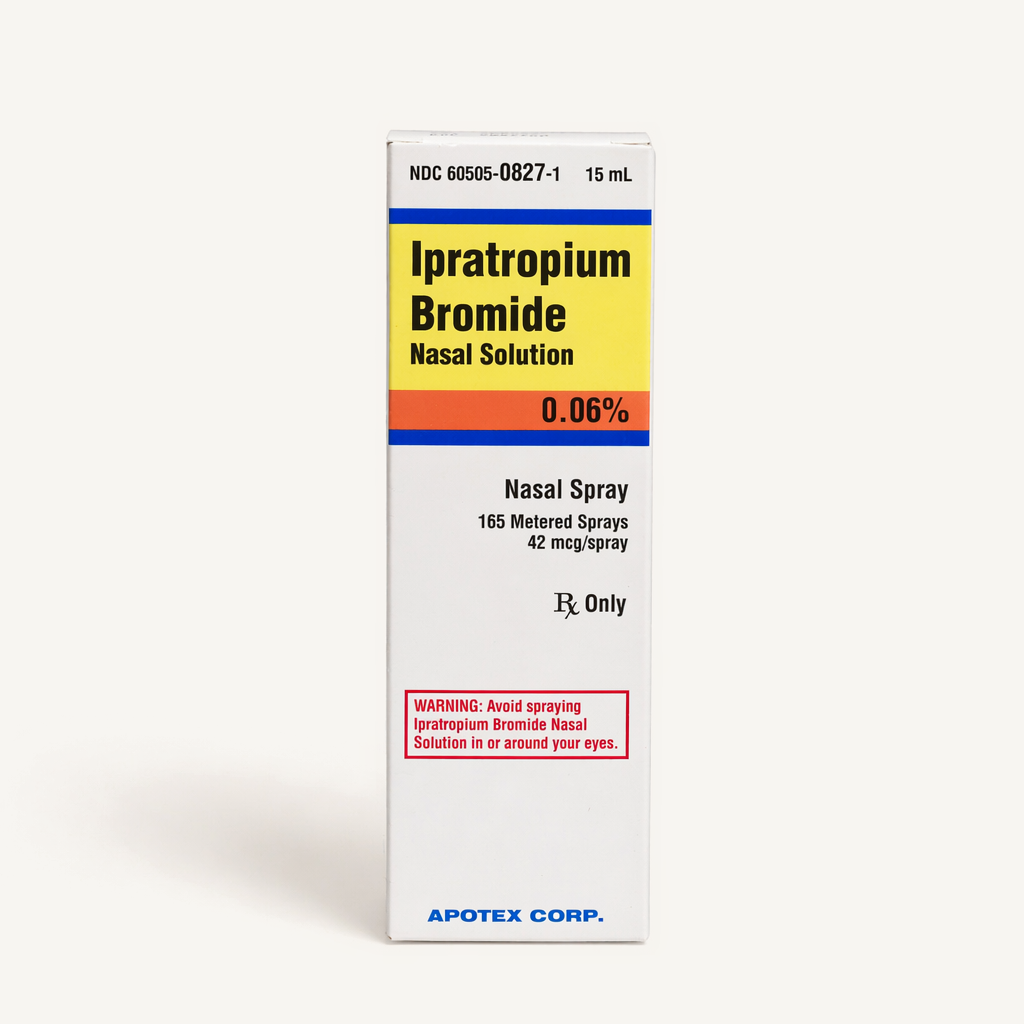
Ipratropium spray works by blocking acetylcholine, a naturally occurring chemical that signals the nasal glands to accelerate mucus production in response to a cold or allergic reaction. The medicine also slows the glands’ pumping mechanisms to reduce nasal drip for people with non-allergic rhinitis.
A primary benefit of ipratropium spray is its localized action, which means little of the medicine enters your blood stream, reducing the risk of side effects.
| Quick Facts | |
|---|---|
| Common Brands | Atrovent (0.03%), Atrovent Nasal (0.06%) |
| Drug Class | Anticholinergic |
| Generic Status | Generic version available |
| Availability | Prescription only |
Dosing
Standard dosing for ipratropium spray largely depends on the prescribed concentration, as well as the patient’s severity of symptoms.
- For allergic and non-allergic rhinitis: To treat these conditions, providers generally recommend two sprays of 0.03% ipratropium spray in each nostril, administered two or three times per day.
- For the common cold: Providers typically recommend the 0.06% strength for common cold symptoms, with two sprays in each nostril administered three to four times per day.
- Duration: Standard guidelines state the spray is generally considered safe to use for the duration of a common cold and its symptoms, but patients are advised to talk to their doctor about long-term use for chronic allergies. Additional monitoring may be recommended.
- Priming the bottle: If you are using the ipratropium spray bottle for the first time, or if it hasn’t been used in more than 24 consecutive hours, you are advised to prime the pump by spraying the medication into the air, away from your face, until a mist appears.
Note: Dosing information below is educational only. Your prescribing physician will determine your specific dose based on your individual health needs. Always follow your healthcare provider’s instructions for exact dosing.
Uses
FDA-Approved Uses
Ipratropium spray is FDA-approved to manage the runny nose associated with seasonal or year-round allergies, and to reduce nasal drip from non-allergic rhinitis. The drug is also FDA-approved to relieve symptoms associated with viral upper respiratory infections, or the common cold.
Off-Label Uses
You may see ipratropium spray prescribed for uses that are not “FDA-approved.” This is a very common and legal practice called “off-label” prescribing, where a doctor uses their clinical judgment to prescribe a drug for a different (but well-researched) purpose.
Common off-label used for ipratropium spray currently found in clinical research and practice include:
- Gustatory rhinitis: Ipratropium spray can help people with this condition, which is characterized by a runny nose in response to eating spicy foods. Providers may recommend using the spray 15 to 30 minutes prior to mealtime.
- Exercise-induced rhinitis: The spray can provide relief for people who experience watery nasal discharge during intense physical activity in cold air.
Side Effects
Ipratropium spray focuses on drying up secretions and primarily has localized effects, so systemic changes are not likely, though some side effects can still occur.
Common Side Effects
Common side effects of using ipratropium spray include:
- Nasal dryness
- Nosebleeds
- Dry throat or mouth
- Headache
- Temporarily unpleasant or bitter taste
Serious Side Effects
Serious side effects are rare, but it’s important to know what to look for if they do occur. Serious side effects from using ipratropium spray can include:
- Vision problems: If ipratropium spray accidentally enters the eyes, blurred vision, pain, and a “halo” effect around lights can all occur. This can also worsen narrow-angle glaucoma.
- Urinary retention: In people with an enlarged prostate, ipratropium spray can make it difficult to pass urine.
- Severe allergic reaction: As with many other medications, ipratropium spray can trigger an anaphylactic reaction in people who are allergic to one or more of the drug’s ingredients.
Call your doctor immediately if you experience any concerning or prolonged symptoms.
Pharmacist Tips
Blow Your Nose First
Standard guidelines recommend blowing your nose before administering ipratropium spray. This helps the medication reach your nasal lining.
Proper Technique Is Key
Per clinical guidelines, the best way to administer ipratropium spray is to tilt the head slightly forward before inserting the spray bottle tip into either nostril, pointed toward the ear. This works to prevent nosebleeds and helps ensure the medicine reaches the nasal glands.
Practice Eye Safety
Patients are cautioned to never spray ipratropium into the eyes. If this occurs, they are advised to flush both eyes with cool tap water for several minutes.
Keep The Applicator Hygienic
Standard guidelines call for cleaning the applicator tip once a week by removing the cap, pulling off the applicator, and washing it in warm, soapy water. Thoroughly rinse and dry the applicator before reassembling the bottle.
Don’t Double Dose
If you miss a dose of ipratropium spray, guidelines suggest using the spray as soon as you remember unless the next dose is within the next few hours. It is not recommended to double the dose as a way to catch up from missing an earlier dose, as this can increase the risk of side effects.
Drug Interactions
Ipratropium spray has a low absorption rate, but it can still interact with other medications. Known interactions with ipratropium spray include:
- Other anticholinergics: Patients are cautioned when using ipratropium alongside other anticholinergic medications used for conditions like overactive bladder, Parkinson’s disease, and chronic obstructive pulmonary disease. Combining these drugs increases the risk for side effects like severe dry mouth and urinary retention issues.
- Antihistamines: Older (first-generation) antihistamines have drying properties, so standard guidelines advise patients should exercise caution. These medications may cause side effects like nosebleeds when used alongside ipratropium spray.
Always give your doctor and pharmacist a complete list of all your medications, vitamins, and supplements to check for potential interactions.
FAQs
Can I use this spray to clear up severe nasal congestion or a stuffy nose?
No, ipratropium spray is intended to control a runny nose. It does not shrink swollen nasal tissues. If you’re experiencing severe nasal congestion or a stuffy nose, your provider will likely recommend a decongestant or steroid spray instead.
Is it normal for my nose to feel excessively dry after using ipratropium spray?
Yes, excessive dryness in the nose is one of the most common side effects from using ipratropium spray. If the dryness leads to discomfort or nosebleeds, your doctor may recommend reducing the frequency of use or using a saline gel to moisturize the nasal lining.
How many times a day should I use this spray for allergies?
If using ipratropium spray to treat allergic rhinitis, standard guidelines suggest two spritzes of 0.03% strength spray in each nostril, administered two to three times per day. Guidelines are the same for using ipratropium spray to treat non-allergic rhinitis, though specific dosage varies by patient.
How long does it typically take for the spray to stop a constant runny nose?
Patients typically notice a decrease in nasal draining within 15 to 30 minutes of using ipratropium spray. However, they may need a few days of continuous use to experience the spray’s full therapeutic benefits.
Is it safe to use ipratropium spray at the same time as a steroid nasal spray like Flonase?
Yes, it is generally considered safe to use ipratropium spray at the same time as a steroid nasal spray like Flonase. These medications treat allergy symptoms in different ways, so providers commonly recommend using them together to manage complex symptoms.
Do I need to prime the pump before using it for the first time?
Priming the pump prior to using the spray bottle for the first time helps ensure you receive the full, measured amount beginning with your first dose. Priming helps mix the medicine evenly within the bottle.
Does this spray treat sneezing, itchy eyes, or other common allergy symptoms?
No, ipratropium is a specialized spray that targets mucus production in the nose. It is not used for other common allergy symptoms like sneezing and itchy eyes.
How long does a standard bottle of ipratropium spray usually last?
One bottle of ipratropium contains roughly 345 individual sprays. If you follow standard guidelines for dosing, this equates to roughly 8 to 16 doses per day (depending on the strength), so one bottle can last anywhere from 22 to 44 days with consistent dosing until it needs to be replaced.
Should I blow my nose before or after using this medication?
Per standard guidelines, blowing your nose prior to administering ipratropium spray is recommended. Blowing your nose after spraying can interfere with the medication’s ability to adhere to nasal glands.
What is the difference between the 0.03% and the 0.06% concentration of this spray?
The 0.03% concentration spray is a lower-dose option usually recommended for long-term allergy or rhinitis management. The 0.06% concentration is stronger and used for relieving the heavy drainage associated with common colds.
How should I clean the plastic applicator tip?
To clean the plastic applicator tip, standard guidelines recommend unscrewing the cap, removing the applicator, and washing the latter in warm, soapy water. Before reassembling, rinse and dry the applicator to remove all soap and prevent moisture from getting trapped. Weekly cleaning is recommended.
Can I use this spray daily for a long-term runny nose?
Daily use of ipratropium spray for long-term runny nose is considered safe as long as your provider prescribes it. Studies show the medication is safe and effective for up to 12 months of continuous use. However, the spray is usually reserved for short-term cold and allergy management, so long-term use warrants medical supervision.
What should I do if the pump gets clogged or stops spraying mist?
If the pump gets clogged or stops spraying, remove the applicator and wash it in warm water. Clearing the hole with a pin or sharp object can damage the pump and lead to you receiving the incorrect dose.
Comparable Medications
Ipratropium Spray, Afrin, Flonase, Azelsatine, or Sudafed?
Ipratropium spray is specifically formulated to prevent and manage a runny nose, whether it originates from allergies, the common cold, or other sources. Since the medication targets one symptom, your doctor may recommend an alternative to ipratropium spray that alleviates more symptoms if needed. Ipratropium spray alternatives include:
Afrin
Afrin, a brand-name medication containing oxymetazoline as its active ingredient, is a decongestant that shrinks blood vessels to alleviate a stuffed nose. It works almost instantly, but can cause rebound symptoms to occur if you use it for more than 3 days.
Flonase
Fluticasone, a steroid medication sold under the brand name Flonase, is primarily used to reduce inflammation, sneezing, and runniness. The drug can take several days to begin working.
Azelastine Nasal Spray
From $32.99
Azelsatine is an antihistamine spray that can relieve itching, sneezing, and runniness in the nose. It treats the cause of the allergy, while ipratropium specifically controls watery nasal discharge without treating other allergy symptoms.
Sudafed
Pseudoephedrine, sold under the brand name Sudafed, is an oral decongestant that affects the entire body to reduce nasal pressure and stuffiness.
We Have Ipratropium Spray in Stock. Get Yours Today!
Important: Information on this page is for educational purposes only. Prescribing decisions are made by independent, licensed providers. TelyRx operates technology-enabled pharmacies and a telehealth platform that connects patients with licensed providers. Prescriptions, when provider-approved and issued, are filled and shipped by TelyRx-affiliated pharmacies. We do not employ physicians or make prescribing decisions. Learn more about our editorial standards here.