

How It Works
Breathing becomes difficult when the muscles surrounding your airways tighten, narrowing the airways. Ipratropium/albuterol inhalation solution targets this tightness from two angles:
- Relaxing the squeeze: The albuterol part of the medicine works quickly on the beta receptors in your lungs. It sends a signal to the muscles in your airways to relax.
- Blocking the tightening signal: Ipratropium blocks chemical signals for airway tightening from reaching the muscles, which keeps the airways open for longer.
By using both of these medicines together, your airways can stay wider and more relaxed than they would with just one medication.
| Quick Facts | |
|---|---|
| Common Brands | DuoNeb (brand discontinued), Combivent (inhaler version) |
| Drug Class | Anticholinergic / beta-2 agonist bronchodilator |
| Generic Status | Generic version available |
| Availability | Prescription only |
Dosing
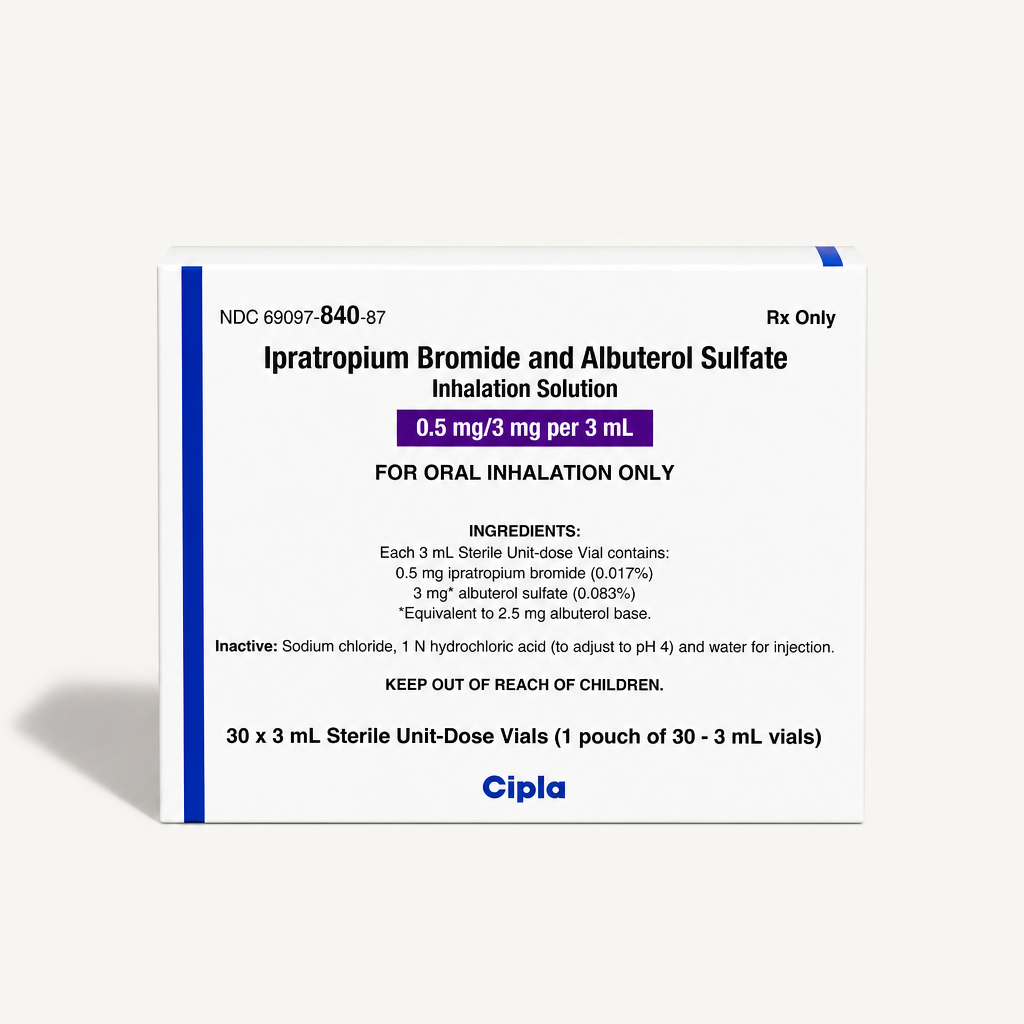
Ipratropium / albuterol is supplied in 3 mL plastic vials. Each vial contains a pre-mixed dose of 0.5 mg ipratropium and 3 mg albuterol.
- Typical schedule: Providers typically recommend using one vial via nebulizer four times a day.
- Flare-up dosing: Standard guidelines suggest that up to two additional doses may be given within 24 hours if breathing becomes more difficult, for a maximum of six doses per day.
- Treatment time: Continue breathing the mist until the nebulizer cup is empty and the machine begins to sputter.
- Technique: Sit in a comfortable, upright position, and breathe calmly and deeply through the mouthpiece or mask. Hold your breath for a second or two at the top of each inhale to let the mist settle in your lungs.
- Missed doses: If you miss a dose, take it as soon as you remember. However, providers typically recommend waiting at least 4 hours between treatments. Do not double up on vials.
Note: Dosing information below is educational only. Your prescribing physician will determine your specific dose based on your individual health needs. Always follow your healthcare provider’s instructions for exact dosing.
Uses
FDA-Approved Uses
The FDA approves ipratropium / albuterol inhalation solution for COPD management. It is approved as a long-term treatment of bronchospasms associated with chronic obstructive pulmonary disease in patients who require more than one bronchodilator.
Off-Label Uses
You may see ipratropium / albuterol inhalation solution prescribed for uses that are not FDA-approved. This is a common and legal practice called off-label prescribing, where a doctor uses their clinical judgment to prescribe a drug for a different (but well-researched) purpose.
Ipratropium / albuterol inhalation solution may be prescribed off-label for the following conditions:
- Acute asthma: While not its primary indication, it is frequently used in emergency rooms and urgent care centers to treat severe asthma attacks.
- Severe bronchitis: It may be used to provide temporary relief from the intense airway constriction caused by severe viral or bacterial lung infections.
Side Effects
Most people tolerate nebulized treatments well, but because the medication can affect the nervous system and heart rate, some side effects are common.
Common Side Effects
- Headache or dizziness
- Dry mouth and sore throat
- Coughing or hoarseness
- Nervousness or the jitters
- Leg cramps
- Upset stomach or diarrhea
Serious Side Effects
Serious side effects are rare, but it’s important to know what to look for if they do occur. Stop taking the medication and immediately call the doctor if you experience any of the following symptoms:
- Heart rhythm changes: Watch for a fast, pounding, or irregular heartbeat (arrhythmia) or chest pain.
- Paradoxical bronchospasm: A rare, sudden worsening of breathing immediately after a treatment.
- Eye issues: If the mist gets into your eyes, it can cause blurred vision or worsen glaucoma. Symptoms include seeing halos around lights or sudden eye pain.
- Urinary retention: Difficulty passing urine, especially in men with an enlarged prostate.
- Severe allergic reaction: It is generally accepted to seek help for hives, facial or throat swelling, or extreme difficulty breathing.
Call your doctor immediately if you experience any concerning or prolonged symptoms.
Pharmacist Tips
Rinse Your Equipment
After each use, rinse the nebulizer cup and mouthpiece with warm water, then let them air-dry. Once a week, they should be disinfected according to the manufacturer’s instructions to prevent lung infections.
Protect Your Eyes
If using a face mask, providers typically recommend ensuring it fits snugly. If the ipratropium mist gets into your eyes, it can dilate your pupils and may cause temporary blurred vision or eye pain.
Store In The Foil
The plastic vials are sensitive to light. Only open the foil pouch when you are ready to use the vials. Once a vial is removed from the foil, it should be used promptly.
Check The Color
The liquid should be clear and colorless. If the solution in the vial looks cloudy, yellow, or contains floating particles, standard guidelines typically recommend discarding it and using a new one.
Stay Upright
It is generally accepted that the nebulizer should not be used while lying down. Sitting up helps the mist reach the bottom of your lungs, where it is needed most.
Don’t Skip The Cleaning
A dirty nebulizer can grow bacteria that you then breathe directly into your lungs, which can lead to pneumonia.
Drug Interactions
Ipratropium / albuterol can interact with other medications that affect your heart rate or nervous system. Please notify your provider if you take any of the following medications:
- Beta-blockers: Some blood pressure and heart medications (like metoprolol or propranolol) can block the effects of albuterol, potentially causing your airways to tighten.
- Diuretics: Some water pills can lower your potassium. Since albuterol can also lower potassium levels, using them together can increase the risk of heart rhythm problems.
- Antidepressants: MAOIs and tricyclic antidepressants can increase the effect the medicine has on your heart rate and blood pressure.
- Other bronchodilators: It is generally accepted to avoid using other short-acting rescue inhalers unless your doctor specifically tells you to do so, as this can lead to an overdose of the medication.
Always give your doctor and pharmacist a complete list of all your medications, vitamins, and supplements to check for potential interactions.
FAQs
What is the difference between this combination liquid and using albuterol in my nebulizer?
Albuterol targets only one receptor to open your airways. This combination adds ipratropium, which blocks the signals that tell your airways to tighten. Using both together is generally more effective for people with COPD than using albuterol alone.
How long does a standard nebulizer treatment with this medication usually take from start to finish?
Most treatments take between 5 and 15 minutes. The exact time depends on the type of nebulizer you use and how much air it delivers.
Why does my heart suddenly start racing or pounding immediately after I breathe in ipratropium/albuterol solution?
Albuterol is a stimulant. This racing feeling is a common side effect and usually fades after treatment ends.
Is it normal for my hands to visibly shake or feel jittery after finishing a treatment?
Yes. Albuterol can cause fine tremors in the hands and restlessness. This is normal and is not usually a cause for concern unless it becomes severe or persists.
Can I mix my daily inhaled steroid liquid (like budesonide) into the same nebulizer cup?
Yes. Providers commonly recommend mixing budesonide (Pulmicort) with ipratropium/albuterol solution so you can take both medications at the same time. It is generally advised to confirm this with your doctor first.
How many times a day is it safe to use this rescue treatment during a COPD or asthma flare-up?
Standard guidelines suggest a maximum of 6 vials in 24 hours. If you feel you need treatment more often than every 4 hours, your flare-up may be severe and require medical attention.
Why do the plastic vials come wrapped in a foil pouch, and how quickly do they expire once I open the foil?
The foil protects the medicine from light. Once the foil pouch is opened, the vials are typically good for about 7 to 14 days, depending on the manufacturer. Standard guidelines typically recommend checking your specific box for the expiration date on the open pouch.
What should I do if the ipratropium/albuterol inside the plastic vial turns yellow or cloudy?
Providers generally advise against using it. Discoloration or cloudiness may indicate that the medication has broken down or become contaminated.
Can using this treatment too close to bedtime cause me to stay awake?
Yes. Because albuterol is a stimulant, it can cause insomnia if taken before you try to sleep.
Can I get the same combination of medications in a portable inhaler instead of using a nebulizer machine?
Yes. The same combination of medications is available in a portable handheld device called Combivent Respimat.
How should I properly clean and disinfect the nebulizer mouthpiece instead of using a nebulizer machine?
Standard guidelines typically recommend rinsing the cup and mouthpiece with warm water after every use. Once a day, it is generally advised to wash them with mild soapy water. Once a week, you can soak them in a 1:3 mixture of white vinegar and water for 30 minutes, then rinse and air-dry.
Does this medication interact with beta-blocker blood pressure pills?
Yes. Beta-blockers can prevent albuterol from working and can worsen breathing. It is generally advised to make sure your doctor knows you are taking them.
Comparable Medications
Albuterol, Combivent, or Budesonide?
Here are some possible alternatives to ipratropium / albuterol inhalation solution:
Plain albuterol
Plain albuterol is a single-ingredient rescue medicine. The combination (ipratropium/albuterol) is often used in COPD because it adds a second bronchodilator that reduces airway tightening through a different pathway, providing broader airflow improvement than albuterol alone.
Combivent Respimat
From $699.99
Combivent contains the same two medications (ipratropium/albuterol) as Duoneb. The main difference is how it is delivered. Duoneb is a nebulized mist used with a machine, while Combivent is a handheld inhaler that delivers the same combination in a portable form.
Budesonide
Budesonide is a steroid that lowers inflammation over time. It does not open the airways immediately. Ipratropium/albuterol is a bronchodilator that opens airways right away. They are often used together but have different mechanisms.
Trelegy Ellipta
From $899.99
Both Trelegy Ellipta and Anoro Ellipta are once-daily maintenance inhalers that combine long-acting bronchodilators to keep airways open over 24 hours. Anoro contains two bronchodilators, while Trelegy adds an inhaled steroid for additional inflammation control. Ipratropium/albuterol is a short-acting rescue treatment used for quick symptom relief, typically several times a day, rather than continuous maintenance.
We Have Ipratropium / Albuterol Inhalation Solution in Stock. Get Yours Today!
Important: Information on this page is for educational purposes only. Prescribing decisions are made by independent, licensed providers. TelyRx operates technology-enabled pharmacies and a telehealth platform that connects patients with licensed providers. Prescriptions, when provider-approved and issued, are filled and shipped by TelyRx-affiliated pharmacies. We do not employ physicians or make prescribing decisions. Learn more about our editorial standards here.