

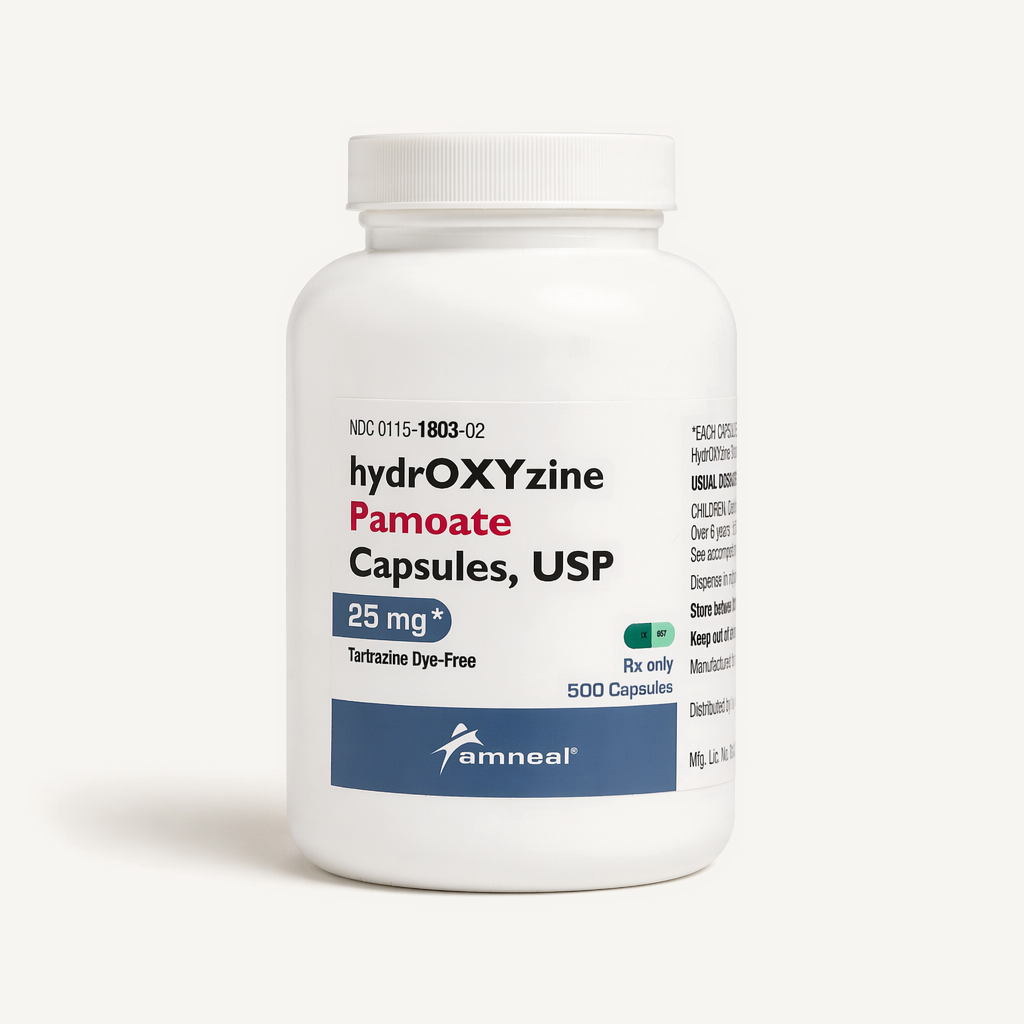
How It Works
Hydroxyzine pamoate works in the body in more than one way.
As an antihistamine, it acts as an H1 receptor antagonist. The immune system releases chemicals called histamines when an allergen is detected, and these histamines bind to H1 receptors to induce swelling, itchiness, and other defenses against the allergen. By blocking these H1 receptors, hydroxyzine pamoate prevents the itch signal from being sent.
Hydroxyzine also influences serotonin activity, a neurotransmitter that helps regulate mood. It blocks serotonin from binding to overactive receptors, which could contribute to anxiety. By modulating serotonin activity, hydroxyzine reduces physical tension and mental stress.
| Quick Facts | |
|---|---|
| Common Brands | Vistaril |
| Drug Class | Antihistamine (first-generation); anxiolytic |
| Generic Status | Generic version available |
| Availability | Prescription only |
Dosing
People typically take hydroxyzine pamoate in divided doses throughout the day. However, the specific dosing schedule depends on what the drug is being used to treat.
- For anxiety: Standard guidelines suggest 50 to 100 mg four times per day.
- For itching and allergic conditions: The approved dose is 25 mg three or four times a day.
- Administration: Swallow the capsules whole with or without food. Timing the dose with a light meal or snack can help with an upset stomach.
Note: The dosing information below is for educational purposes only. Your prescribing physician will determine your specific dose based on your individual health needs. Always follow your healthcare provider’s instructions for exact dosing.
Uses
FDA-Approved Uses
Hydroxyzine pamoate is FDA-approved for the following:
- Relieving anxiety and tension symptoms associated with generalized anxiety disorder or psychoneurosis
- Managing the itchiness of chronic hives and skin conditions like eczema
- Sedating patients before anesthesia for surgery
Off-Label Uses
You may see hydroxyzine pamoate prescribed for uses that are not “FDA-approved.” This is a very common and legal practice called “off-label” prescribing, where a doctor uses their clinical judgment to prescribe a drug for a different (but well-researched) purpose.
Common off-label uses for hydroxyzine pamoate currently found in clinical research and practice include:
- Insomnia: Due to hydroxyzine pamoate’s sedative properties, providers may recommend the drug to patients who have difficulty falling asleep due to racing thoughts.
- Panic disorder: While hydroxyzine pamoate is not approved as a primary treatment for panic disorder, the drug may be used as needed to alleviate symptoms during a panic attack.
- Alcohol withdrawal: In some clinical settings, doctors use hydroxyzine pamoate to manage the agitation and anxiety associated with the early stages of alcohol withdrawal.
Side Effects
People who take hydroxyzine pamoate often notice the drug’s effects on their alertness. These are known side effects, and often diminish as the body adjusts.
Common Side Effects
Common side effects of taking hydroxyzine pamoate include:
- Drowsiness
- Dry mouth
- Headache
- Dizziness
Serious Side Effects
Serious side effects are rare, but it’s important to know what to look for if they do occur. Serious side effects of taking hydroxyzine pamoate can include:
- Heart rhythm changes: This medication can affect the heart’s electrical cycle. Patients are advised to seek immediate care if they experience chest pounding, fainting, or an irregular heartbeat.
- Severe skin reactions: Hydroxyzine pamoate has been linked to AGEP, a rare condition that causes a widespread rash with small, pus-filled bumps.
- Seizures: While rare, some patients report convulsions after taking higher-than-usual doses of hydroxyzine pamoate. Patients with a history of seizure disorders are advised to proceed with caution and talk to their doctor before taking this medication.
- Severe allergic reaction: As with many types of medication, hydroxyzine pamoate can lead to anaphylaxis in people who are allergic to one or more of the drug’s ingredients. This is considered a medical emergency. Symptoms include difficulty breathing and throat swelling.
Call your doctor immediately if you experience any concerning or prolonged symptoms.
Pharmacist Tips
Prepare For Some Grogginess
People who take hydroxyzine for sleep may notice strong feelings of grogginess the next morning. Getting a full night’s sleep of 7 to 9 hours can minimize the morning-after effect.
Be Safe With Driving
Hydroxyzine pamoate can induce drowsiness and affect motor function. For this reason, avoid driving, swimming, and operating machinery when taking hydroxyzine pamoate until you understand how the drug affects you.
Use Caution If Over 65
Adults over 65 are more sensitive to the side effects of hydroxyzine pamoate. This puts them at a higher risk of falls, confusion, and urinary retention.
Avoid Combining With Other Antihistamines
It is not advisable to take allergy medications in the same drug family, including over-the-counter medications. Doing so can increase your risk of adverse effects.
Avoid alcohol and other sedatives
Alcohol can have a sedating effect, so avoid drinking alcohol and taking other sedatives with this medication because combining them can increase risk of injury from excessive sedation.
Drug Interactions
Hydroxyzine pamoate can interact with other medications and substances. Known interactions include:
- Central nervous system depressants: Opioids, benzodiazepines, sleep aids, and alcohol all significantly increase the risk of respiratory depression and extreme sedation when taken alongside hydroxyzine pamoate.
- QT-prolonging drugs: Medications such as antipsychotics, heart rhythm drugs, and certain antibiotics like azithromycin can all affect your heart rhythm. Standard guidelines advise caution and close medical monitoring for people who take QT-prolonging drugs alongside hydroxyzine pamoate.
- SSRI/antidepressants: While people often take hydroxyzine pamoate alongside SSRIs or antidepressants, certain medications, such as citalopram, can elevate the heart rhythm risks of hydroxyzine. Talk to your doctor about how to proceed if you’re already taking an SSRI or antidepressant.
Always give your doctor and pharmacist a complete list of all your medications, vitamins, and supplements to check for potential interactions.
FAQs
Is hydroxyzine an addictive narcotic or a controlled substance like Xanax?
No, hydroxyzine is not an addictive narcotic or controlled substance like Xanax. It is an antihistamine, not a controlled substance, and it does not carry the same risks of physical dependence or withdrawal as benzodiazepines or narcotics.
What is the difference between hydroxyzine pamoate and hydroxyzine hydrochloride?
The primary difference between hydroxyzine pamoate and hydroxyzine hydrochloride is the formulation. Hydroxyzine hydrochloride is typically administered as an oral tablet or liquid, while hydroxyzine pamoate is usually formulated as a non-chewable capsule.
How long does it take for a hydroxyzine pill to kick in and calm down an active panic attack?
People who take hydroxyzine pamoate typically feel initial effects within 15 to 30 minutes of taking the capsule with stronger effects over the next couple of hours.
Will taking hydroxyzine put me to sleep, or will it just take the edge off my anxiety?
Hydroxyzine has sedative properties that can also help take the edge off anxiety symptoms. For some, the sedation is strong enough to induce sleep. For others, the drug reduces heart racing, shaking, and other physical symptoms of anxiety without fully inducing sleep.
How long does the “brain fog” hangover feeling last the morning after taking it for sleep?
People who take hydroxyzine pamoate for sleep typically feel brain fog, or drowsiness, the next morning. These effects typically diminish as the patient’s body adapts to the new medication.
Can I safely take hydroxyzine at the same time as my SSRI antidepressant?
Patients may safely take hydroxyzine and an SSRI antidepressant concurrently, but taking both drugs can affect heart rhythm. Medical monitoring from your provider is advised.
Is it safe to drink alcohol while taking a prescription for hydroxyzine pamoate?
It is strongly advised to avoid alcohol while taking hydroxyzine pamoate. Alcohol can exacerbate the drug’s sedative effects and potentially lead to dangerous impairment levels.
Can I take hydroxyzine every single day to prevent anxiety, or should I only take it when I feel a panic attack starting?
Whether you should take hydroxyzine pamoate every day or on an as-needed basis depends on the treatment plan your doctor provides.
Is it generally considered safe to take hydroxyzine to help with sleep or nausea while I am pregnant?
Standard guidelines advise against taking hydroxyzine pamoate during pregnancy, as the drug can pose risks to the unborn baby. It is always recommended to consult your OB/GYN about the safest medication options during pregnancy or if you are planning to become pregnant.
Can taking this pill every day cause unexpected weight gain?
While weight gain is not a common side effect of taking hydroxyzine pamoate, some users have reported increased appetite or mild weight changes after taking the medication for a prolonged period. If you notice changes in your appetite or weight while taking it, talk to your provider.
Can I take my daily ADHD stimulant while also taking hydroxyzine to sleep at night?
Some providers recommend hydroxyzine to help temper the stimulant effects of daily ADHD medication. However, patients are advised to discuss this regimen with their doctor to ensure the dosage timing doesn’t interfere with their daily focus.
Is it safe to drive a car or operate heavy machinery immediately after taking a daytime dose for anxiety?
It is generally not considered safe to drive a car or operate machinery after taking a daytime dose of hydroxyzine for anxiety. The medication has sedative effects that can make you feel tired and lose focus, which is a potentially dangerous combination when you are engaged in certain activities.
Comparable Medications
Hydroxyzine Pamoate, Hydroxyzine Hydrochloride, Alprazolam, Escitalopram, or Diphenhydramine?
Hydroxyzine pamoate is an antihistamine used to treat anxiety, as well as itchiness from hives and eczema that may also be prescribed to manage anxiety symptoms. Your doctor may recommend an alternative to hydroxyzine pamoate based on factors such as your age, medical history, and the nature of your symptoms. Hydroxyzine pamoate alternatives include:
Hydroxyzine hydrochloride
Hydroxyzine pamoate and hydroxyzine hydrochloride are essentially two versions of the same drug. Pamoate is typically administered as an oral capsule and hydrochloride is available in liquid form for people who have difficulty swallowing pills.
Alprazolam
Sold under the brand name Xanax, alprazolam is a benzodiazepine and controlled substance that works quickly to alleviate symptoms of anxiety, but also carries a high risk of physical dependence and withdrawal. Hydroxyzine pamoate may not work as quickly or intensely for an acute panic attack, but it is generally considered a safer option in terms of dependence.
Escitalopram
Sold under the brand name Lexapro, escitalopram is an SSRI taken once daily to build up in the body over time and help treat the underlying causes of depression and anxiety. Providers often prescribe hydroxyzine as supplemental medication for immediate, short-term relief while waiting for the SSRI to take full effect.
Diphenhydramine
Hydroxyzine pamoate and diphenhydramine are both first-generation antihistamines known to cause sleepiness. Diphenhydramine, sold under the brand name Benadryl, is primarily used for simple allergies and as a sleep aid. Unlike hydroxyzine, It does not require a prescription.
We Have Hydroxyzine Pamoate in Stock. Get Yours Today!
Important: Information on this page is for educational purposes only. Prescribing decisions are made by independent, licensed providers. TelyRx operates technology-enabled pharmacies and a telehealth platform that connects patients with licensed providers. Prescriptions, when provider-approved and issued, are filled and shipped by TelyRx-affiliated pharmacies. We do not employ physicians or make prescribing decisions. Learn more about our editorial standards here.