

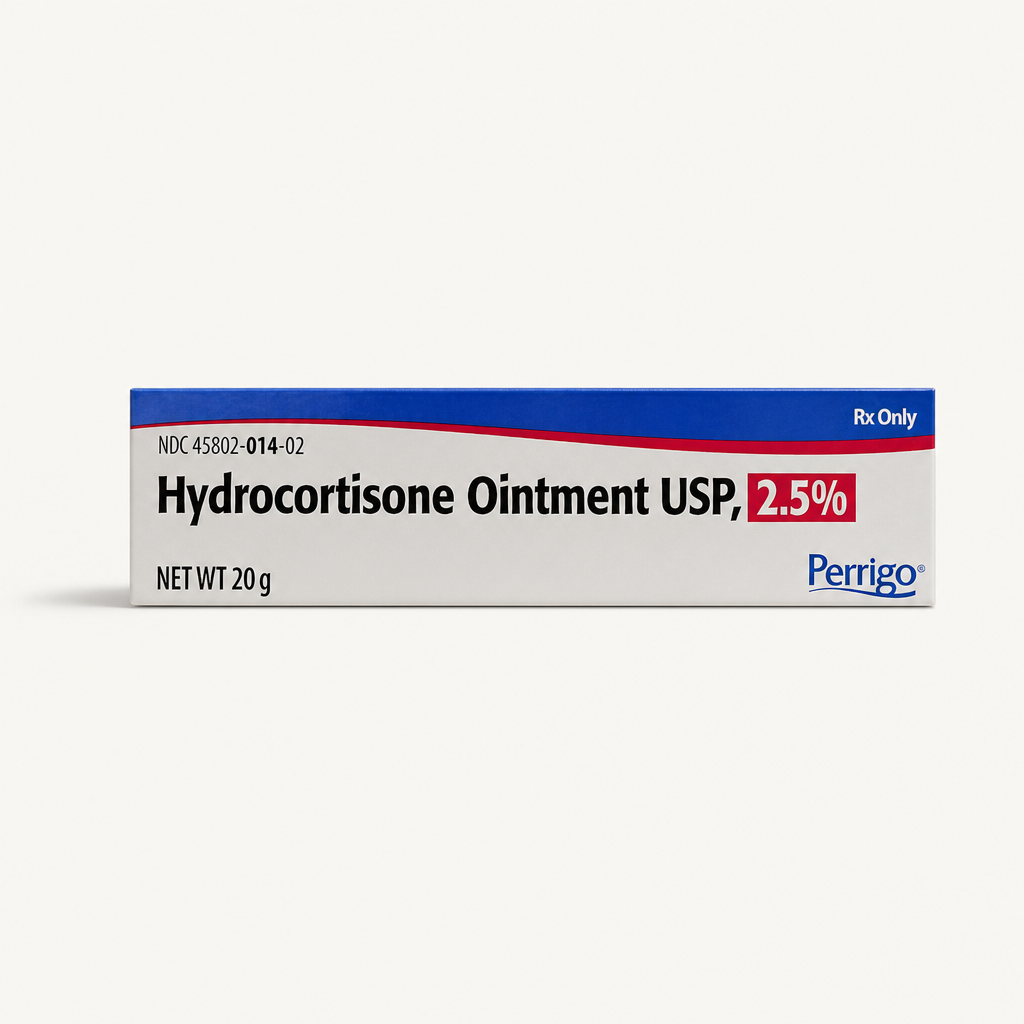
How It Works
Hydrocortisone ointment works by calming the immune system’s defense cells (white blood cells) to reduce the body’s inflammatory response. The steroid also works to narrow the blood vessels (vasoconstriction) at the site of application. This further reduces swelling and helps take the “heat” out of a rash or insect bite.
The ointment base ensures the active ingredient stays in contact with the skin longer than a cream or lotion. This delivery method is beneficial for penetration through tough or dry skin layers.
| Quick Facts | |
|---|---|
| Common Brands | Locoid, Pandel, Cortizone-10 |
| Drug Class | Topical corticosteroid |
| Generic Status | Generic version available |
| Availability | Prescription or OTC |
Dosing
Apply a thin film of hydrocortisone ointment to the affected area 1 to 4 times daily. For OTC strengths, such as 1% ointment, the frequency is typically 3 to 4 times a day for adults. Prescription strengths, such as 2.5% ointment, are often applied 2 to 3 times daily.
The skin should be clean and dry before applying this medication. It is important to wash your hands before and after application to prevent the medication from being transferred to sensitive areas such as the eyes or mouth.
Only a small amount is needed to cover the irritated area. Using more than recommended does not make the medication work faster and may increase the risk of side effects. Treatment duration depends on the skin condition and the prescribed strength.
Note: Dosing information below is educational only. Your prescribing physician will determine your specific dose based on your individual health needs. Always follow your healthcare provider’s instructions for exact dosing.
Uses
FDA-Approved Uses
Hydrocortisone ointment is FDA-approved for the relief of inflammatory and itchy (pruritic) symptoms of skin conditions that respond to steroids (corticosteroid-responsive dermatoses).
Off-Label Uses
You may see hydrocortisone ointment prescribed for uses that are not FDA-approved. This is a common and legal practice called off-label prescribing, where a doctor uses their clinical judgment to prescribe a drug for a different purpose.
- Seborrheic dermatitis of the face: While use on the face requires caution, providers may prescribe a short course of hydrocortisone ointment to manage redness and scaling around the nose or eyebrows.
- Post-laser treatment recovery: Some clinicians may use low-strength hydrocortisone ointment after certain dermatological laser procedures to reduce temporary swelling.
Side Effects
Most people experience few side effects when using hydrocortisone ointment as directed for short periods. However, because this drug is a steroid, inappropriate or excessive use can lead to changes in the skin’s structure or systemic absorption into the bloodstream.
Common Side Effects
Some common side effects may include:
- Mild burning or stinging at the application site
- Itching or skin irritation
- Dryness or cracking of the skin
- Redness or warmth
- Inflamed hair follicles (folliculitis)
Serious Side Effects
Serious side effects are rare, but it’s important to know what to look for if they do occur.
Stop using this medication and seek emergency care or call your doctor if you experience any serious or life-threatening side effects. These may include:
- Skin thinning (atrophy): Prolonged use can cause the skin to become fragile, leading to stretch marks or easy bruising.
- Adrenal suppression: If used over very large areas or for too long, this medication can interfere with the body’s ability to produce certain hormones. Symptoms include extreme tiredness or weakness.
- High blood sugar: Systemic absorption may raise glucose levels, which is a concern for individuals with diabetes.
- Topical steroid withdrawal (TSW): Stopping this medication after long-term use can cause a severe rebound rash, burning, or redness. TSW is less common with low-potency steroids like hydrocortisone ointment.
Call 911 or your doctor immediately if you experience any concerning or prolonged symptoms.
Pharmacist Tips
Avoid Using Bandages
Do not cover the treated area with a bandage, wrap, or plastic dressing unless a provider specifically instructs you to do so. This increases the amount of medication absorbed and raises the risk of side effects.
Apply Sparingly to Folds
Be cautious when applying this ointment to areas where skin touches skin, such as the underarms or groin. These areas are more sensitive and prone to skin thinning.
Check the Formulation
Ointments are greasier and stay on the skin longer than creams. This makes the ointment form better for dry skin, but this version may be too heavy for “weeping” or oily rashes.
Wait Before Sunscreen
If you need to apply sunscreen or moisturizer, it is generally recommended to apply the hydrocortisone ointment first and wait 15 to 30 minutes before applying other products.
Watch for Infection
If you notice pus, honey-colored crusting, or increased swelling, stop use and contact a provider. This medication can mask the signs of a skin infection or worsen a fungal infection, such as ringworm.
Wash Hands Thoroughly
Unless your hands are the area being treated, always wash them after application to avoid accidentally getting the steroid in your eyes or mouth.
Drug Interactions
While topical medications have fewer interactions than oral drugs, this ointment can still affect how other treatments work.
Hydrocortisone may interact with medications and products including:
- Other topical steroids: Using multiple steroid-containing creams or ointments at the same time can significantly increase the risk of skin thinning and adrenal gland issues.
- Oral corticosteroids: If you are taking oral prednisone or dexamethasone, using topical hydrocortisone may lead to overlap in steroid levels.
- Antifungal medications: If used at the same time as an antifungal, a provider may manage the timing to ensure the steroid does not interfere with the body’s ability to clear the fungal infection.
- Cosmetic skin products: Medicated cleansers or products containing alcohol or astringents may increase skin irritation when used alongside this ointment.
Always give your doctor and pharmacist a complete list of all your medications, vitamins, and supplements to check for potential interactions.
FAQs
What is the difference between over-the-counter 1% hydrocortisone ointment and prescription 2.5%?
The primary difference is the concentration of the active steroid. The 2.5% version is more potent and is typically used for more severe inflammation or thicker skin areas that do not respond to the lower OTC strength.
Why can’t you cover a hydrocortisone ointment application site with bandages or wraps?
Covering the site creates an airtight seal that forces more of the medication into the skin and bloodstream. This increased absorption can lead to more side effects, such as skin thinning or interference with natural hormone production.
Is hydrocortisone ointment effective against fungal skin infections like ringworm or athlete’s foot?
This medication is not an antifungal and will not cure a fungal infection. In fact, applying a steroid to a fungal infection can make the condition worse by suppressing the immune response the body needs to fight the fungus.
Does hydrocortisone ointment treat contact dermatitis?
This medication is frequently used to relieve the itching and redness associated with contact dermatitis, such as rashes caused by soaps, detergents, or poison ivy.
Should you apply moisturizer before or after applying hydrocortisone ointment?
Apply the medicated ointment first to ensure it comes into direct contact with the skin. After waiting about 15 to 30 minutes for the medication to absorb, a moisturizer can be applied over the top.
Is hydrocortisone ointment approved for use during pregnancy?
Low-potency OTC hydrocortisone is generally considered acceptable during pregnancy, but risk cannot be ruled out. Because high-potency steroids have shown risks in animal studies, providers typically recommend discussing with your doctor before using this medication while pregnant.
How frequently should hydrocortisone ointment be applied per day for dermatitis?
Providers typically recommend applying this treatment 1 to 4 times per day. The exact frequency depends on the severity of the rash and the strength of the ointment being used.
Does hydrocortisone ointment interact with other topical medications or sunscreens?
While direct chemical interactions are rare, applying other products too soon can wash away the medication or dilute this treatment. It is best to wait for the ointment to dry before applying sunscreen.
Comparable Medications
Hydrocortisone ointment 2.5% vs. triamcinolone acetonide, hydrocortisone 1%, tacrolimus, or Lotrisone?
Triamcinolone
From $24.99
This is a mid-to-high-potency corticosteroid, making it much stronger than hydrocortisone. While hydrocortisone is often used for mild rashes on sensitive skin, triamcinolone is usually reserved for more severe flare-ups or for areas with thicker skin, such as the elbows or knees. Triamcinolone carries a higher risk of skin thinning.
Hydrocortisone 1%
This is the standard OTC version of the medication. This version is weaker than the prescription 2.5% ointment. It is intended for temporary relief of minor itches and irritations. If a rash does not clear with the 1% version within a week, a provider may upgrade the treatment to a prescription strength.
Tacrolimus Topical Ointment
From $79.99
This is a nonsteroidal topical medication, a calcineurin inhibitor. Unlike hydrocortisone, tacrolimus does not cause skin thinning, making it a common alternative for long-term management of eczema on the face or eyelids. Healthcare providers may still recommend intermittent breaks when used for extended periods of time.
Lotrisone
This is a combination product containing both a strong steroid (betamethasone) and an antifungal (clotrimazole). While hydrocortisone ointment only treats inflammation, Lotrisone treats specific fungal infections that cause itching and redness. Using hydrocortisone alone on a fungal infection is generally discouraged, whereas Lotrisone addresses both the fungus and the symptoms.
We Have Hydrocortisone Ointment in Stock. Get Yours Today!
Important: Information on this page is for educational purposes only. Prescribing decisions are made by independent, licensed providers. TelyRx operates technology-enabled pharmacies and a telehealth platform that connects patients with licensed providers. Prescriptions, when provider-approved and issued, are filled and shipped by TelyRx-affiliated pharmacies. We do not employ physicians or make prescribing decisions. Learn more about our editorial standards here.