

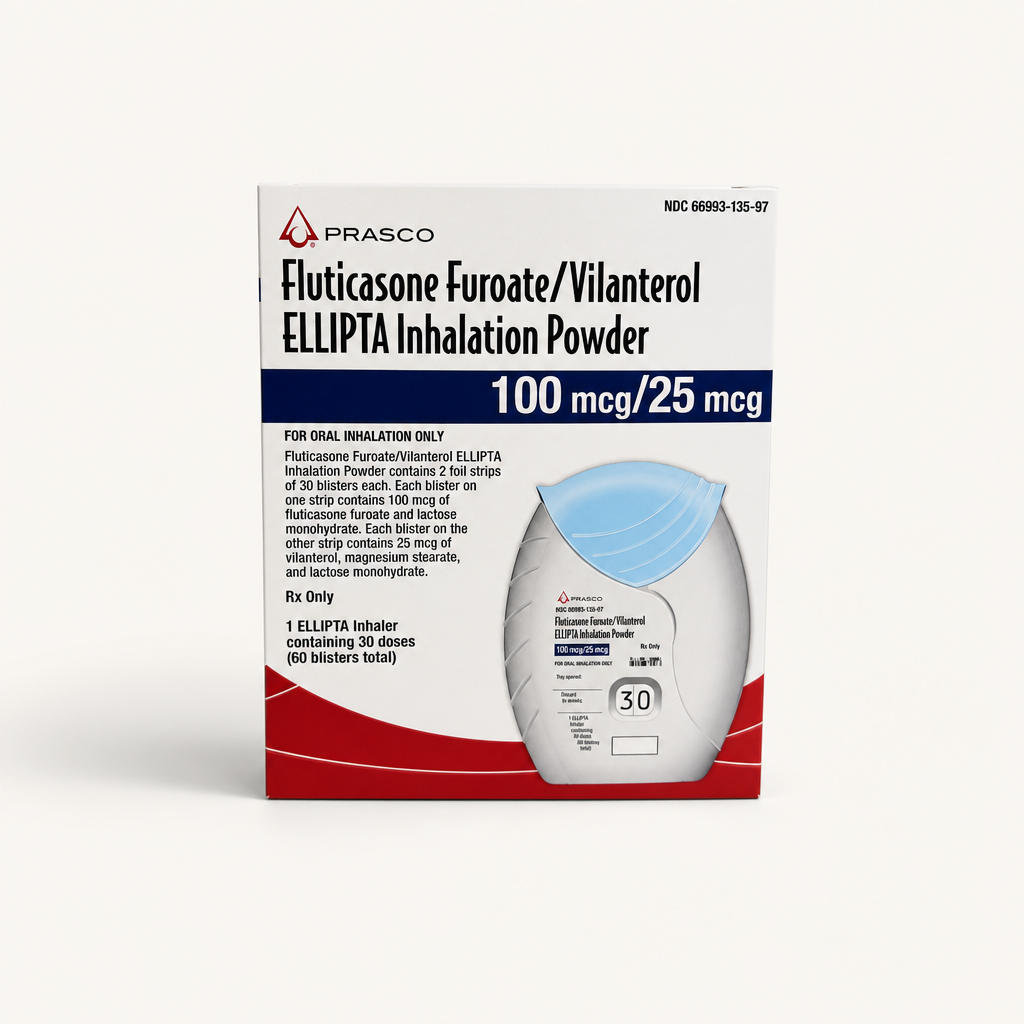
How It Works
Normally, the airways in your lungs stay wide and free of irritation. In those with conditions like asthma or COPD, the lungs face two main problems: the walls of the airways become swollen, and the muscles around them tighten. Fluticasone furoate and vilanterol address both issues.
- Lowering swelling: Fluticasone furoate is a steroid that works in the lungs to reduce inflammation. Reducing the swelling also helps the lungs to be less sensitive to triggers like dust, cold air, or smoke.
- Relaxing the muscles: Vilanterol is a long-acting medicine that targets the muscles around your airways. When these muscles are tight, it makes it harder for air to get through. Vilanterol relaxes those muscles, helping to keep airways open.
| Quick Facts | |
|---|---|
| Common Brands | Breo Ellipta |
| Drug Class | Inhaled corticosteroid (ICS) / long-acting beta-agonist (LABA) |
| Generic Status | Generic version available |
| Availability | Prescription only |
Dosing
Educational dosing for fluticasone furoate and vilanterol is based on its 24-hour activity window. This is a once-daily medication.
- Standard dose: The typical dose is one inhalation (puff) by mouth once a day.
- Consistency: Standard guidelines suggest taking your puff at the same time every single day. It can be taken in the morning or at night, as long as the timing remains consistent.
- Proper technique: Standard guidelines state that you do not need to shake this inhaler. Slide the cover down until you hear a click to load the powder. Providers typically advise breathing out fully away from the device, then taking a long, steady, deep breath through the mouthpiece.
- Holding your breath: After inhaling the powder, providers suggest trying to hold your breath for about 3 to 4 seconds to ensure the medicine settles into your lungs.
- Missing a dose: If you miss your scheduled dose, it is generally recommended to take it as soon as you remember. However, providers do not recommend taking more than one dose in a 24-hour period. If it is almost time for your next dose, it is generally accepted to wait and stay on your regular schedule.
Note: Dosing information below is educational only. Your prescribing physician will determine your specific dose based on your individual health needs. Always follow your healthcare provider’s instructions for exact dosing.
Uses
FDA-Approved Uses
The FDA approves fluticasone furoate and vilanterol for:
- Asthma maintenance: Long-term, once-daily treatment.
- COPD maintenance: Long-term management of airflow obstruction and reducing flare-ups for chronic lung conditions such as chronic bronchitis or emphysema.
Off-Label Uses
You may see fluticasone furoate and vilanterol prescribed for uses that are not FDA-approved. This is a common and legal practice called off-label prescribing, where a doctor uses their clinical judgment to prescribe a drug for a different (but well-researched) purpose.
Fluticasone furoate and vilanterol may be prescribed off-label for post-infectious cough. Some providers use this combination to settle the lingering, high-level inflammation and airways spasms that can follow severe viral pneumonia or bronchitis.
Side Effects
The medicine is inhaled directly into the lungs, which helps minimize side effects elsewhere in the body. However, local effects in the mouth and throat are common.
Common Side Effects
- Headache
- Sore throat or mouth pain
- Common cold symptoms (runny nose, congestion)
- Hoarseness or voice changes
- Oral thrush (fungal infection in the mouth)
Serious Side Effects
Serious side effects are rare, but it’s important to know what to look for if they do occur. It’s generally accepted that you stop taking the medication and immediately call the doctor if you experience any of the following symptoms:
- Pneumonia: Patients with COPD have an increased risk of lung infections while using inhaled steroids. It is generally advised to watch for fever, chills, or changes in mucus color.
- Paradoxical bronchospasm: A rare reaction where breathing gets suddenly worse immediately after use.
- Heart issues: Rapid or irregular heartbeat, chest pain, or elevated blood pressure.
- Eye problems: Long-term use of steroids may increase the risk of glaucoma or cataracts.
- Low potassium levels (hypokalemia): Fluticasone furoate and vilanterol can lead to low potassium levels, which can be serious. Symptoms include muscle cramps or twitching, constipation, and unusual weakness or tiredness.
- High blood sugar (hyperglycemia): Fluticasone furoate and vilanterol can raise blood sugar levels. Symptoms include confusion and increased hunger, thirst, or urination.
- Adrenal suppression: Long-term use of inhaled corticosteroids can reduce the adrenal glands’ ability to produce natural stress hormones, a condition called adrenal insufficiency. Symptoms include fatigue, weakness, low blood pressure, nausea, or vomiting.
- Weakened immune system: Steroids can make it harder for your body to fight off certain infections like chickenpox or measles.
- Severe allergic reactions: Symptoms include swelling of the face, lips, tongue, or throat; difficulty breathing or swallowing; racing heart; severe rash or itching; and/or fever.
Call your doctor immediately if you experience any concerning or prolonged symptoms.
Pharmacist Tips
Rinse And Spit
After your daily puff, it is advisable to rinse your mouth with water and spit it out. Providers do not recommend swallowing the water. This helps remove leftover steroid powder from your tongue and throat, which lowers your risk of developing oral thrush.
Don’t Wash The Device
Standard guidelines do not advise using water to clean your inhaler. Simply wipe the mouthpiece with a dry tissue or cloth once a week.
Watch The Counter
The Ellipta inhaler has a large dose counter on the front. When it reaches 0, the device is empty and must be thrown away, even if you still hear a slight rattling.
Mind The Foil Tray
It is generally advised only to open the foil tray when you are ready to start using the inhaler for the first time. Once removed from the tray, the medication is sensitive to humidity.
Keep Your Rescue Handy
Because this medication takes time to build up in your system, it will not stop a sudden attack. Standard guidelines recommend keeping a fast-acting rescue inhaler (such as albuterol) with you for emergencies.
Drug Interactions
Certain medications can interfere with how fluticasone furoate and vilanterol work or increase the risk of side effects. Let your doctor know if you take:
- Beta-blockers: Common blood pressure or heart medications like metoprolol or propranolol can block the airway-relaxing effects of vilanterol.
- Antifungals and antivirals: Drugs such as ketoconazole or ritonavir can increase the amount of steroid absorbed into the body, increasing the risk of systemic (whole body) side effects.
- MAOIs and antidepressants: These can increase the bronchodilator’s impact on your heart rate.
- Diuretics: Some water pills can lower your potassium. Using them with this inhaler may cause potassium levels to drop further, which can affect heart rhythm.
Always give your doctor and pharmacist a complete list of all your medications, vitamins, and supplements to check for potential interactions.
FAQs
What is the difference between brand Breo Ellipta and generic fluticasone furoate/vilanterol?
They contain the same active ingredients in the same doses. The generic version provides similar clinical effectiveness as the brand-name product but is often available at a lower cost.
Can fluticasone furoate/vilanterol cause frequent sore throats?
Yes. Inhaled steroids can irritate the throat tissues. It is generally accepted that rinsing your mouth and throat with water immediately after each dose is the best way to prevent this irritation and the development of thrush.
What should I do if the powder leaves a gritty taste in the back of my mouth?
A slight taste or gritty sensation is normal for dry powder inhalers. Rinsing your mouth after use will help remove this residue. If you find the powder too difficult to tolerate, speak with your doctor about metered-dose (spray) alternatives.
Is it safe to use fluticasone furoate/vilanterol if I have glaucoma?
Standard guidelines suggest using caution. Inhaled steroids can occasionally increase intraocular pressure. If you have glaucoma or cataracts, it is generally advised that you should have regular eye exams while using this medication.
What happens if I accidentally open the cover and close it without inhaling?
Opening the cover loads the dose. If you close it without inhaling, that dose is lost and delivered to the device’s internal waste area. Providers advise against reloading it, as you could accidentally inhale a double dose. It is generally accepted to wait for your next scheduled time.
Is it safe to use fluticasone furoate/vilanterol if you’re taking a beta blocker?
It depends on the type of beta blocker. Some can tighten your airways, making the inhaler less effective. Your doctor will determine if your heart medication and your inhaler are compatible.
Does this maintenance medication actively heal the lungs?
It does not cure the condition or reverse permanent scarring, but it does help treat active inflammation and swelling. This allows the lungs to function as normally as possible and prevents further damage from repeated attacks.
How long is the inhaler good for once I remove it from the moisture pouch?
Once you open the foil tray, the inhaler is good for six weeks. It is a good idea to write the discard date on the inhaler label as soon as you open it.
What happens if I miss my scheduled morning dose?
It is generally advised to take it as soon as you remember, but skip it if it is nearly time for your next day’s dose. Standard guidelines do not recommend taking two doses at the same time.
Comparable Medications
Breo Ellipta, Wixela Inhub, or Trelegy Ellipta?
Here are some possible alternatives to fluticasone furoate and vilanterol:
Breo Ellipta
From $589.99
The brand-name version of fluticasone furoate and vilanterol. It is a two-in-one inhaler providing an anti-inflammatory and a 24-hour airway opener. It is taken once daily.
Wixela Inhub
From $129.99
This is also a combination of a steroid and a bronchodilator. However, it uses different active ingredients (fluticasone propionate and salmeterol). Unlike the once-daily Breo Ellipta, Wixela must be used twice daily (morning and night).
Trelegy Ellipta
From $899.99
This is a three-in-one inhaler. It contains the same two medicines as Breo Ellipta but adds a third ingredient (umeclidinium) to open the airways further. It is typically prescribed for patients who need more control than Breo can provide alone.
We Have Fluticasone Furoate and Vilanterol in Stock. Get Yours Today!
Important: Information on this page is for educational purposes only. Prescribing decisions are made by independent, licensed providers. TelyRx operates technology-enabled pharmacies and a telehealth platform that connects patients with licensed providers. Prescriptions, when provider-approved and issued, are filled and shipped by TelyRx-affiliated pharmacies. We do not employ physicians or make prescribing decisions. Learn more about our editorial standards here.