

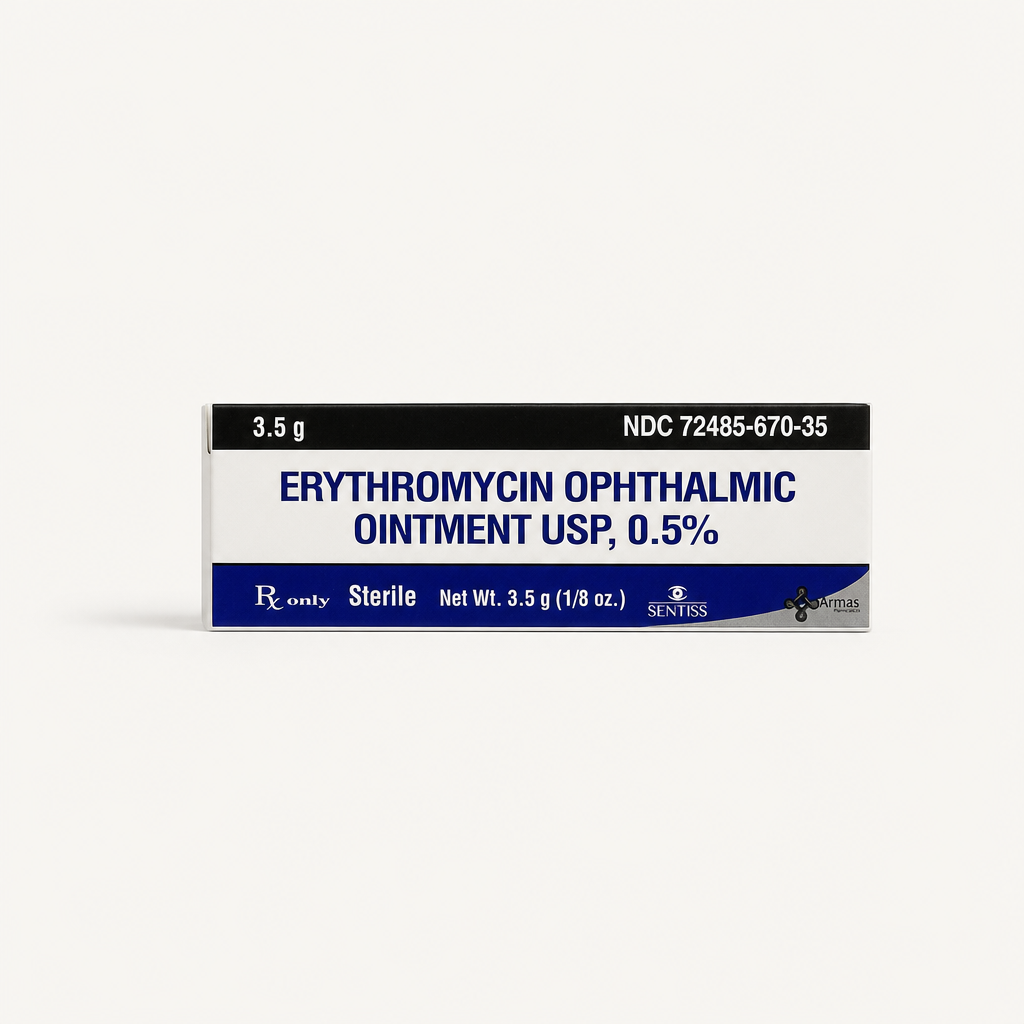
How It Works
Erythromycin ophthalmic ointment works by inhibiting bacterial growth on the ocular surface, particularly the cornea and conjunctiva. It stops bacterial growth without disrupting normal human cellular processes.
| Quick Facts | |
|---|---|
| Common Brands | Ilotycin, Romycin |
| Drug Class | Ophthalmic macrolide antibiotic |
| Generic Status | Generic is available |
| Availability | Prescription only |
Dosing
For the treatment of active eye infections, providers typically recommend applying a 1-centimeter ribbon of erythromycin ophthalmic ointment to the affected eye(s) up to 6 times a day, depending on the severity of the infection. Your doctor will provide instructions about how often to use the ointment.
When applying the medication, it is generally advised to tilt the head forward or slightly back, pull down the lower eyelid to form a small pouch, and squeeze the ointment into this space.
Note: Dosing information below is educational only. Your prescribing physician will determine your specific dose based on your individual health needs. Always follow your healthcare provider’s instructions for exact dosing.
Uses
FDA-Approved Uses
Erythromycin ophthalmic ointment is FDA-approved to treat bacterial infections that affect the surface of the eye. These conditions include conjunctivitis (pink eye) and blepharitis, which are caused by bacteria that are affected by erythromycin.
Off-Label Uses
You may see erythromycin ophthalmic ointment prescribed for uses that are not “FDA-approved.” This is a common and legal practice called “off-label” prescribing, where a doctor uses their clinical judgment to prescribe a drug for a different (but well-researched) purpose.
Erythromycin ophthalmic ointment may be prescribed off-label to treat styes that do not improve with non-medical treatments, such as warm compresses and eyelid scrubs.
Side Effects
Like all medications, erythromycin ophthalmic ointment can cause side effects. Some common side effects may improve over time as your body adjusts to the medication. Other side effects may be serious and require medical attention.
Common Side Effects
- Mild eye irritation
- Eye redness
- Temporary blurred vision
Serious Side Effects
Serious side effects are rare, but it’s important to know what to look for if they do occur.
- Severe allergic reactions: A serious allergic reaction may involve breathing problems, wheezing, a rapid heartbeat, hives, itching, or swelling of the face, lips, tongue, or throat. Seek immediate medical care if you experience signs of an allergic reaction to this ointment.
- Secondary eye infections: Using this medication over a long period can sometimes contribute to an infection with other types of germs, such as fungi. This can cause symptoms such as worsening blurry vision, pinkness, or eye discharge.
Call your doctor immediately if you experience any concerning or prolonged symptoms.
Pharmacist Tips
Wash Your Hands Frequently
Wash your hands with soap and water before and after applying the ointment. This helps prevent contamination of the ointment tube and prevents new bacteria from entering your eye.
Avoid Touching The Applicator Tip
Be careful not to let the tube tip touch your eye, eyelid, fingers, or any other surfaces, as this can contaminate the medication and increase the risk of further infections.
Remove Contact Lenses
Providers typically recommend against wearing contact lenses if you have an eye infection.
Complete The Entire Course
Do not stop applying the ointment before your prescribed treatment period is over, even if your eyes feel better. Stopping treatment early can cause the infection to return or become harder to treat.
Expect Temporary Blurry Vision
Because this is an ointment, it can temporarily blur your vision immediately after application. Do not drive a car or operate machinery until your vision clears.
Dispose Of Contaminated Items
To prevent reinfection, throw away any eye makeup, face makeup, or disposable contact lenses you used while your eye was infected.
Drug Interactions
Certain medications and substances can interact with erythromycin ophthalmic ointment, potentially altering its effectiveness or increasing the risk of side effects. While there are generally no known interactions with food or drinks, some drug interactions are possible.
- Clindamycin: Using this medication alongside erythromycin may require your doctor to adjust the dose or change how often you take one or both medications.
- Warfarin: If both of these medications are prescribed together, your healthcare provider may need to monitor you closely and adjust your dosages.
Always give your doctor and pharmacist a complete list of all your medications, vitamins, and supplements to check for potential interactions.
FAQs
Why can this antibiotic cause such painful stomach cramps right after you take it?
While stomach cramps are a known side effect of erythromycin, the ophthalmic ointment is applied directly to the eye and is designed for minimal systemic absorption. This helps reduce the likelihood of stomach cramps from the ophthalmic ointment.
If you experience severe stomach cramps after using the eye ointment, contact your healthcare provider about this side effect.
Can you take cholesterol pills like statin medications while on this prescription?
Clinical data do not indicate any known interaction between statin medications or cholesterol pills and erythromycin ophthalmic ointment. Because the ointment is applied locally to the eye, systemic interactions are less common.
That said, consult your pharmacist or prescribing doctor about whether this ointment could interact with any medications that you take.
What is the difference between oral pills, topical erythromycin gel, and eye drops?
Erythromycin comes in several forms designed for different areas of the body. The ophthalmic ointment is formulated specifically for the eye’s delicate surface to treat conditions such as conjunctivitis.
Topical gels treat the skin, and oral pills or injections treat bacterial infections throughout the body.
Can taking this medication interact with birth control pills?
Standard guidelines have not found any established interactions between erythromycin ophthalmic ointment and birth control pills. However, it is always best to review your current medication list with your doctor before starting to use erythromycin ophthalmic ointment.
Can I drink alcohol or have a beer while using erythromycin?
It is unknown if drinking alcohol affects erythromycin ophthalmic ointment. However, heavy drinking can affect your body’s immune response, making it harder for your system to fight a bacterial infection.
Why does my skin look slightly yellow after a few days on this?
Skin yellowing (jaundice) is not a typical side effect of erythromycin ophthalmic ointment. If you notice your skin or eyes turning yellow, this could be a sign of a separate medical issue, and you should seek prompt medical attention.
How many times a day should I use erythromycin drops?
For the treatment of an active eye infection, the typical dosage is a 1-centimeter ribbon of the ointment applied to the affected eye(s) up to 6 times a day. The exact frequency will depend on the severity of your infection and your doctor’s instructions.
Can I take erythromycin if I’m allergic to penicillin?
Doctors may recommend erythromycin if you have a penicillin allergy. Erythromycin belongs to a class of drugs called macrolide antibiotics rather than the penicillin family. Doctors commonly prescribe erythromycin as an alternative for people allergic to penicillin.
Comparable Medications
Erythromycin Ophthalmic Ointment, Azithromycin (Zithromax), Amoxicillin, Clindamycin, Metoclopramide?
Azithromycin
From $28.99
This is another medication within the macrolide antibiotic class that operates similarly to erythromycin.
Amoxicillin Capsules
From $28.99
This medication is a penicillin antibiotic, distinct from macrolide antibiotics like erythromycin.
Clindamycin Capsules
From $46.99
This prescription medication may interact with erythromycin eye ointment.
Metoclopramide
This is a separate medication with a different mechanism of action from macrolide antibiotics or penicillins.
We Have Erythromycin Ophthalmic Ointment in Stock. Get Yours Today!
Important: Information on this page is for educational purposes only. Prescribing decisions are made by independent, licensed providers. TelyRx operates technology-enabled pharmacies and a telehealth platform that connects patients with licensed providers. Prescriptions, when provider-approved and issued, are filled and shipped by TelyRx-affiliated pharmacies. We do not employ physicians or make prescribing decisions. Learn more about our editorial standards here.