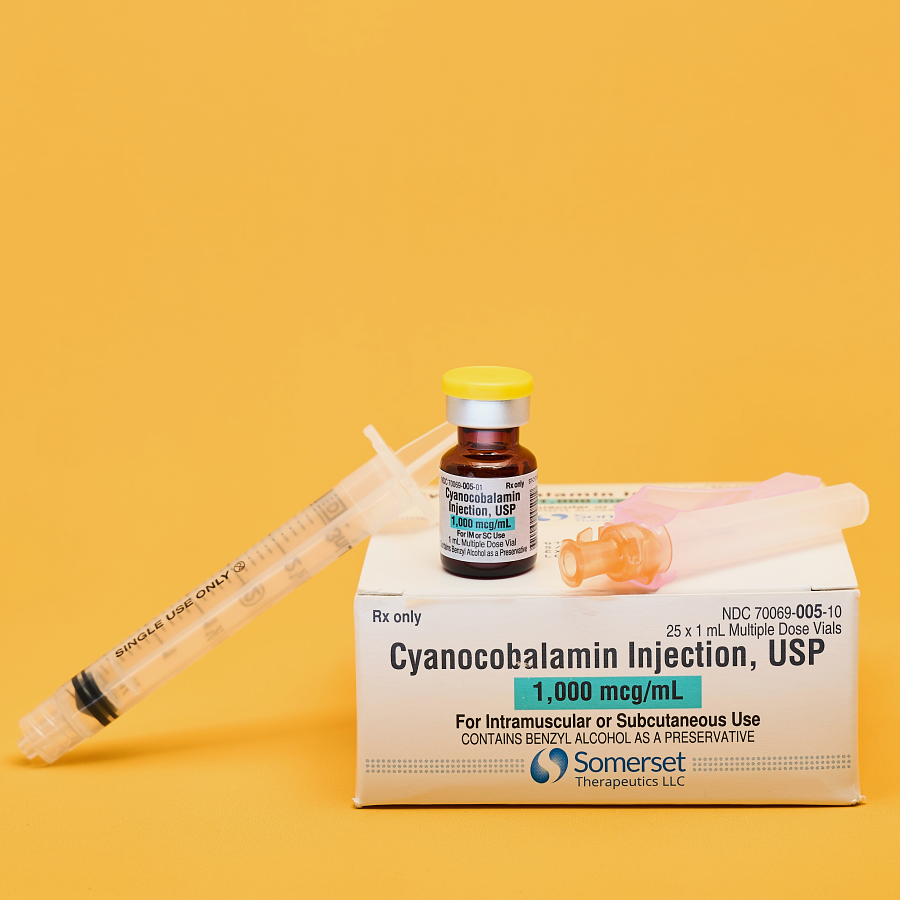
How It Works
Vitamin B12 is an essential nutrient involved in several biological processes. It helps your body grow red blood cells, maintain healthy nerve cells, and make DNA. But, your body does not create it on its own. Many people get enough vitamin B12 through a standard diet. Specifically, you can find it in foods such as meat, eggs, milk, seafood, and fortified cereals and nutritional yeast.
However, some people do not get enough vitamin B12 through their diet, or have trouble absorbing it due to certain types of anemia or gastrointestinal disorders. Pregnancy can also affect your vitamin B12 levels. Vitamin B12 supplementation through cyanocobalamin (vitamin B12) injections and other methods can help treat vitamin B12 deficiency (low vitamin B12 levels).
| Quick Facts | |
|---|---|
| Common Brands | Berubigen, Betalin-12, Cobex, Crystamine, Cyanoject, Dodex, Nascobal, Redisol, Rubramin PC, Vibisone |
| Drug Class | B Vitamin, Water-soluble vitamin, Dietary supplement |
| Generic Status | Generic version of Cobalamin |
| Availability | Prescription only |
Dosing
The dosing of cyanocobalamin (vitamin B12) injection can vary. For general maintenance therapy and preventing deficiency, it is typically prescribed as an intramuscular or subcutaneous (under the skin) injection.
A common dosage for maintenance therapy is 1 mL (1,000 mcg) administered once a month. If performing the injection yourself, you can do so into the upper, outer thigh. If a healthcare provider or caregiver administers the shot, it may be given in the deltoid muscle (upper arm) or the gluteal muscle.
It is important to use a clean needle and syringe for every injection to maintain sterility and prevent infection.
Note: Dosing information is educational only. Your prescribing physician will determine your specific dose based on your individual health needs. Always follow your healthcare provider’s instructions for exact dosing.
Uses
FDA-Approved Uses
Cyanocobalamin (Vitamin B12) injections are FDA-approved to treat vitamin B12 deficiency that may be caused by dietary limitations, pernicious anemia, pregnancy, and certain gastrointestinal disorders.
Off-Label Uses
You may see cyanocobalamin (vitamin B12) injections prescribed for uses that are not “FDA-approved.” This is a very common and legal practice called “off-label” prescribing, where a doctor uses their clinical judgment to prescribe a drug for a different (but well-researched) purpose.
While the primary medical use is to treat deficiencies, providers may occasionally prescribe vitamin B12 injections off-label for other health goals, such as improving energy levels, metabolism, and general wellness.
Get Savings Updates for a Cyanocobalamin
Join our mailing list for exclusive deals and more.
Side Effects
Like all medications, cyanocobalamin (vitamin B12) injection can cause side effects. Some common side effects may improve over time as your body adjusts to the medication. Other side effects may be serious and require medical attention.
Common Side Effects
- Headache
- Fatigue or low energy
- Nausea
- Diarrhea
- Common cold symptoms (runny nose, sore throat)
- Joint pain
- Dizziness
- Tingling in the hands or feet
- Injection site reactions (mild pain, redness, or swelling at the spot where the shot was given)
Serious Side Effects
Serious side effects are rare, but it’s important to know what to look for if they do occur. Stop using cyanocobalamin (vitamin B12) injection and call your doctor immediately if you experience:
- Severe allergic reactions: Symptoms include swelling of the face, lips, tongue, or throat; difficulty breathing or swallowing; severe rash or itching; fever.
- Hypokalemia (low potassium): People with pernicious anemia may have a higher risk of experiencing low potassium levels when taking supplemental cyanocobalamin (vitamin B12). Symptoms include muscle cramps, weakness, fatigue, difficulty breathing, or irregular heartbeats.
- Leber’s optic atrophy: Cyanocobalamin (vitamin B12) supplements can potentially worsen optic nerve damage and should not be used by people with this rare, hereditary eye condition.
Call your doctor immediately if you experience any concerning or prolonged symptoms.
Pharmacist Tips
Store at Room Temperature
Cyanocobalamin (vitamin B12) injection liquid should be stored at room temperature between 68°F and 77°F (20°C and 25°C) in a cool, dry place. Do not freeze the medication.
Limit or Avoid Alcohol
It’s recommended to avoid drinking large amounts of alcohol, as it may interfere with the absorption of vitamin B12 and reduce the effectiveness of the treatment.
Consider Dietary Sources
Natural sources of vitamin B12 include foods like beef, poultry, seafood, dairy, and fortified cereals and nutritional yeast.
Keep Up With Bloodwork
Regular blood tests are important to monitor your B12 levels, as well as iron, folic acid, and potassium.
Drug Interactions
Certain medications and substances can interact with cyanocobalamin, potentially altering how it works or increasing the risk of side effects. For example:
Always give your doctor and pharmacist a complete list of all your medications, vitamins, and supplements to check for potential interactions.
FAQs
How often do I need to inject cyanocobalamin?
For maintenance therapy, the typical dosage is 1 mL injected once a month. However, providers may prescribe cyanocobalamin more frequently for acute deficiencies. Always follow your provider’s advice.
Why does the liquid look bright red or pink?
The solution’s distinct red or pink color is expected and comes from the manufacturing process, when the liquid interacts with light.
Why did I break out in acne after starting B12 injections?
While not listed as a most common side effect, individual responses to high-dose vitamins vary. If you notice skin changes or acne after starting B12 injections, consult your healthcare provider.
Does cyanocobalamin hurt more than other shots?
Mild injection site pain can be a side effect of cyanocobalamin (vitamin B12) injections. Using a clean needle and injecting into a relaxed muscle or under the skin can help minimize discomfort.
Do I need to keep the vial in the refrigerator or in the dark?
Cyanocobalamin injection vials should be stored at room temperature (68°F to 77°F) in a cool, dry place protected from light. Refrigeration is generally not required.
Can cyanocobalamin cause low potassium levels (hypokalemia)?
Yes, in rare cases. When cyanocobalamin is used to treat pernicious anemia, low potassium levels may occur. Your doctor may recommend regular monitoring of your potassium levels.
Is cyanocobalamin safe to take during pregnancy?
Generally, yes, cyanocobalamin is considered safe to take during pregnancy. However, you must tell your healthcare provider if you are pregnant or planning to become pregnant so they can determine the correct dosage form for you.
What is the difference between cyanocobalamin and methylcobalamin injections?
Methylcobalamin is an “active” form of vitamin B12. Once cyanocobalamin is injected, the body converts it into methylcobalamin.
How long does it take to feel an energy boost after an injection?
Response times vary by individual and the severity of the vitamin B12 deficiency. If you’re not noticing an energy boost after a B12 injection, talk to your healthcare provider.
Can I overdose on injectable Vitamin B12?
Vitamin B12 is water-soluble, meaning the body typically expels excess amounts through urine. While “overdosing” in the toxic sense is rare, high doses can lead to specific imbalances like low potassium. If you’re worried you have used too much, call Poison Control (1-800-222-1222) or 911.
Does alcohol interfere with B12 injections?
Alcohol can impair the body’s ability to absorb and utilize B12. It is unknown if alcohol specifically affects the injected form to the same degree as oral forms, but limiting drinking is recommended.
Is cyanocobalamin synthetic or natural?
Cyanocobalamin is a man-made (synthetic) form of Vitamin B12.
Comparable Medications
Hydroxocobalamin
An injectable form of vitamin B12 used to treat vitamin B12 deficiency as well as cyanide poisoning.
Methylcobalamin
A naturally occurring, u0022activeu0022 form of vitamin B12 used to treat vitamin B12 deficiency.
Oral B12 tablets (cyanocobalamin/methylcobalamin)
An oral form of supplemental vitamin B12 used to treat vitamin B12 deficiency.
We Have a Cyanocobalamin in Stock. Get Yours Today!
Important: Information on this page is for educational purposes only. Prescribing decisions are made by independent, licensed providers. TelyRx operates technology-enabled pharmacies and a telehealth platform that connects patients with board-certified licensed providers. Prescriptions, when provider-approved and issued, are filled and shipped by TelyRx-affiliated pharmacies. We do not employ physicians or make prescribing decisions. Learn more about our editorial standards here.