

How It Works
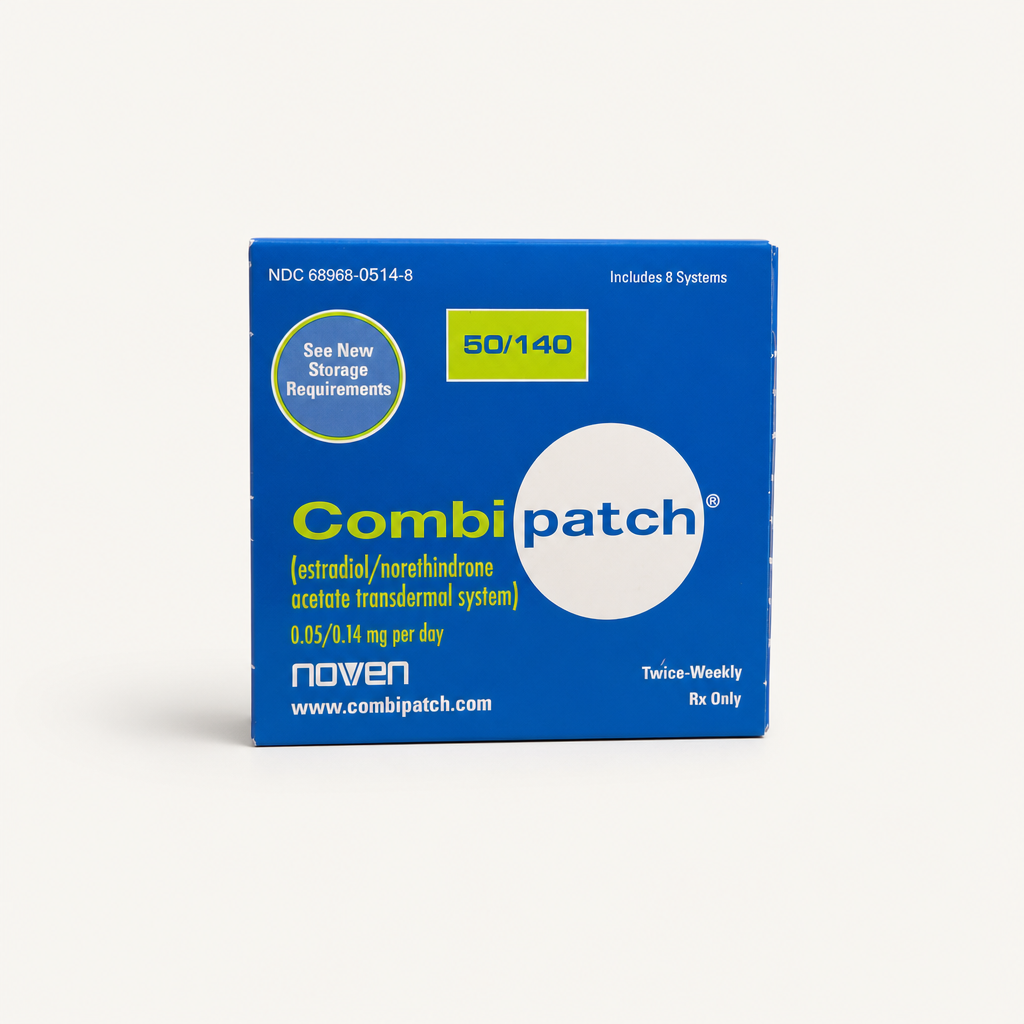
CombiPatch delivers estradiol, a form of estrogen identical to what the body naturally produces, along with norethindrone acetate, a synthetic progestin. This helps address symptoms caused by the natural reduction in these hormones that occurs during menopause.
Many symptoms of menopause are the result of declining production of estrogen in the body. CombiPatch contains estradiol, which is designed to replace the loss of estrogen.
CombiPatch also contains a progestin hormone called norethindrone acetate. The addition of progestin is intended to reduce the risk of thickening of the lining of the uterus (endometrial hyperplasia) and a type of uterine cancer (endometrial cancer) in postmenopausal women who have a uterus.
| Quick Facts | |
|---|---|
| Common Brands | CombiPatch |
| Drug Class | Estrogen and progestin, hormone replacement therapy |
| Generic Status | No generic is available |
| Availability | Prescription only |
Dosing
CombiPatch is applied to the skin of the lower abdomen twice a week, meaning a new patch is placed every three to four days. It is available in two strengths, each delivering 0.05 mg of estradiol per day, combined with either 0.14 mg or 0.25 mg of norethindrone acetate per day.
For some patients, CombiPatch may also be used as part of a continuous sequential regimen. In this schedule, an estradiol-only patch is used for the first 14 days of a 28-day cycle, followed by CombiPatch for the remaining 14 days.
Your healthcare provider will prescribe the lowest effective dose for the shortest duration needed to treat your symptoms and should reevaluate your treatment every 3 to 6 months to determine whether therapy is still appropriate.
Note: Dosing information below is educational only. Your prescribing physician will determine your specific dose based on your individual health needs. Always follow your healthcare provider’s instructions for how and when to apply your patches.
Uses
FDA-Approved Uses
CombiPatch is FDA-approved to treat moderate-to-severe vasomotor symptoms of menopause, including hot flashes, night sweats, vaginal dryness, and vaginal irritation. It is also approved to treat low estrogen levels (hypoestrogenism) caused by certain conditions that affect ovarian function, such as primary ovarian failure, hypogonadism, or surgical removal of the ovaries.
The combination of estradiol and norethindrone acetate as hormone therapy may also be prescribed to prevent bone loss, known as osteoporosis, in women after menopause. Because of the potential risks of hormone therapy, it is generally reserved for women at significant risk of osteoporosis when non-estrogen medications are not appropriate.
Off-Label Uses
You may see CombiPatch prescribed for uses that are not “FDA-approved.” This is a common and legal practice called “off-label” prescribing, where a doctor uses their clinical judgment to prescribe a drug for a different (but well-researched) purpose.
CombiPatch does not have common off-label uses but may be considered for hormone-related health issues according to a doctor’s clinical assessment.
Side Effects
Like all medications, CombiPatch can cause side effects. Some common side effects may improve over time as your body adjusts to the medication. Other side effects may be serious and require medical attention.
Common Side Effects
- Breast pain or tenderness
- Headache
- Vaginal discharge or irritation
- Irregular vaginal bleeding or spotting
- Weakness
- Back pain
- Nausea, vomiting, or diarrhea
- Stomach cramps or bloating
- Painful period
- Trouble sleeping
- Mood changes or depression
- Weight gain
- Hair loss
- Skin irritation at the application site
- Fluid retention
Serious Side Effects
Serious side effects are rare, but it’s important to know what to look for if they do occur.
- Blood clots: CombiPatch can increase the risk of developing serious blood clots, including deep vein thrombosis (DVT) and pulmonary embolism (PE). It may also increase the risk of serious cardiovascular events such as stroke or heart attack.
- Severe allergic reactions: Some patients may experience serious allergic responses resulting in hives, facial swelling, breathing problems, or throat tightness.
- Cancer risk: Hormone replacement therapy may increase the risk of certain cancers, such as breast and endometrial cancer. The norethindrone component helps reduce the risk of endometrial cancer associated with estrogen therapy in women with a uterus.
- Dementia: Patients aged 65 or older may have an increased risk of developing dementia while using hormone therapies. However, it is unknown whether this finding applies to younger postmenopausal women.
- Gallbladder and liver problems: Estrogen therapy can increase the risk of gallbladder disease, gallstones, or liver damage. Signs of these issues can include jaundice or severe stomach pain.
- Increased blood pressure: CombiPatch can raise blood pressure or worsen existing high blood pressure (hypertension).
- Uterine fibroid growth: The hormones in CombiPatch can cause uterine fibroids (a type of benign tumor) to grow larger, causing pain or heavy bleeding.
- High triglycerides: CombiPatch may raise triglyceride levels in the blood, which can lead to pancreas inflammation, especially in people who already have high levels of triglycerides. This effect appears to be less common with transdermal estrogen than with oral estrogen.
- Calcium level changes: CombiPatch may affect calcium levels in certain people. It should be used with caution in patients with hypoparathyroidism and in those with breast cancer that has spread to the bones because it may increase calcium levels.
Call your doctor immediately if you experience any concerning or prolonged symptoms.
Pharmacist Tips
Store Patches Properly
Keep unopened pouches of CombiPatch in the refrigerator to protect the medication. Let the pouch come to room temperature before applying a patch.
The Right Application Site
Apply the patch to a smooth, clean, dry, and hairless area on your lower stomach, ensuring the skin is free of lotions, oils, or powders.
Areas To Avoid
Do not apply CombiPatch to your breasts, waistline, or any skin that is injured, burned, irritated, tattooed, or scarred.
Site Rotation
Apply each new patch to a different area of your lower abdomen to help prevent skin irritation. Allow at least one week before applying a patch to the same site again.
Managing A Loose Patch
If CombiPatch falls off, attempt to reapply the same patch. If it will not stick, apply a new patch to a different area but maintain your original schedule for changing patches.
Check After The Patch Gets Wet
Instructions note that it is generally safe to shower and bathe while wearing CombiPatch. However, after the patch gets wet, you should check to make sure that it has not fallen off.
Safe Disposal
When removing the patch, fold it in half so the sticky sides join together, place it in a child-proof container, and throw it in the trash.
Removing Residue
If sticky adhesive is left on your skin after removing a patch, let the area dry for 15 minutes, then gently rub it with an oil-based lotion to clean the skin.
Drug Interactions
Certain medications and substances can interact with CombiPatch, potentially altering how it works or increasing the risk of side effects.
- Seizure medications: Drugs like carbamazepine and phenytoin may increase the breakdown of estradiol, which can reduce the effectiveness of CombiPatch.
- Antibiotics and antifungals: Some medications, including clarithromycin, erythromycin, ketoconazole, and itraconazole, may increase estradiol levels and the risk of side effects
- Tuberculosis medications: Drugs like rifampin and rifabutin can interfere with how well CombiPatch works and reduce the effectiveness.
- St. John’s wort: This herbal supplement can alter the effectiveness of CombiPatch.
- HIV and AIDS medicines: Some HIV medications, including ritonavir, may change estradiol levels and affect how well CombiPatch works. The direction of the interaction can vary depending on the medication.
- Thyroid medications: CombiPatch can increase levels of thyroid-binding proteins, which may reduce the amount of thyroid hormone available to your body. Patients taking thyroid replacement medications such as levothyroxine may need a dose adjustment.
- Blood thinners: CombiPatch may affect how well anticoagulants such as warfarin work. Your provider may need to monitor your treatment and adjust your dose if necessary.
Always give your doctor and pharmacist a complete list of all your medications, vitamins, and supplements to check for potential interactions.
FAQs
Why must patients store CombiPatch in the refrigerator before dispensing or long-term use?
Pharmacists note that unopened pouches of CombiPatch must be kept in the refrigerator to maintain the stability and effectiveness of the active hormones until they are ready to be used.
How long can a CombiPatch remain safely at room temperature once you bring the medication home?
CombiPatch should be stored in the refrigerator until you are ready to use it. Remove a patch from the refrigerator and pouch immediately before application. The FDA labeling does not specify how long an unopened patch can safely remain at room temperature, so avoid storing patches outside the refrigerator unless directed by your provider or pharmacist.
Why is CombiPatch specifically prescribed for menopausal women who still have an intact uterus?
CombiPatch contains estrogen and progestin. For menopausal women who still have a uterus, hormone replacement therapy with estrogen alone can cause the uterine lining to thicken, increasing the risk of endometrial cancer. Combining progestin with estrogen in CombiPatch is designed to reduce this risk.
How often should a patient change their CombiPatch during a standard week?
Providers indicate that a patient should change their CombiPatch twice a week, which means wearing a single patch for three to four days before replacing it with a new one.
Can CombiPatch be applied directly to the breasts or the upper chest?
No, usage instructions state that CombiPatch should not be applied on or near the breasts. The hormones in CombiPatch can be absorbed into the breast tissue, which increases the risk of side effects and complications.
What should I do if a CombiPatch falls off before the scheduled changing day?
If a patch falls off early, try to stick the same patch back onto your skin. If it no longer sticks securely, apply a new patch to a different area of your lower stomach. Continue with your original replacement schedule for the next patch.
Is it safe to wear a CombiPatch while swimming, bathing, or using a hot tub?
CombiPatch is designed to remain in place during normal bathing and showering, but prolonged water exposure or friction may cause the patch to loosen. Check that the patch remains securely attached afterward.
Swimming is not specifically addressed in the FDA labeling, and prolonged exposure to hot water, such as in a hot tub, should be approached with caution because heat may affect medication absorption.
Can CombiPatch cause irregular vaginal bleeding or spotting during the first few months of use?
Irregular vaginal bleeding or spotting is a common side effect when starting CombiPatch. It may also occur if the patch is not changed according to the prescribed schedule.
Can a patient cut a CombiPatch in half to reduce the hormone dosage?
Guidelines indicate that you should never cut a CombiPatch. The patch is designed to release a steady, controlled amount of hormones over a few days, and cutting it can disrupt this release rate. This may make the medication less safe or less effective.
Why must patients rotate the application site each time they apply a new CombiPatch?
Rotating the application site to a different area of the lower abdomen helps prevent skin irritation, redness, and discomfort. Pharmacists suggest avoiding applying a patch to the exact same spot two times in a row and allowing at least one week to pass before applying a patch to the same site again.
Does wearing a CombiPatch treat or prevent postmenopausal osteoporosis?
Estrogen therapy can help slow bone loss and reduce the risk of fractures after menopause. However, preventing osteoporosis is not an FDA-approved indication for CombiPatch, and it should not be used specifically for osteoporosis prevention unless your provider determines it is appropriate based on your individual needs.
What is the difference between the CombiPatch 0.05/0.14 mg dosage and the 0.05/0.25 mg dosage?
Both dosages provide the same amount of estradiol (0.05 mg), but the second option releases a higher daily dose of norethindrone (0.25 mg instead of 0.14 mg). Your provider will determine the appropriate progestin strength based on your specific health needs.
Comparable Medications
CombiPatch, Climara, Vivelle-Dot, Prempro, Climara Pro, Estring?
Climara
An estradiol-only transdermal patch used to treat menopausal symptoms. It is applied once weekly, while CombiPatch is applied twice weekly.
Vivelle-Dot
An estradiol-only transdermal patch applied twice weekly. Unlike CombiPatch, it does not contain a progestin to provide endometrial protection.
Prempro
An oral combination of estrogen and progestin used to treat menopausal symptoms. Unlike CombiPatch, Prempro is taken as a tablet rather than applied as a patch.
Climara Pro
A combined estradiol/levonorgestrel transdermal patch used to treat menopausal symptoms. It is applied once weekly, compared with twice-weekly CombiPatch.
Estring
A low-dose vaginal estradiol ring used to treat vaginal and vulvar symptoms associated with menopause. Unlike CombiPatch, it provides primarily local treatment and is not intended to treat symptoms such as hot flashes.
We Have CombiPatch in Stock. Get Yours Today!
Important: Information on this page is for educational purposes only. Prescribing decisions are made by independent, licensed providers. TelyRx operates technology-enabled pharmacies and a telehealth platform that connects patients with licensed providers. Prescriptions, when provider-approved and issued, are filled and shipped by TelyRx-affiliated pharmacies. We do not employ physicians or make prescribing decisions. Learn more about our editorial standards here.