

How It Works
As a lincosamide antibiotic, clindamycin inhibits bacterial protein synthesis, which stops bacteria from growing.
| Quick Facts | |
|---|---|
| Common Brands | Cleocin, Cleocin-T, Clindagel |
| Drug Class | Lincosamide antibiotic |
| Generic Status | Generic is available |
| Availability | Prescription only |
Dosing
Dosing for clindamycin depends on the form prescribed and the severity of the infection.
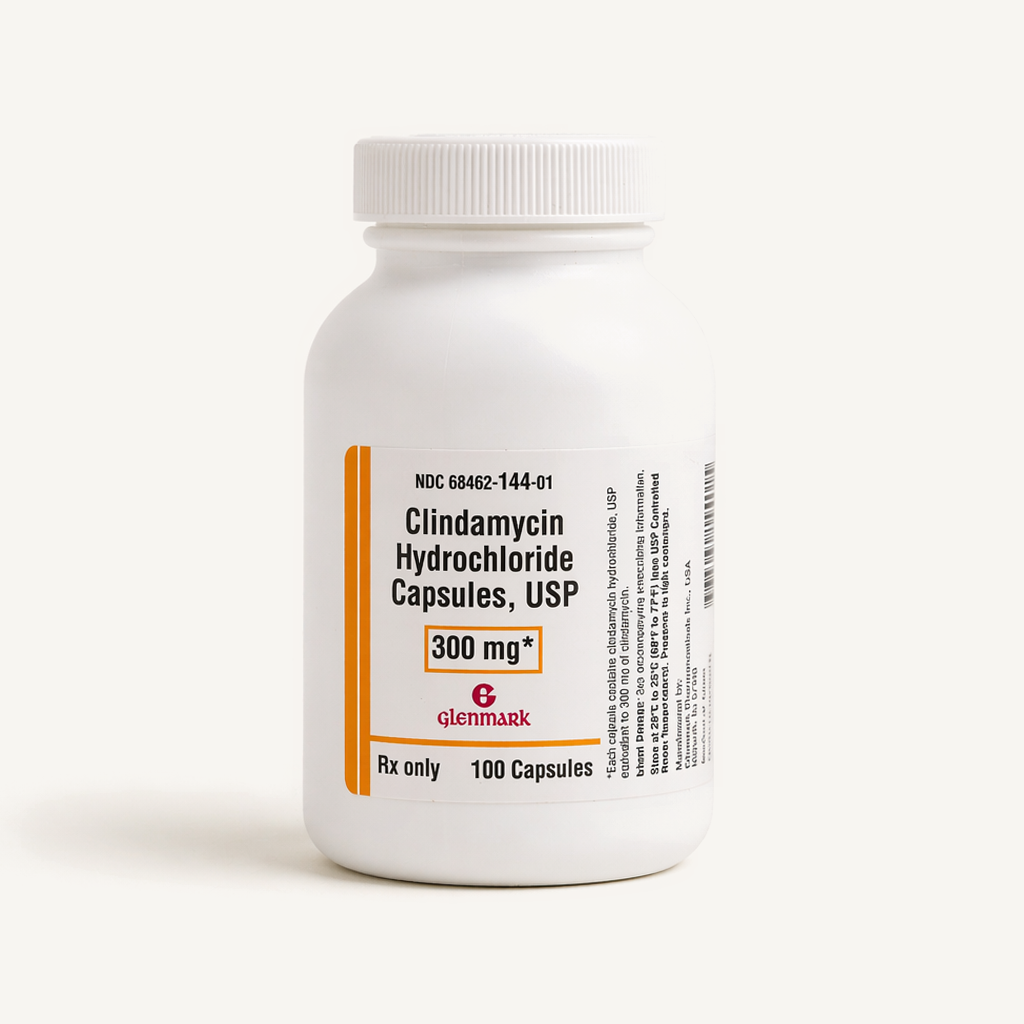
- Oral capsules: Clindamycin capsules come in 75 mg, 150 mg, and 300 mg strengths. The recommended dose is 150-300 mg, taken by mouth every 6 hours. For more severe infections, the recommended dose is 300-450 mg by mouth every 6 hours.
- Topical gel: A tube of clindamycin 1% gel contains 30 grams. The recommended dose is a thin film applied to the affected area twice daily.
- Vaginal cream: The recommended dose is applied intravaginally at bedtime for 3 to 7 days.
Your healthcare provider will tell you how long you need to take clindamycin. It is strongly recommended to complete the full course of treatment, even if your symptoms improve sooner. This helps ensure the infection is eliminated and reduces the risk of it returning and becoming resistant to antibiotics.
Note: Dosing information below is educational only. Your prescribing physician will determine your specific dose based on your individual health needs. Always follow your healthcare provider’s instructions for exact dosing.
Uses
FDA-Approved Uses
Clindamycin is FDA-approved to treat:
- Lung infections, including pneumonia
- Skin infections
- Blood infections
- Abdominal infections, including peritonitis
- Pelvic and genital tract infections, including endometritis, abscesses, and cellulitis
- Bone and joint infections
- Strep throat
- Acne vulgaris
- Bacterial vaginosis
Off-Label Uses
You may see clindamycin prescribed for uses that are not “FDA-approved.” This is a very common and legal practice called “off-label” prescribing, where a doctor uses their clinical judgment to prescribe a drug for a different (but well-researched) purpose.
There are currently no common off-label uses for clindamycin.
Side Effects
Like all medications, clindamycin can cause side effects. Some common side effects may improve over time as your body adjusts to the medication. Other side effects may be serious and require medical attention.
Common Side Effects
- Diarrhea
- Nausea
- Vomiting
- Stomach pain or discomfort
- Metallic or unpleasant taste in the mouth
- Mild skin dryness, redness, burning, itching, or peeling (gel formulation)
- Mild vaginal irritation, itching, or discharge (vaginal cream formulation)
Serious Side Effects
Serious side effects are rare, but it’s important to know what to look for if they do occur. Stop using clindamycin and call your doctor immediately if you experience:
- Severe allergic reactions: Symptoms include swelling of the face, lips, tongue, or throat; difficulty breathing or swallowing; racing heart; severe rash or itching; and/or fever.
- Drug reaction with eosinophilia and systemic symptoms (DRESS): This is a specific type of allergic reaction that affects multiple organs. Symptoms include swollen lymph nodes, shortness of breath, dark-colored urine, rash, fever, yellowing of the skin or eyes (jaundice), and swelling in the feet, ankles, or legs.
- Liver damage (hepatotoxicity): Symptoms include belly pain, nausea, fever, unusual tiredness, itching, loss of appetite, dark urine, pale stools, and jaundice (yellowing of the eyes or skin).
- Clostridioides difficile (C. diff) diarrhea: Antibiotics can alter the normal flora of the gut, increasing the risk of this severe bacterial infection. Symptoms include persistent or watery diarrhea, fever, blood in the stool, and severe stomach cramping. Symptoms may occur up to 2 months after stopping the medication.
- Severe skin reactions: Life-threatening skin conditions such as toxic epidermal necrolysis (TEN) or Stevens-Johnson syndrome (SJS) can occur when taking clindamycin. Symptoms include purple or red rash, blistering or peeling skin, and painful, watery eyes.
- Kidney damage: Symptoms include reduced urination, unusual tiredness, confusion, difficulty catching your breath, nausea, seizures, and swelling in the hands, feet, ankles, or legs.
- Esophageal ulcers: Symptoms include throat pain, trouble swallowing, heartburn, loss of appetite, nausea, vomiting, and dry cough.
Call your doctor immediately if you experience any concerning or prolonged symptoms.
Pharmacist Tips
Take Oral Capsules With Plenty Of Water
To prevent the pill from causing esophageal irritation or ulcers, swallow clindamycin capsules whole with a full glass of water.
Stay Upright After Your Dose
Providers typically recommend sitting or standing upright for at least 30 minutes after taking your oral clindamycin dose to ensure the medication properly reaches the stomach.
Clindamycin Can Be Taken With Or Without Food
Taking oral clindamycin alongside a meal or snack can significantly help lessen the likelihood of nausea and vomiting.
Finish the Course
It is vital to complete the entire course of an antibiotic, even if your symptoms disappear midway through treatment. Stopping early can cause the infection to return and increases the risk of the bacteria developing resistance to the drug, making future infections much harder to treat.
Space Any Probiotics After Your Dose
If your provider recommends you take a daily probiotic to help maintain healthy gut bacteria, make sure to take the probiotic at least 2 hours apart from your oral clindamycin dose so the antibiotic does not destroy the beneficial bacteria.
Stay Hydrated
If you experience mild diarrhea, drink plenty of fluids to prevent dehydration.
Limit Or Avoid Alcohol
While there are no direct chemical interactions between oral clindamycin and alcohol, healthcare professionals usually advise avoiding alcohol during treatment. Alcohol can worsen gastrointestinal side effects like nausea, vomiting, and diarrhea. Also, alcohol weakens the immune system, making it harder to recover from the bacterial infection.
Store At Room Temperature
Clindamycin should be stored at 68°F to 77°F (20°C to 25°C) in a cool, dry place away from light.
Try To Avoid Missing A Dose
If you miss a dose of clindamycin, take it as soon as you remember, unless it is almost time for your next dose. In that case, skip the missed dose and take your next dose as usual. Do not take double or extra doses of clindamycin to make up for a missed one.
Drug Interactions
Certain medications and substances can interact with oral clindamycin, potentially altering how it works or increasing the risk of side effects.
- Antifungals: Drugs that treat fungal infections — such as ketoconazole, posaconazole, voriconazole, and itraconazole — can interact with clindamycin. This is true of topical and vaginal clindamycin too.
- HIV medications: Drugs like ritonavir, nelfinavir, and lopinavir can interact with clindamycin.
- Birth control pills: Clindamycin may interfere with estrogen or progestin hormone levels.
- Seizure medications: Medications like carbamazepine or phenytoin should not be taken with clindamycin.
- Nefazodone: This medication can interact with clindamycin.
- Rifampin: This medication may interact with clindamycin.
- Warfarin: Clindamycin can interact with this blood thinner.
- Amiodarone: This medication may interact with clindamycin.
- Clarithromycin: Clindamycin should not be taken with this antibiotic that treats bacterial infections.
- St. John’s wort: Clindamycin can interact with this supplement used for depression.
- Alcohol: While alcohol does not directly interact with clindamycin, heavy drinking can make it harder for your body to fight off the infection.
Always give your doctor and pharmacist a complete list of all your medications, vitamins, and supplements to check for potential interactions.
FAQs
Why was I told to drink a full glass of water and remain upright after taking a clindamycin capsule?
Taking the capsule with a full glass of water and remaining upright for at least 30 minutes helps the oral medication travel into the stomach. This prevents the capsule from becoming lodged in the throat, which can cause esophageal irritation, throat pain, or ulcers.
Is it common to experience heartburn or a sensation of a pill lodged in the chest when taking clindamycin?
Yes, this sensation can occur when taking oral clindamycin. It may be a sign of esophageal irritation or the beginning of an esophageal ulcer. To prevent this from happening, it is recommended to swallow the capsules whole with plenty of water and avoid lying down for at least 30 minutes after taking the dose.
Can I take a daily probiotic while on clindamycin, and how should I space the doses?
Probiotics might help reduce the risk of severe diarrhea that can occur with antibiotic use. If your prescriber recommends a probiotic, it is generally advised to separate it from your clindamycin dose by at least two hours. This spacing prevents the antibiotic from killing the “good” bacteria provided by the probiotic.
Will topical clindamycin gel bleach my towels or clothing?
Clindamycin gel on its own generally doesn’t bleach towels or clothing. However, it can bleach fabrics when combined with benzoyl peroxide in a combination gel.
Is it safe to use tampons or have intercourse with vaginal clindamycin cream?
No. It is not recommended to have intercourse or use tampons or other vaginal products while using vaginal clindamycin cream. It’s generally advised to avoid using tampons or having sex until at least 3 days after treatment.
Does clindamycin interfere with the effectiveness of oral birth control pills?
Clindamycin can interact with estrogen or progestin hormones, which may interfere with the effectiveness of certain birth control pills. Ask your healthcare provider if you need to use a barrier method, such as a condom, while taking clindamycin.
Is it safe to use clindamycin if I am pregnant or breastfeeding?
It is generally considered safe to use oral clindamycin early in pregnancy, although the long-term safety is not clear so risk cannot be ruled out. Healthcare providers will carefully weigh the risks and benefits before prescribing it to a pregnant person.
Vaginal clindamycin cream is not recommended during pregnancy due to potential risks to the baby. If you are breastfeeding, be aware that clindamycin passes into breast milk. Providers typically recommend monitoring the infant for side effects like diarrhea, bloody stools, or oral thrush (white patches in the mouth).
Can taking clindamycin cause a secondary yeast infection or oral thrush?
Yes. Because clindamycin alters the body’s natural balance of bacteria, it can lead to fungal overgrowth. This can manifest as oral thrush (white patches in the mouth) or as a vaginal yeast infection (unusual vaginal discharge, odor, or itching).
Why is clindamycin frequently prescribed for patients with a penicillin allergy?
Clindamycin is a lincosamide antibiotic, meaning it belongs to an entirely different drug family than penicillin. Clindamycin can be a safe alternative for treating serious infections in people who are allergic to penicillin drugs.
Comparable Medications
Clindamycin, amoxicillin, cephalexin, benzoyl peroxide, or metronidazole?
There are several medications that your doctor can prescribe in place of clindamycin. Here are a few possible alternatives below.
Amoxicillin Capsules
From $28.99
A prescription oral penicillin antibiotic used to treat bacterial infections.
Cephalexin Capsules
From $32.99
A prescription oral cephalosporin antibiotic used to treat bacterial infections.
Benzoyl Peroxide Topical Wash
From $34.99
An over-the-counter topical antibacterial used to treat acne.
Metronidazole
From $22.99
A prescription oral antibiotic used to treat bacterial and parasitic infections.
We Have Clindamycin in Stock. Get Yours Today!
Important: Information on this page is for educational purposes only. Prescribing decisions are made by independent, licensed providers. TelyRx operates technology-enabled pharmacies and a telehealth platform that connects patients with licensed providers. Prescriptions, when provider-approved and issued, are filled and shipped by TelyRx-affiliated pharmacies. We do not employ physicians or make prescribing decisions. Learn more about our editorial standards here.