

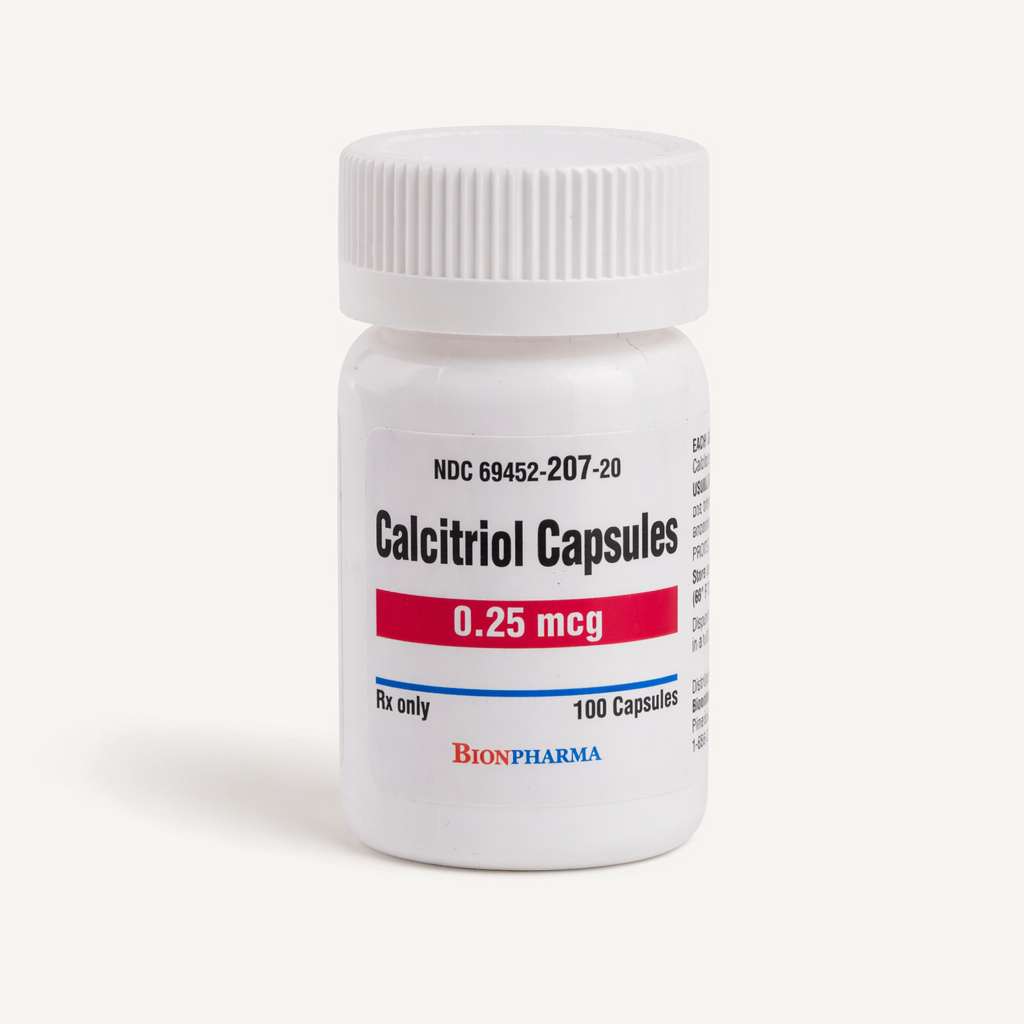
How It Works
Without active vitamin D, your body absorbs only a small amount of calcium. Calcitriol works through a direct biological process involving three main areas:
- The intestines: The medication signals the gut to increase the absorption of calcium and phosphorus from the food you eat.
- The bones: Calcitriol regulates how your body builds and maintains bone tissue, ensuring your skeleton remains strong and dense. It also helps regulate how calcium moves in and out of the bones.
- The parathyroid glands: Calcitriol sends a stop signal to these glands. When calcium is low, these glands normally pump out too much parathyroid hormone (PTH), which can damage your bones at high levels. Calcitriol keeps PTH levels in check.
By increasing the amount of calcium in your bloodstream, calcitriol prevents your body from stealing calcium from your bones to keep your heart and muscles working.
| Quick Facts | |
|---|---|
| Common Brands | Rocaltrol, Vectical (Topical) |
| Drug Class | Vitamin D analog/active vitamin D metabolite |
| Generic Status | Generic version available |
| Availability | Prescription only |
Dosing
Note: The dosing information below is for educational purposes only. Your prescribing physician will determine your specific dose based on your individual health needs.
Calcitriol is powerful, and the difference between an effective dose and a toxic dose can be small. As a result, your dose will be personalized.
- Typical starting dose: Most people begin with a small dose, such as 0.25 mcg (micrograms) once daily.
- Dose adjustments: Providers typically monitor your blood work when starting treatment. If your calcium levels are still low, the dose may be increased by 0.25 mcg every few weeks.
- Liquid formulations: If using the oral solution, standard guidelines suggest using the specific oral dispenser provided with the medication. A household spoon is not accurate enough for dosing.
- Timing: It is generally recommended to take calcitriol at the same time every day to maintain steady levels.
- With or without food: Calcitriol can be taken on an empty stomach or with a meal.
Always follow your healthcare provider’s instructions for exact dosing.
Uses
FDA-Approved Uses
The FDA approves calcitriol capsules for:
- Management of hypocalcemia: In patients on chronic renal dialysis.
- Secondary hyperparathyroidism: Management of high parathyroid hormone levels in patients with moderate to severe chronic kidney disease who are not yet on dialysis.
- Hypoparathyroidism: Treatment of low calcium caused by parathyroid gland disorders, surgery, or conditions where the body doesn’t respond to parathyroid hormone.
Off-Label Uses
You may see calcitriol capsules prescribed for uses that are not FDA-approved. This is a common and legal practice called off-label prescribing, where a doctor uses their clinical judgment to prescribe a drug for a different purpose.
Calcitriol capsules may be prescribed off-label for the following conditions:
- Osteoporosis: In specific cases of severe bone loss that do not respond to traditional treatments like bisphosphonates.
- Rickets: Treatment of certain rare, vitamin D-resistant forms of bone softening.
Side Effects
Because calcitriol increases calcium levels, most side effects occur when your calcium levels rise too high (hypercalcemia).
Common Side Effects
- Headache
- Mild nausea or upset stomach
- Feeling tired or sleepy
- Dry mouth
- A metallic taste in the mouth
Serious Side Effects
Serious side effects are rare, but it’s important to know what to look for if they do occur. Call your provider right away if you experience any symptoms of the following:
- Hypercalcemia (too much calcium): It is generally advised to watch for extreme thirst, frequent urination, severe constipation, confusion, bone pain, or an irregular heartbeat.
- Kidney stones: Sharp pain in your side or back and blood in the urine can be signs that excess calcium is forming stones.
- Severe allergic reactions: Seek immediate help for hives, facial swelling, or trouble breathing.
Call your doctor immediately if you experience any concerning or prolonged symptoms.
Pharmacist Tips
Be A Calcium Constant
Your dose is based on the amount of calcium you normally eat. If you suddenly start eating much more or much less calcium (like starting a high-dairy diet), your mineral balance can spin out of control.
Check Your Other Multivitamins
Most over-the-counter multivitamins and bone health supplements contain vitamin D. Taking these alongside prescription calcitriol can lead to vitamin D toxicity. Check with your pharmacist or doctor before starting any new supplement.
Stay Hydrated
Drinking enough water is essential when taking calcitriol to help your kidneys process excess minerals and prevent stone formation. Those on dialysis should continue following their provider’s guidance on fluid intake.
Lab Work Is Mandatory
Attend all scheduled blood draws so your doctor can ensure your dose remains safe.
Watch The Antacids
Many antacids (like Tums) are pure calcium, and others (like Mylanta) contain magnesium. Both can interact poorly with calcitriol. Standard guidelines typically advise consulting your provider before using them.
Drug Interactions
Calcitriol’s potency means it can interfere with how other medications work, especially those affecting the heart and kidneys. Let your doctor know if you take:
- Digoxin: High calcium levels can make your heart more sensitive to digoxin, increasing the risk of a dangerous heart rhythm.
- Thiazide diuretics: Water pills like hydrochlorothiazide can reduce calcium excretion by the kidneys, which, when combined with calcitriol, can raise blood calcium levels too high.
- Seizure medications: Drugs like phenobarbital or phenytoin can speed up how your body breaks down vitamin D, which can make calcitriol less effective by lowering its levels.
- Cholestyramine: This cholesterol medication can block your gut from absorbing calcitriol if taken too close together.
Always give your doctor and pharmacist a complete list of all your medications, vitamins, and supplements to check for potential interactions.
FAQs
Why is prescription calcitriol required for patients with chronic kidney disease?
Healthy kidneys perform the final step in activating vitamin D. When kidneys fail, they can no longer create the active form your body needs. Calcitriol provides the active form directly, bypassing the kidneys’ role.
Can calcitriol be taken with calcium carbonate?
It is generally accepted that you should only take calcium supplements (like calcium carbonate) if your doctor specifically prescribes them alongside calcitriol. Doing so without supervision significantly increases the risk of hypercalcemia.
What is the difference between oral calcitriol capsules and topical calcitriol ointment?
The oral capsules work by managing blood mineral levels to support kidney or parathyroid health. The topical ointment (Vectical) is applied directly to the skin to slow the overproduction of skin cells in plaque psoriasis and does not significantly affect your internal calcium levels.
How does calcitriol suppress secondary hyperparathyroidism?
When your body senses low calcium, the parathyroid glands work overtime, which can lead to bone damage. Calcitriol raises calcium and directly tells the parathyroid glands to slow down, protecting your skeletal health.
Is it safe to take vitamin D or multivitamins while taking prescription calcitriol?
Standard guidelines suggest avoiding other vitamin D sources. Because calcitriol is potent, adding extra D2 or D3 can lead to vitamin D toxicity, which can damage your heart and kidneys.
Should oral calcitriol be taken on an empty stomach?
Taking the medication the same way every day (either always with food or always without) helps your doctor accurately measure how much you are absorbing.
Why is calcitriol contraindicated for those with hypercalcemia?
Since calcitriol’s primary job is to raise calcium levels, taking it when your levels are already high can be dangerous and may lead to calcium deposits in your soft tissues and organs.
Can taking calcitriol cause a metallic taste in the mouth?
Yes. A metallic taste is a known, though less common, side effect. However, if this is accompanied by nausea or loss of appetite, it could be an early sign that your calcium levels are becoming too high.
Comparable Medications
Cholecalciferol, Paricalcitol, Calcipotriene, or Cinacalcet?
Selecting the right treatment for mineral balance depends on your specific stage of kidney or parathyroid disease.
Cholecalciferol (Vitamin D3) Capsules
From $22.99
D3 is the inactive form found in over-the-counter supplements. It requires the kidneys to activate it. Calcitriol is the active form that works regardless of kidney function.
Paricalcitol
Both are active vitamin D analogs. However, paricalcitol is specifically designed to lower parathyroid hormone (PTH) levels, with a slightly lower risk of raising calcium and phosphorus levels than calcitriol.
Cinacalcet
These work in opposite ways to achieve the same goal. Calcitriol raises calcium to tell the parathyroid to stop. Cinacalcet tricks the parathyroid into thinking calcium is already high. They are sometimes used together for maximum control of PTH.
Calcipotriene Cream
From $119.99
Calcipotriene is a vitamin D derivative used strictly as a skin cream for psoriasis. It cannot be used to treat low blood calcium or kidney disease.
We Have Calcitriol Capsules in Stock. Get Yours Today!
Important: Information on this page is for educational purposes only. Prescribing decisions are made by independent, licensed providers. TelyRx operates technology-enabled pharmacies and a telehealth platform that connects patients with licensed providers. Prescriptions, when provider-approved and issued, are filled and shipped by TelyRx-affiliated pharmacies. We do not employ physicians or make prescribing decisions. Learn more about our editorial standards here.