

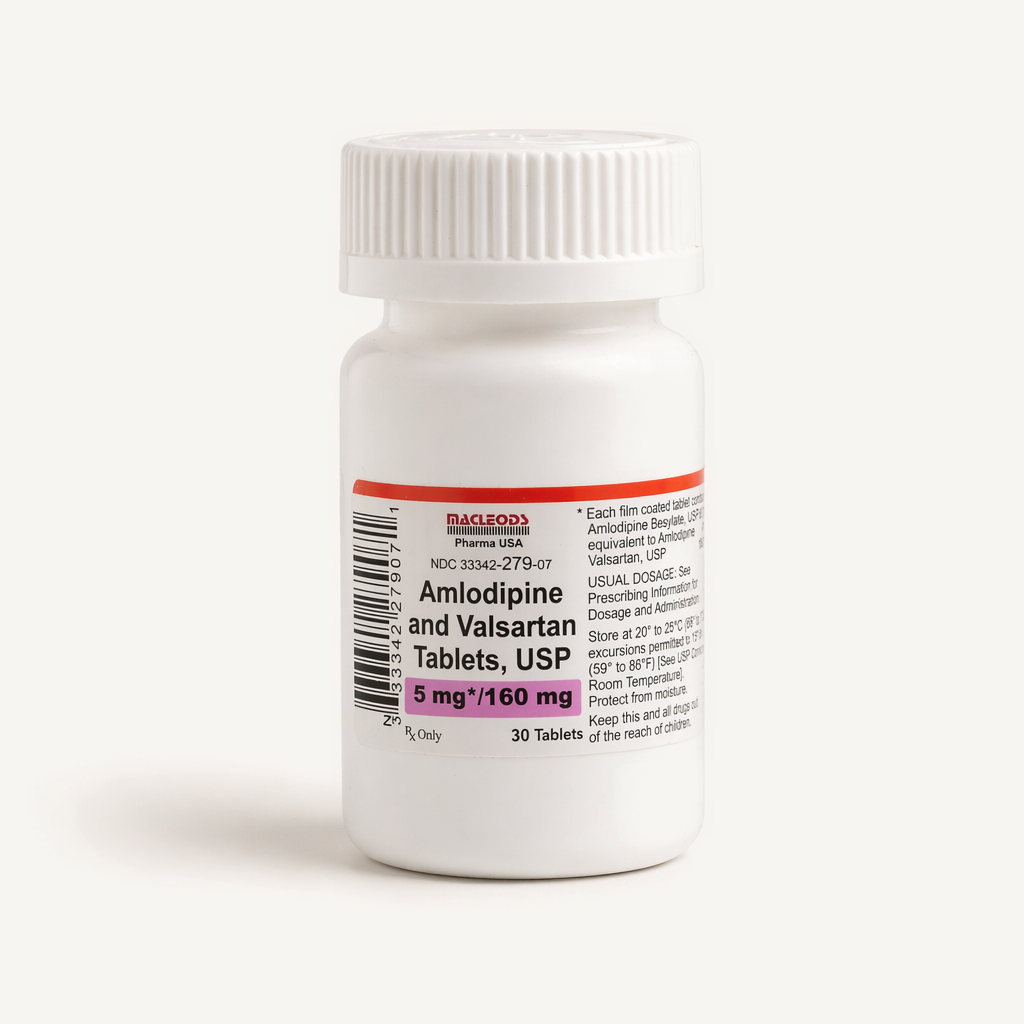
How It Works
Amlodipine/valsartan works by relaxing the cardiovascular system through two distinct pathways. Amlodipine blocks calcium from entering muscle cells after blood vessels constrict, keeping the smooth muscles of the blood vessels dilated to allow blood to flow with less resistance.
Valsartan blocks angiotensin II, a vasoconstrictor that causes blood vessels to tighten and become narrow.
| Quick Facts | |
|---|---|
| Common Brands | Exforge |
| Drug Class | Calcium channel blocker/angiotensin II receptor blocker |
| Generic Status | Generic version available |
| Availability | Prescription only |
Dosing
Amlodipine/valsartan has long-lasting effects, so a single daily dose is typically sufficient for maintaining consistent medication levels over a 24-hour cycle.
- Standard starting dose: Providers usually start patients on the drug with a daily dose of 5 mg.
- Dose adjustments: Providers may increase the prescription strength depending on how their patient responds to the medication during the first 2 weeks. The maximum dose is generally 10 mg per day.
- Timing: Per standard guidelines, patients are advised to take their amlodipine/valsartan at the same time each day to maintain consistent blood pressure levels. The drug may be taken with or without food, but a light snack at dose time is recommended if you experience discomfort taking the drug on an empty stomach.
Note: Dosing information below is educational only. Your prescribing physician will determine your specific dose based on your individual health needs. Always follow your healthcare provider’s instructions for exact dosing.
Uses
FDA-Approved Uses
Amlodipine/valsartan is FDA-approved to lower blood pressure in adults with hypertension to reduce the risk of fatal and nonfatal cardiovascular events, including strokes and heart attacks. The drug is also FDA-approved to treat patients who require multiple medications to reach their blood pressure goals.
Off-Label Uses
You may see amlodipine/valsartan prescribed for uses that are not “FDA-approved.” This is a very common and legal practice called “off-label” prescribing, where a doctor uses their clinical judgment to prescribe a drug for a different (but well-researched) purpose.
Common off-label uses for amlodipine/valsartan currently found in clinical research and practice include:
- Chronic kidney disease: Amlodipine/valsartan as a combination drug is formulated to lower blood pressure, but valsartan alone is frequently prescribed to protect the kidneys in patients with protein in their urine (proteinuria).
- Left ventricular hypertrophy: Providers may prescribe this combination medication to help reverse thickening of the heart’s left pumping chamber, which is a common complication of long-term blood pressure.
Side Effects
People generally tolerate the amlodipine/valsartan combination drug well, but the medication’s dual-mechanism action means there are two potential sets of side effects.
Common Side Effects
Common side effects from taking this medication include:
- Swelling in the ankles, feet, and hands (peripheral edema)
- Dizziness
- Sore throat, stuffy nose, fatigue, and other cold-like symptoms
- Temporary warmth or redness in the face and neck (flushing)
Serious Side Effects
Serious side effects are rare, but it’s important to know what to look for if they do occur. Serious side effects of taking amlodipine/valsartan can include:
- Hypotension: Amlodipine/valsartan may lead to an excessive drop in blood pressure. Symptoms include dizziness and lightheadedness, and this is especially common in patients who are dehydrated or who also take water-pill diuretics.
- Kidney function changes: The medication may cause a temporary decrease in kidney function for some patients, particularly those with pre-existing kidney disease or heart failure.
- Hyperkalemia: Valsartan can cause the body to retain more potassium than it normally would. Signs potassium has reached hyperkalemic levels include muscle weakness and an irregular heartbeat.
- Chest pain: While rare, some patients with severe coronary artery disease may experience worsening chest pain, or angina, after taking amlodipine/valsartan. This side effect is usually due to the calcium channel blocker component, and is especially common during the initial weeks of treatment as the body adjusts.
Call your doctor immediately if you experience any concerning or prolonged symptoms.
Pharmacist Tips
Stand Up Slowly
Amlodipine/valsartan can lead to orthostatic hypotension, or a sudden drop in blood pressure that occurs when you stand. This occurs because your body is still adjusting to the new blood pressure levels, so it is advised to take extra caution when rising from a sitting or lying position.
Monitor Blood Pressure At Home
A log of your blood pressure readings can be an invaluable resource to your provider, especially if your blood pressure tends to increase during in-person doctor visits.
Watch The Salt Substitutes
Many salt substitutes swap out sodium for potassium chloride. Since amlodipine/valsartan already increases potassium retention, it is recommended to speak with your provider or a pharmacist before using these salt substitutes alongside the medication.
Don’t Crush Or Break
Amlodipine/valsartan tablets are not intended to be divided into half-doses. Talk to your provider if you have a hard time swallowing the tablets whole.
Stay Hydrated
Since amlodipine/valsartan lowers blood pressure, being dehydrated while taking the medication can lead to severe dizziness and kidney strain.
Drug Interactions
Amlodipine/valsartan can interact with a wide range of other medications and substances, potentially changing how each active ingredient works and increasing the risk of side effects. Known interactions with amlodipine/valsartan include:
- Nonsteroidal anti-inflammatory drugs (NSAIDs): Using NSAIDs like ibuprofen and naproxen alongside amlodipine/valsartan can counteract the latter’s ability to lower blood pressure, and may also lead to kidney issues.
- Potassium supplements: Since amlodipine/valsartan can cause your body to retain more potassium, taking potassium supplements alongside this medication can lead to potassium overload and increase the risk of hyperkalemia.
- Simvastatin: Amlodipine can increase levels of simvastatin in your bloodstream. If you take simvastatin for high cholesterol and amlodipine/valsartan, your provider may lower the dose.
- Lithium: Valsartan can increase levels of lithium in your body, which can potentially lead to toxicity if you take both medications.
- Alcohol: Taking amlodipine/valsartan and drinking alcohol can each lower your blood pressure, so combining both may lead to severe dizziness and an increased risk of injury from a fall.
Always give your doctor and pharmacist a complete list of all your medications, vitamins, and supplements to check for potential interactions.
FAQs
What is the most effective time of day to take amlodipine/valsartan?
Many providers recommend taking your daily dose of amlodipine/valsartan in the morning to manage your blood pressure throughout the day. However, consistently taking the tablet at the same time each day is considered more crucial to the drug’s effectiveness than taking it at a specific time.
Do I need to take this pill with a meal?
Standard guidelines state you may take your amlodipine/valsartan tablet with or without food. If you experience nausea or gastrointestinal discomfort taking the medication on an empty stomach, a light snack with your dose is recommended.
Will amlodipine/valsartan significantly lower my heart rate the way beta-blockers do?
No, amlodipine and valsartan primarily target blood vessels and do not affect the heart’s electrical pacing system. As a result, this medication won’t affect your pulse the same way beta-blockers do.
Is it safe to cut or split this tablet in half?
No, standard guidelines advise that amlodipine/valsartan tablets should not be cut or split in half. Since the tablet is not scored, halving it may lead to incorrect dosing. If your current strength is too high, your doctor may lower your dose or recommend a different medication.
Is it safe to drink alcohol while taking amlodipine/valsartan?
Per standard guidelines, it is generally advised to avoid or limit alcohol consumption while taking amlodipine/valsartan. Combining the medication with alcohol can lower blood pressure too much, leading to side effects like dizziness, lightheadedness, fainting, and headaches.
Can amlodipine/valsartan impact my libido?
Erectile dysfunction and changes in libido are not common side effects of taking amlodipine/valsartan.
Is it safe to continue taking this medication if I discover I am pregnant?
No. If you find out you are pregnant, standard guidelines caution you to stop taking this medication immediately and contact a doctor. Valsartan can cause severe injury or death to a developing fetus, particularly in the second and third trimesters.
Will my blood pressure spike if I run out of pills and stop taking this?
Yes, abruptly quitting amlodipine/valsartan can cause your blood pressure to rebound to its previously high pre-treatment levels. It is advised to always have a refill ready to go.
Can I take ibuprofen while taking amlodipine/valsartan?
It is generally advised not to take ibuprofen with amlodipine/valsartan, as combining the medications can lead to an increase in blood pressure or cause the drugs to counteract each other’s effects. Talk to your doctor about pain relief alternatives while taking amlodipine/valsartan.
Comparable Medications
Amlodipine/Valsartan, Amlodipine/Benazepril, Valsartan/HCTZ, or Amlodipine/Valsartan/HCTZ?
Amlodipine/valsartan lowers blood pressure through two separate pathways. Alternatives to amlodipine/valsartan include:
Amlodipine/Benazepril Capsules
From $40.49
Sold under the brand name Lotrel, this combination medication contains a calcium channel blocker and an angiotensin-converting enzyme (ACE) inhibitor. Some patients develop a dry cough with ACE inhibitors like benazepril.
Valsartan / Hydrochlorothiazide Tablets
From $32.99
Sold under the brand name Diovan HCT, this combination drug contains a water-pill diuretic instead of a calcium channel blocker. Providers generally prefer amlodipine/valsartan for patients who need blood vessel dilation without the electrolyte changes or increased urination associated with diuretics.
Amlodipine/valsartan/HCTZ
This triple-action combination medication contains the same angiotensin II receptor blocker and calcium channel blocker as amlodipine/valsartan, plus a diuretic component. Doctors typically reserve amlodipine/valsartan/HCTZ for patients who have been unable to lower their blood pressure with dual-action medications.
We Have Amlodipine/Valsartan in Stock. Get Yours Today!
Important: Information on this page is for educational purposes only. Prescribing decisions are made by independent, licensed providers. TelyRx operates technology-enabled pharmacies and a telehealth platform that connects patients with licensed providers. Prescriptions, when provider-approved and issued, are filled and shipped by TelyRx-affiliated pharmacies. We do not employ physicians or make prescribing decisions. Learn more about our editorial standards here.