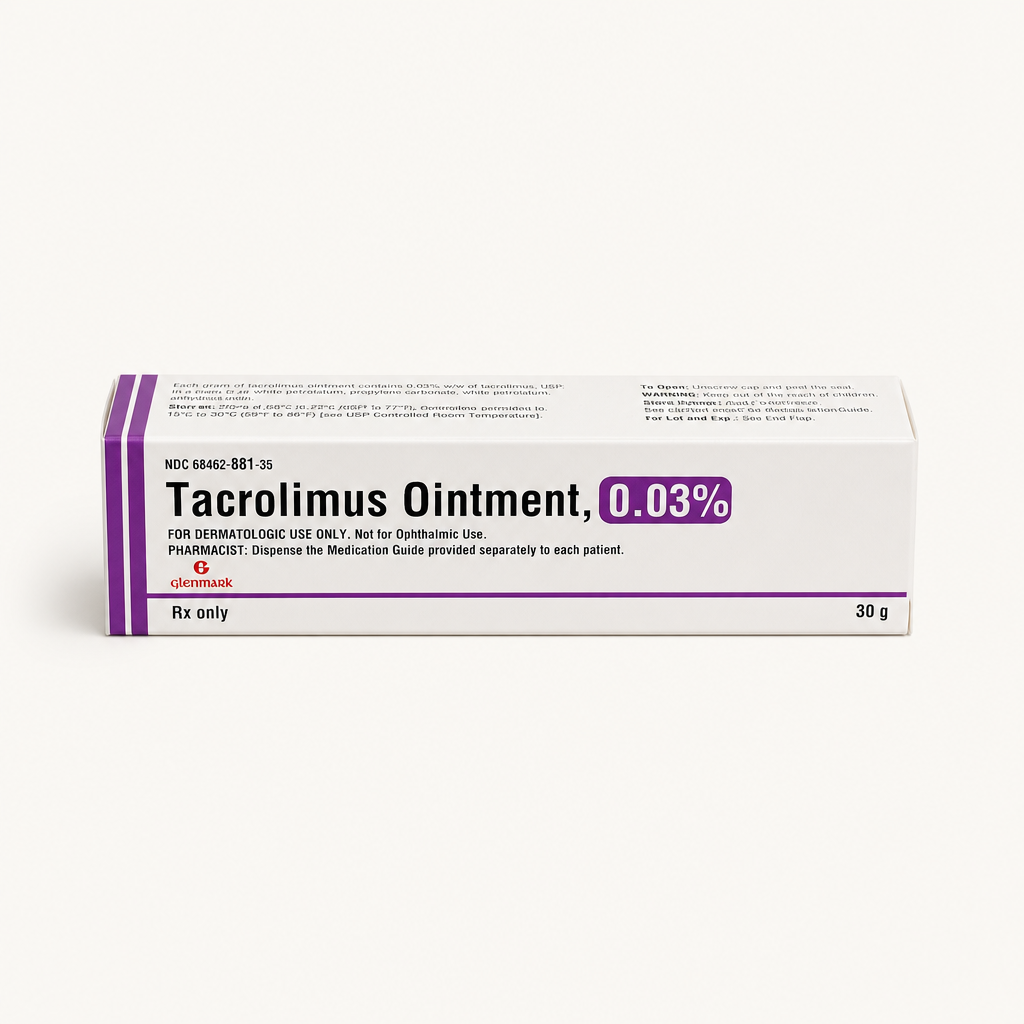
How It Works
Tacrolimus works by reducing overactive immune responses in the skin. In people with eczema, certain immune cells become overly active and release inflammatory signals that lead to redness, itching, and irritation.
When tacrolimus is applied to the skin, it penetrates into the deeper layers and interferes with an internal signaling pathway inside immune cells that is needed to fully activate this inflammatory response. By reducing this activity, it decreases the release of inflammatory signals in the skin and helps improve eczema symptoms such as redness, itching, and irritation.
| Quick Facts | |
|---|---|
| Common Brands | Protopic |
| Drug Class | Topical calcineurin inhibitor (immunomodulator) |
| Generic Status | Generic version available |
| Availability | Prescription only |
Dosing
Standard guidelines for using tacrolimus emphasize the importance of precise and consistent application.
- Application frequency: Providers typically recommend applying a thin layer of the ointment to affected areas two times per day.
- Application process: Clean and dry the affected area before applying the ointment. Patients should wash their hands thoroughly with soap and water after application unless the hands are being treated.
- Duration: Patients typically use tacrolimus until their symptoms resolve. If symptoms do not improve after 6 weeks of consistent use, providers generally reassess the treatment plan. Continuous long-term use should be avoided.
- Maintenance: Once eczema symptoms are under control, some providers may recommend applying tacrolimus twice weekly to areas that frequently flare. While not part of the standard twice-daily treatment regimen, this approach may help reduce future outbreaks in certain patients.
Note: Dosing information below is educational only. Your prescribing physician will determine your specific dose based on your individual health needs. Always follow your healthcare provider’s instructions for exact dosing.
Uses
FDA-Approved Uses
Tacrolimus is FDA-approved for treating atopic dermatitis (eczema). Specifically, the medication is approved for short-term and intermittent long-term treatment of moderate-to-severe atopic dermatitis in non-immunocompromised patients.
Off-Label Uses
You may see (medication) prescribed for uses that are not “FDA-approved.” This is a very common and legal practice called “off-label” prescribing, where a doctor uses their clinical judgment to prescribe a drug for a different (but well-researched) purpose.
Common off-label uses for tacrolimus currently found in clinical research and practice include:
- Vitiligo: Providers may recommend tacrolimus to assist with repigmentation of skin on the face and neck for people with vitiligo.
- Psoriasis: Tacrolimus may be effective at clearing psoriasis, particularly inverse forms of the condition that develop in sensitive areas of skin like the face, armpits and genitals.
- Lichen sclerosus: Doctors may prescribe tacrolimus off-label to treat symptoms of this skin condition affecting the genital area.
- Facial seborrheic dermatitis: Tacrolimus may be prescribed for facial seborrheic dermatitis when other treatments have not been effective or when long-term corticosteroid use on the face is not desirable. It can be particularly useful for helping maintain symptom control in sensitive facial areas.
- Oral lichen planus: Though tacrolimus is intended for skin application, the medication may help treat chronic inflammatory conditions of the mouth.
Side Effects
Patients usually tolerate tacrolimus well and systemic changes are unlikely. However, reactivity of the skin during a flare can cause initial discomfort and localized effects can still occur.
Common Side Effects
Common side effects from using acrolimus include:
- Burning, itching, or stinging at the application site during the initial stages of treatment
- Redness or warmth on the skin
- Headache, sore throat, runny nose, and other flu-like symptoms
- Increased skin sensitivity to hot or cold temperatures
Serious Side Effects
Serious side effects are rare, but it’s important to know what to look for if they do occur. Serious side effects from using tacrolimus can include:
- Secondary skin infection: Skin infections can occur during treatment with tacrolimus. Viral infections such as cold sores (herpes simplex), chickenpox, and shingles have been reported. Patients with eczema may also be at risk for eczema herpeticum, a potentially serious herpes virus infection that can spread across areas of affected skin.
- Swollen lymph nodes: It is advised to consult your provider if you notice new lumps on your neck, armpits, or groin.
- Rare malignancy risk: Tacrolimus carries an FDA black box warning regarding rare reports of skin cancer and lymphoma in patients. A direct causal relationship has not been established, and large studies have not shown an overall increase in cancer risk with topical tacrolimus use. However, because of this warning and the limited long-term safety data available, tacrolimus is generally used intermittently and for the shortest duration needed to control symptoms.
Call your doctor immediately if you experience any concerning or prolonged symptoms.
Pharmacist Tips
Expect Some Burning
People who use tacrolimus often report a stinging sensation after application for the first 3 to 5 days of treatment. Your doctor may permit you to refrigerate the ointment, which can reduce the burning effect.
Be Careful In The Sun
Tacrolimus can make your skin more sensitive to UV light. Standard guidelines recommend patients avoid tanning beds and limit direct sun exposure while using the ointment. Wearing protective clothing over affected areas is also recommended.
Watch For The Alcohol Flush
Tacrolimus can lead to an alcohol-induced flush, during which the skin feels warm or itchy after you consume an alcoholic beverage. This is not an allergic reaction, but a known interaction between tacrolimus and alcohol.
Moisturizer Timing Is Key
Per standard guidelines, patients are advised to apply tacrolimus and then wait at least 20 minutes before putting on daily moisturizer. Not waiting long enough can affect how your body absorbs the ointment.
Do Not Use Bandages
Covering affected areas with a bandage, or occlusion, after applying the ointment is not recommended. This can significantly increase how much ointment is absorbed and increase your risk of side effects.
Drug Interactions
Because only small amounts of topical tacrolimus are usually absorbed into the bloodstream, interactions with oral or injected medications are uncommon. However, they cannot be completely ruled out, especially if the ointment is used over large areas of skin, under occlusive dressings, or for long periods.
- CYP3A4 inhibitors: In patients with widespread skin involvement, medications that inhibit CYP3A4 may increase tacrolimus levels in the body. Examples include certain antifungal medications (such as ketoconazole, itraconazole, and fluconazole), antibiotics (such as erythromycin), calcium channel blockers, and cimetidine.
- Alcohol: Drinking alcohol while using tacrolimus can lead to flushing of the skin with noticeable redness and warmth.
Always give your doctor and pharmacist a complete list of all your medications, vitamins, and supplements to check for potential interactions.
FAQs
Why does my skin violently burn or itch the first few days I put this ointment on?
Burning, stinging, itching, or a feeling of warmth at the application site are common side effects of tacrolimus, particularly during the first few days of treatment. These sensations occur because tacrolimus can temporarily activate nerve endings in the skin and may be more noticeable in areas affected by eczema or other inflammation. In most cases, the irritation begins to improve within 3 to 5 days as the skin becomes less inflamed and the nerve endings become less sensitive to the medication.
Does drinking alcohol make the same spots where I applied the ointment turn bright red?
Yes, the tacrolimus alcohol flush is a well-documented interaction. Skin treated with the ointment can become red and hot after you consume even a small amount of alcohol.
Is it safe to take over-the-counter ibuprofen if tacrolimus already puts stress on your kidneys?
Topical tacrolimus ointment is absorbed into the bloodstream in very small amounts — far too low to affect kidney function in the vast majority of patients. There is no specific warning against using over-the-counter ibuprofen while applying tacrolimus ointment. If you have pre-existing kidney disease or are using oral tacrolimus (for organ transplant), speak with your doctor before taking ibuprofen or other NSAIDs, as the oral form of tacrolimus can affect the kidneys.
Can using tacrolimus make me more likely to catch a cold or an infection?
Topical tacrolimus works locally in the skin and is absorbed into the bloodstream in very small amounts, not enough to weaken your overall immune system or make you more likely to catch a cold. However, the FDA label notes a possible small increase in the risk of certain skin-related viral infections such as cold sores (herpes simplex), chickenpox, or shingles in the treated areas. Any active skin infection should be treated before starting tacrolimus ointment. If you develop new blisters, sores, or signs of skin infection while using the ointment, contact your provider.
Are you supposed to avoid direct sunlight or tanning beds while using the ointment?
Yes, standard guidelines advise patients to avoid tanning beds and direct sunlight exposure while using tacrolimus. The ointment increases sensitivity to UV light, so wearing protective clothing and hats in the sun is recommended.
Does tacrolimus interact with natural herbal supplements?
Tacrolimus ointment is absorbed into the bloodstream in very small amounts, so interactions with other medications or supplements are unlikely for most patients. The herbal supplement interactions you may read about (such as St. John’s Wort) apply to the oral form of tacrolimus used in organ transplant patients, not the topical ointment. However, it is always good practice to tell your doctor and pharmacist about all medications and supplements you are taking.
Is it safe to continue taking or applying this medication if I discover I am pregnant?
The effects of tacrolimus on pregnant patients are not fully known, so risk cannot be ruled out. Standard guidelines state the ointment should only be prescribed to pregnant people if the benefits outweigh the risks. Your OB-GYN can help you determine if tacrolimus is the best option during pregnancy.
Why does my blood sugar keep spiking into diabetic ranges after starting tacrolimus?
Blood sugar changes and diabetes are known side effects of oral tacrolimus used at high doses in organ transplant patients, but this is not a recognized concern with topical tacrolimus ointment. Only small amounts of the ointment are typically absorbed into the bloodstream, making it very unlikely to affect blood sugar levels. If you are experiencing blood sugar spikes, discuss other possible causes with your healthcare provider.
Comparable Medications
Tacrolimus, Elidel, Triamcinolone, Clobetasol, Topical Ster, Cyclosporine, or Dupixent?
Tacrolimus is a topical calcineurin inhibitor primarily used to relieve symptoms of atopic dermatitis. Depending on your medical history and symptoms, your doctor may recommend a different medication instead. Alternatives to tacrolimus include:
Pimecrolimus Cream
From $169.99
Both tacrolimus and Elidel (pimecrolimus) are calcineurin inhibitors. Tacrolimus is considered more potent, especially in the 0.1% formulation, and is commonly used for moderate-to-severe eczema. However, studies comparing tacrolimus 0.03% and pimecrolimus have found similar effectiveness. Elidel is often chosen for milder eczema symptoms.
Triamcinolone
From $24.99
Triamcinolone is a mid-strength topical steroid that works quickly to clear up eczema symptoms but can lead to thinning skin in sensitive areas like the face, armpits, and groin. Tacrolimus does not cause skin thinning, making it a preferable treatment option for those experiencing eczema symptoms in these areas.
Clobetasol Cream
From $23.99
Clobetasol is a very high-potency corticosteroid that is commonly used for short-term treatment of more severe eczema flares and often produces rapid symptom improvement. However, it is generally limited to no more than 4 continuous weeks of use and is usually avoided on sensitive areas such as the face, armpits, and groin because of its higher risk of skin thinning.
Topical steroids
Topical corticosteroids are generally considered the first-line prescription treatment for atopic dermatitis and are commonly used on most areas of the body. Tacrolimus is often preferred for sensitive areas such as the face, eyelids, armpits, and groin because it does not cause skin thinning and is considered a first-line option for these areas.
Cyclosporine
From $154.99
Cyclosporine is an oral immunosuppressant that may be prescribed for moderate-to-severe atopic dermatitis that has not responded adequately to topical treatments. Unlike tacrolimus ointment, it works throughout the body and is generally reserved for more severe cases because it requires monitoring for potential side effects.
Dupixent
Dupixent is a biological injection that works on the systemic level to block pathways that produce inflammation. Tacrolimus is a topical ointment that works locally. Doctors may prescribe both to patients with severe eczema, with Dupixent as their primary treatment and tacrolimus as spot treatment for lingering facial flares.
We Have Tacrolimus in Stock. Get Yours Today!
Important: Information on this page is for educational purposes only. Prescribing decisions are made by independent, licensed providers. TelyRx operates technology-enabled pharmacies and a telehealth platform that connects patients with licensed providers. Prescriptions, when provider-approved and issued, are filled and shipped by TelyRx-affiliated pharmacies. We do not employ physicians or make prescribing decisions. Learn more about our editorial standards here.