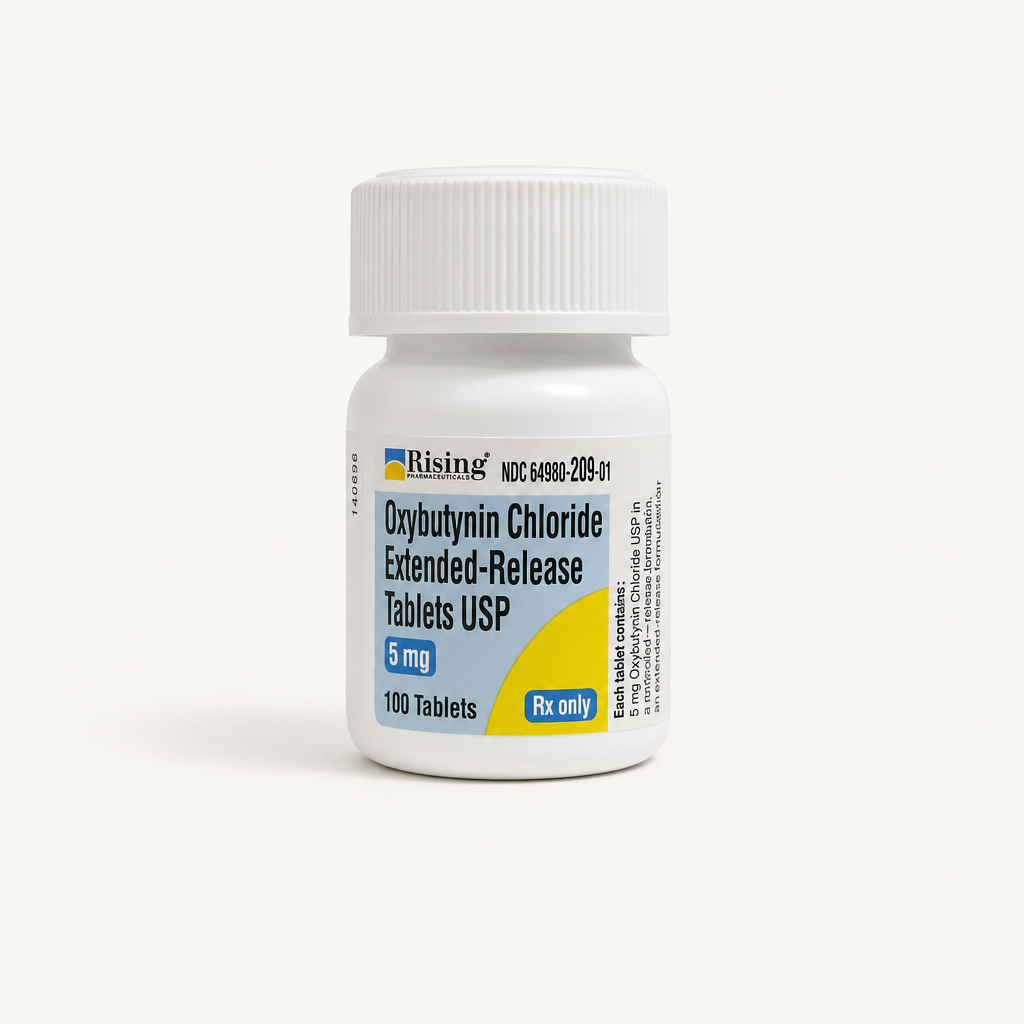
How It Works
Oxybutynin ER belongs to a class of medications known as anticholinergics and antimuscarinics. It works by relaxing muscles in the bladder wall. This increases the total amount of urine the bladder can comfortably hold. At the same time, it reduces the sudden muscle spasms that can cause urgency.
Oxybutynin ER blocks muscarinic receptors in the bladder wall. This decreases excessive acetylcholine activity, a chemical messenger that can trigger involuntary bladder muscle spasms and contractions. Oxybutynin ER also has a direct antispasmodic effect on smooth muscle.
| Quick Facts | |
|---|---|
| Common Brands | Ditropan XL |
| Drug Class | Anticholinergic, antimuscarinic, antispasmodic, muscarinic antagonist |
| Generic Status | Generic is available |
| Availability | Prescription only |
Dosing
Standard guidelines suggest that the typical starting dose of oxybutynin ER is 5 mg to 10 mg taken by mouth once daily. Based on effectiveness and side effects, a healthcare provider may adjust this amount. The maximum recommended dose is 30 mg daily.
Providers typically recommend taking the extended-release tablets at approximately the same time each day to maintain consistent medication levels in the body. The tablets must be swallowed whole with a glass of water. Patients should not chew, cut, or crush extended-release tablets, as this can destroy the slow-release mechanism.
Note: Dosing information below is educational only. Your prescribing physician will determine your specific dose based on your individual health needs. Always follow your healthcare provider’s instructions for exact dosing.
Uses
FDA-Approved Uses
Oxybutynin ER is FDA-approved to treat symptoms of overactive bladder, which can include an urgent and frequent need to urinate and urinary leakage.
Off-Label Uses
You may see oxybutynin ER prescribed for uses that are not “FDA-approved.” This is a common and legal practice called “off-label” prescribing, where a doctor uses their clinical judgment to prescribe a drug for a different (but well-researched) purpose.
Clinical documentation notes that healthcare providers may prescribe oxybutynin off label to treat primary focal hyperhidrosis, which is a condition that causes excess sweating in the palms, underarms, face, or scalp.
Side Effects
Like all medications, oxybutynin ER can cause side effects. Some common side effects may improve over time as your body adjusts to the medication. Other side effects may be serious and require medical attention.
Common Side Effects
- Dry mouth
- Constipation
- Dizziness
- Sleepiness or drowsiness
- Nausea
- Blurry vision
- Headache
- Diarrhea
- Urinary tract infection
- Anxiety
- Heartburn
Serious Side Effects
Serious side effects from oxybutynin ER are rare, but it’s important to know what to look for if they do occur.
- Severe allergic reactions: Oxybutynin ER may cause allergic reactions, including breathing problems, wheezing, throat tightness, difficulty swallowing, and swelling of the face, lips, mouth, or tongue. Seek immediate medical attention for an allergic reaction to oxybutynin ER.
- Angioedema: This is a specific, potentially severe type of swelling that affects the face, lips, tongue, or throat and can occur at any time during treatment.
- Urinary retention: Oxybutynin ER can sometimes make it difficult to empty your bladder, especially if you already have a pre-existing urinary blockage or are taking other medications for bladder conditions.
- Heat exhaustion: Because oxybutynin ER decreases the ability to sweat, it can impair your body’s temperature regulation. This increases the risk of overheating or suffering from heat stroke during hot weather or strenuous exercise.
- Cognitive disruptions: This medication can cause confusion, drowsiness, and hallucinations.
- Cardiovascular irregularities: In rare instances, patients may experience a fast, slow, or irregular heartbeat.
Call your doctor immediately if you experience any concerning or prolonged symptoms.
Pharmacist Tips
Establish a Routine
Oxybutynin ER is most effective when taken consistently at the same time each day.
Don’t Damage The Tablet
It is important to swallow the tablet whole. Do not break, crush, or chew it, which can disrupt how the extended-release medication is absorbed.
Prevent Heat-Related Illness
This medication reduces your ability to sweat, so be cautious in hot environments or during exercise. Stay hydrated and alert to signs of overheating.
Time Your Dosage
If you find that the medication causes daytime drowsiness or dizziness, it may be best to take your daily tablet before bed.
Avoid Consuming Alcohol
Providers strongly discourage drinking alcohol when taking oxybutynin ER because alcohol can worsen side effects like dizziness, drowsiness, and blurred vision.
Exercise Caution When Driving
Do not drive or engage in activities that require sharp concentration and clear vision until you fully understand how this medication affects you.
Monitor Older Adults
Patients over 65 have a higher risk of side effects such as dizziness and sleepiness, which increase their risk of falls.
Drug Interactions
Certain medications and substances can interact with oxybutynin ER, potentially altering how it works or increasing the risk of side effects.
- Other anticholinergic medications: Combining oxybutynin ER with other anticholinergics, including certain antihistamines, other overactive bladder treatments, or medicines for stomach spasms, can compound side effects like dry mouth, constipation, and dizziness.
- Fungal infection treatments: Antifungal medications such as ketoconazole, miconazole, itraconazole, fluconazole, and voriconazole can interact with oxybutynin ER, increasing the risk of adverse effects.
- Bacterial infection treatments: Certain antibiotics, specifically clarithromycin and erythromycin, have the potential to interact with oxybutynin.
- Parkinson’s disease medications: Drugs used to manage Parkinson’s disease, such as benztropine or trihexyphenidyl, can interact with oxybutynin ER and require close medical monitoring when prescribed together.
- Dementia and Alzheimer’s medications: Medicines like donepezil, galantamine, and rivastigmine may interact with oxybutynin, requiring your doctor to adjust your dosages.
- Stomach and intestinal medications: Drugs used for stomach problems, such as dicyclomine, hyoscyamine, or metoclopramide, can have interactions with oxybutynin ER.
- Potassium supplements: Providers commonly advise against using potassium supplements while taking oxybutynin ER because of potential gastrointestinal effects.
- Psychiatric medications: Certain medications used for mental health conditions, including clozapine and quetiapine, may interact with oxybutynin ER and require additional monitoring or dosage adjustments.
Always give your doctor and pharmacist a complete list of all your medications, vitamins, and supplements to check for potential interactions.
FAQs
What does it mean if an intact oxybutynin tablet shell appears in my stool?
Patients may sometimes find what looks like an intact oxybutynin tablet in their stool. This is normal. The medication has been absorbed and the pill within the stool is just the remaining extended release shell. This shell is typically made from materials that survive digestion to allow the medicine to release slowly over time.
How long does oxybutynin ER take to reduce overactive bladder symptoms?
Patients may need to wait 2 to 8 weeks to experience the full clinical benefits of oxybutynin ER. Additionally, it can take a few months for a healthcare provider to slowly adjust the dose to find the right balance between symptom relief and side effects.
What is the difference between the immediate-release and extended-release versions of oxybutynin?
The immediate-release (short-acting) version requires patients to take a dose 2 to 4 times a day, whereas the extended-release (long-acting) version is formulated for once-daily dosing.
The extended-release tablet releases the active drug slowly over 24 hours, which results in better symptom control and fewer side effects for some people.
Does oxybutynin ER increase the risk of heatstroke?
Taking oxybutynin ER reduces the body’s ability to sweat, which is the primary way the body cools down. Because of this decreased sweating, patients are at a higher risk for heat exhaustion or heat stroke, particularly when exercising vigorously or spending time in hot environments.
Is it safe to consume alcohol while taking oxybutynin ER?
Standard guidelines indicate that it is best to avoid drinking alcohol while taking oxybutynin ER. While it is unknown if alcohol directly interacts with the chemical structure of the drug, consuming alcohol can exacerbate side effects like blurred vision, drowsiness, and dizziness.
Can oxybutynin ER cause cognitive side effects like confusion or hallucinations?
Cognitive disruptions are a known risk of oxybutynin ER. In some cases, the medication can cause confusion, drowsiness, and hallucinations. When they occur, these issues usually arise during the first few months of treatment or after a dosage increase. The risk of these side effects is higher in patients taking larger doses of oxybutynin ER and those with underlying nervous system conditions.
Should oxybutynin ER be taken in the morning or at night?
Guidelines indicate that you can take the oxybutynin extended-release tablet at any time of the day, provided you are consistent and take it at approximately the same time each day.
If you experience side effects like tiredness or dizziness that are more disruptive during the day, it may be beneficial to take the pill at night before bed.
Does oxybutynin ER interact with medicines like ketoconazole?
Oxybutynin ER has known potential interactions with oral ketoconazole, a medication used to treat fungal infections. Using these medications at the same time can increase the risk of certain side effects. Your doctor may need to adjust the dosages or frequency of your medications if they must be prescribed together.
Should oxybutynin ER be taken on an empty stomach?
Oxybutynin ER can be taken with or without food. However, it should be swallowed whole with a glass of water.
Why do patients with Parkinson’s disease need monitoring while taking oxybutynin ER?
Patients with Parkinson’s disease have underlying nervous system issues that make them more susceptible to the cognitive side effects of oxybutynin. They are at a heightened risk of confusion, drowsiness, and hallucinations from oxybutynin ER. As a result, their healthcare providers must monitor them closely and may need to utilize lower dosages of oxybutynin ER or consider alternative therapies for an overactive bladder.
Comparable Medications
Oxybutynin ER, Oxybutynin immediate-release (Ditropan), Mirabegron (Myrbetriq), Solifenacin, and Oxybutynin topical (Oxytrol / Gelnique)?
Oxybutynin immediate-release
This is the short-acting version of the same active ingredient. It must be taken multiple times a day (usually 2 to 4 times) and is more likely to cause side effects such as dry mouth.
Mirabegron ER Tablets
From $359.99
This oral medication treats overactive bladder through a different biological pathway than oxybutynin. It tends to cause fewer anticholinergic side effects, such as drowsiness, so some providers prescribe it for older adults who are at a high risk for falls.
Solifenacin
From $29.99
This is another antimuscarinic prescription medication used to treat bladder conditions with potentially less CNS side effects than oxybutynin.
Oxybutynin topical
Instead of being swallowed as a pill, this alternative formulation delivers the medication through the skin via a gel or topical patch. This may be an option for patients who have trouble swallowing oral tablets.
We Have Oxybutynin ER in Stock. Get Yours Today!
Important: Information on this page is for educational purposes only. Prescribing decisions are made by independent, licensed providers. TelyRx operates technology-enabled pharmacies and a telehealth platform that connects patients with licensed providers. Prescriptions, when provider-approved and issued, are filled and shipped by TelyRx-affiliated pharmacies. We do not employ physicians or make prescribing decisions. Learn more about our editorial standards here.