How It Works
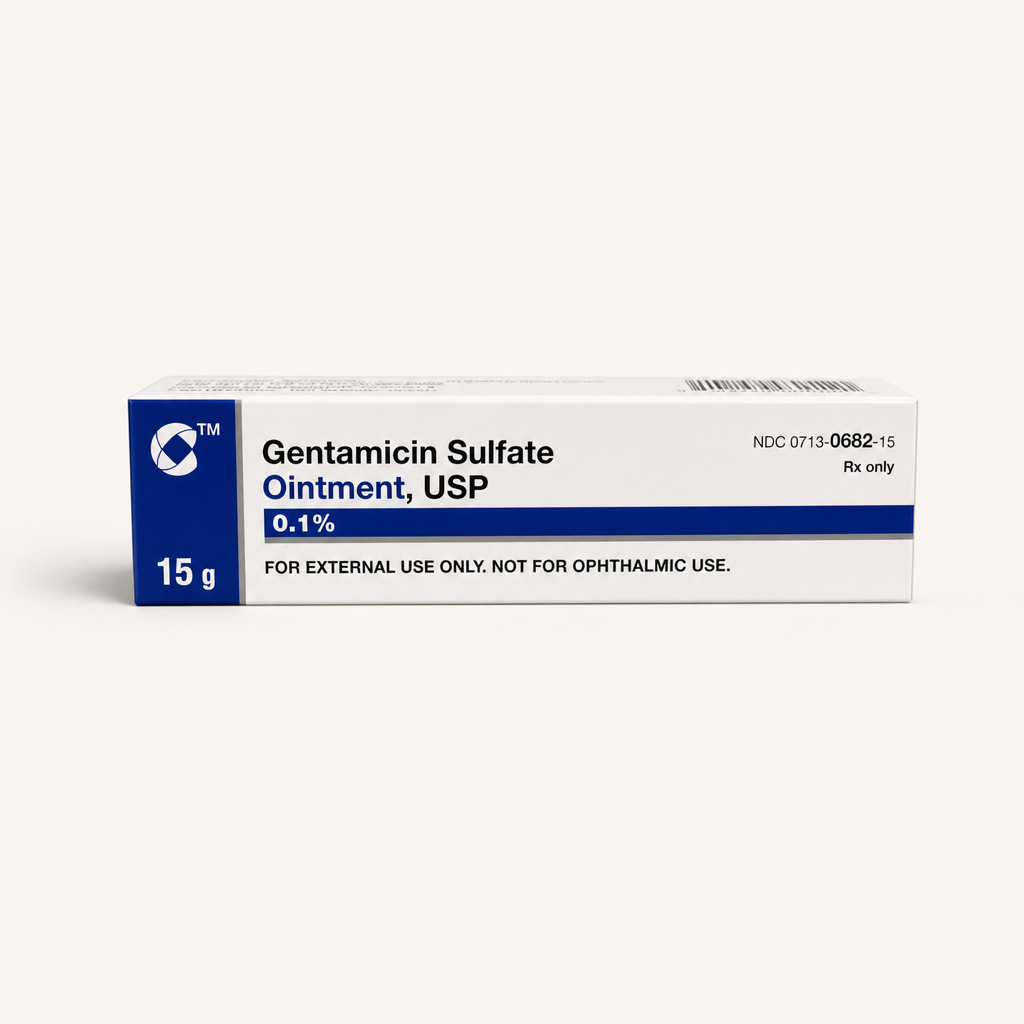
Gentamicin 0.1% topical ointment kills bacteria rather than just slowing their growth, making it a bactericidal antibiotic. When applied to a wound or infected sore, the concentrated action helps clear the infection and allows the skin to begin the natural healing process. The ointment base also helps soften any crusts or scabs, making it easier for the antibiotic to reach the underlying infection.
It’s important to use the medication consistently as directed, so the concentration of the antibiotic remains high enough to eliminate the bacteria entirely. If the levels drop too low or the treatment is stopped prematurely, the remaining bacteria may become harder to treat.
| Quick Facts | |
|---|---|
| Common Brands | Garamycin, Gentak |
| Drug Class | Aminoglycoside antibiotic |
| Generic Status | Generic version of Garamycin |
| Availability | Prescription only |
Dosing
Standard guidelines suggest applying a small amount of gentamicin 0.1% topical ointment to the affected area three to four times a day. Before application, it is helpful to gently clean the skin with mild soap and water and pat it dry. If the infection has produced a crust, such as in cases of impetigo, a healthcare provider may recommend removing the crust first so the ointment can make direct contact with the infection.
To apply the medication, a thin film should be spread over the entire infected area. Once applied, the area may be left open or covered with a loose, sterile gauze bandage. It is generally advised to avoid airtight or plastic-covered bandages unless specifically instructed by a doctor. Washing hands before and after application helps prevent the spread of the infection to other parts of the body or other people.
Note: Dosing information below is educational only. Your prescribing physician will determine your specific dose based on your individual health needs. Always follow your healthcare provider’s instructions for exact dosing.
Uses
FDA-Approved Uses
Gentamicin 0.1% topical ointment is FDA-approved for the treatment of:
- Contagious skin infection that causes red sores and crusts (impetigo contagiosa)
- Skin sores caused by poor blood circulation (infected stasis ulcers)
- Bacterial infections that complicate existing skin conditions (eczema, psoriasis, and seborrheic dermatitis)
- Localized infections in minor wounds (cuts, abrasions, or small burns)
Off-Label Uses
You may see gentamicin 0.1% topical ointment prescribed for uses that are not “FDA-approved.” This is a common and legal practice called “off-label” prescribing, where a doctor uses their clinical judgment to prescribe a drug for a different (but well-researched) purpose.
Common off-label uses include:
- Surgical site prophylaxis: Providers may recommend applying a small amount of ointment to minor surgical incisions to prevent the development of a bacterial infection during the healing phase.
- Severe acne support: In some instances, this antibiotic may be used alongside other treatments to help clear specific types of infected acne lesions.
Side Effects
Most people tolerate this topical medication well, as only a small amount is absorbed into the bloodstream. However, because it is applied directly to the skin, some localized reactions can occur. These symptoms are usually mild and often resolve as the skin adjusts to the treatment.
Common Side Effects
- Skin irritation or redness
- Itching at the application site
- Mild stinging or burning
- Skin dryness
Serious Side Effects
Serious side effects are rare, but it’s important to know what to look for if they do occur.
- Severe allergic reactions: Symptoms may include a widespread rash, hives, or swelling of the face, lips, and tongue. Seek emergency care if you experience difficulty breathing or throat tightness.
- Secondary infection: Long-term use of this antibiotic can lead to the growth of other organisms, such as fungi. Contact a doctor if the skin infection does not improve or if a new type of rash develops.
- Systemic absorption concerns: While rare with topical use, applying the medication to very large areas of broken or burned skin can lead to absorption. This may cause symptoms like ringing in the ears or changes in urination.
Call your doctor immediately if you experience any concerning or prolonged symptoms.
Pharmacist Tips
Complete the Full Course
Even if the skin looks better after a few days, it is essential to finish the entire prescription course. Stopping prematurely can lead to a recurrence that is resistant to antibiotics.
Store at Room Temperature
Keep the tube in a dry place between 68 and 77 degrees Fahrenheit. Avoid leaving the medication in a hot car or a damp bathroom cabinet, as extreme temperatures can degrade the antibiotic.
Avoid Eye Contact
This specific ointment is formulated for the skin and should not be used in the eyes. If the medication accidentally gets into the eyes, rinse them immediately with cool tap water.
Avoid Sensitive Areas
Do not apply this medication inside the mouth, nose, or ears unless specifically directed by a healthcare professional.
Watch for Allergic History
If you have ever had a reaction to other aminoglycoside antibiotics, such as neomycin (found in Neosporin), inform your provider, as there is a possibility of a cross-reaction.
Check the Bandage
If you cover the area with gauze, ensure it is not wrapped too tightly. Air circulation can often help the healing process for certain skin infections.
Drug Interactions
Interactions with gentamicin 0.1% topical ointment are not common because the medication mostly stays on the surface of the skin. However, using other skin products simultaneously can sometimes interfere with how well the antibiotic works or increase skin irritation.
- Other topical products: Standard guidelines suggest avoiding the use of other creams, lotions, or medicated soaps on the same area of skin unless cleared by a provider. Mixing products can sometimes deactivate the antibiotic.
- Systemic interactions: If the medication is applied to a very large area of damaged skin, it could potentially interact with other medications that affect the kidneys or hearing, such as strong diuretics or other aminoglycosides.
Always give your doctor and pharmacist a complete list of all your medications, vitamins, and supplements to check for potential interactions.
FAQs
How does gentamicin differ from other antibiotics like tobramycin?
Both belong to the aminoglycoside family, but they may target slightly different strains of bacteria. Tobramycin is frequently used for eye infections, while gentamicin is a mainstay for various skin infections.
What should I do if I develop ringing in the ears while using gentamicin?
Ringing in the ears is a very rare side effect for the topical ointment. However, if it occurs, it could indicate that some of the medication is being absorbed into the system. It is important to stop use and contact a healthcare provider immediately.
Can gentamicin topical cream treat fungal or viral skin infections?
No, this medication is strictly an antibiotic for bacteria. It does not have the properties required to kill fungi (like yeast or ringworm) or viruses (like herpes or warts).
Does systemic gentamicin interact with nonsteroidal anti-inflammatory drugs like ibuprofen?
Yes, when gentamicin is in the bloodstream, taking nonsteroidal anti-inflammatory drugs can increase the risk of kidney issues. This is less of a concern with the topical ointment unless it is used on very large areas of damaged skin.
Comparable Medications
Gentamicin 0.1% Topical Ointment vs Tobramycin, Mupirocin, or Erythromycin?
Tobramycin
Gentamicin and tobramycin are both aminoglycoside antibiotics that work in the same way by stopping bacteria from making the proteins they need to survive. While they are closely related, tobramycin is most commonly found in ophthalmic (eye) preparations. Gentamicin 0.1% topical ointment is more versatile in its topical forms, being widely used for various primary and secondary skin infections. Both require a prescription and are generally well tolerated when used as directed.
Mupirocin
From $44.99
Mupirocin is another common topical antibiotic, often used for impetigo and to eliminate MRSA (resistant staph) from the nasal passages. While gentamicin 0.1% topical ointment is an aminoglycoside, mupirocin belongs to a different class. Mupirocin is often a preferred choice for certain staph infections, whereas gentamicin provides broad Gram-negative coverage. Both treatments involve applying a thin layer to the skin several times a day.
Erythromycin Gel
From $48.99
Erythromycin is a macrolide antibiotic available in topical forms, frequently used for acne or eye infections. Unlike gentamicin 0.1% topical ointment, which kills bacteria, erythromycin often works by stopping bacteria from growing (bacteriostatic). Erythromycin is sometimes preferred for patients who have sensitivities to aminoglycosides, though gentamicin remains a standard choice for more complex or secondary bacterial skin infections.
We Have Gentamicin 0.1% Topical Ointment in Stock. Get Yours Today!
Important: Information on this page is for educational purposes only. Prescribing decisions are made by independent, licensed providers. TelyRx operates technology-enabled pharmacies and a telehealth platform that connects patients with licensed providers. Prescriptions, when provider-approved and issued, are filled and shipped by TelyRx-affiliated pharmacies. We do not employ physicians or make prescribing decisions. Learn more about our editorial standards here.