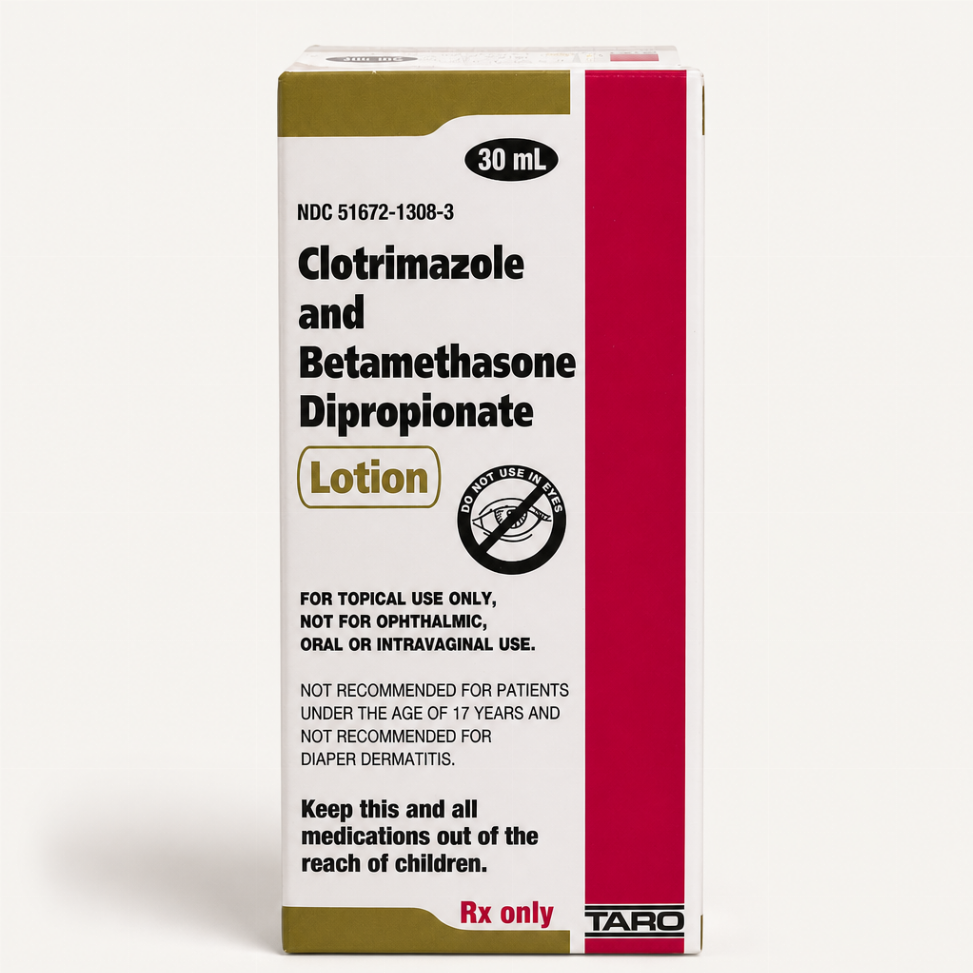
How It Works
Clotrimazole/betamethasone lotion utilizes a dual-action approach to treating fungal infections.
Clotrimazole works by blocking the production of ergosterol, a substance fungi need to build and maintain their cell membranes. Without enough ergosterol, the fungal cells become damaged and are unable to grow properly.
Betamethasone is a corticosteroid that helps reduce inflammation. It is thought to work by lowering the body’s production of certain chemicals that contribute to redness, swelling, and itching.
| Quick Facts | |
|---|---|
| Common Brands | Lotrisone |
| Drug Class | Topical azole antifungal/topical corticosteroid |
| Generic Status | Generic is available |
| Availability | Prescription only |
Dosing
Providers typically prescribe clotrimazole/betamethasone lotion to be applied by gently massaging enough lotion into the affected area twice a day. For conditions like athlete’s foot, treatment usually lasts for two weeks and should not exceed four weeks of continuous use.
For ringworm and jock itch, treatment is generally prescribed for one week and should not exceed two weeks. Guidelines suggest a maximum dose of 45 milliliters (mL) of lotion per week.
Note: The dosing information below is for educational purposes only. Your prescribing physician will determine your specific dose based on your individual health needs. Contact your healthcare provider if symptoms do not improve after 1 week for ringworm or jock itch, or after 2 weeks for athlete’s foot, as the diagnosis may need to be reassessed. Always follow your healthcare provider’s instructions for exact dosing.
Uses
FDA-Approved Uses
Clotrimazole/betamethasone lotion is FDA-approved to treat certain inflammatory fungal skin infections, including athlete’s foot (tinea pedis), jock itch (tinea cruris), and ringworm (tinea corporis).
Off-Label Uses
You may see clotrimazole/betamethasone lotion prescribed for uses that are not “FDA-approved.” This is a common and legal practice called “off-label” prescribing, where a doctor uses their clinical judgment to prescribe a drug for a different (but well-researched) purpose.
Examples of common off-label uses of clotrimazole/betamethasone lotion include:
- Other inflammatory fungal skin infections: Healthcare providers may prescribe clotrimazole/betamethasone lotion for inflammatory fungal infections not specifically listed in the FDA labeling, such as tinea manuum (hand ringworm) or tinea barbae (beard ringworm). The lotion formulation may be especially useful for hairy areas where creams can be more difficult to apply
Side Effects
Like all medications, clotrimazole/betamethasone lotion can cause side effects. Some common side effects may improve over time as your body adjusts to the medication. Other side effects may be serious and require medical attention.
Common Side Effects
Common side effects reported in clinical trials:
- Burning or stinging at the application site
- Dry skin
Other side effects that have been reported with clotrimazole, topical corticosteroids, or similar medications include:
- Itching
- Redness or irritation
- Peeling
- Inflamed hair follicles (folliculitis)
- Acne-like breakouts
- Increased hair growth at the application site
- Skin lightening (hypopigmentation)
- Swelling
- Blistering
- Hives
Serious Side Effects
Serious side effects are rare, but it’s important to know what to look for if they do occur.
- Severe allergic reactions: Although uncommon, clotrimazole/betamethasone lotion can cause an allergic reaction. Stop using the medication and seek immediate medical attention if you develop hives, severe rash, swelling of the face, lips, tongue, or throat, or difficulty breathing.
- Reduced adrenal function: The steroid component of this lotion can be absorbed through the skin into the bloodstream, causing the adrenal glands to produce less cortisol. If this occurs, symptoms can include nausea, weakness, tiredness, or low blood pressure.
- Cushing’s syndrome: Changes to cortisol production can cause Cushing’s syndrome, which is marked by weight gain in the upper body, a rounded face, thinning skin, depression, and anxiety.
- High blood sugar: Systemic absorption of the steroid component in this lotion may elevate blood sugar levels, resulting in increased thirst, frequent urination, fatigue, and confusion.
- Vision problems: In rare instances, topical use of betamethasone may increase the risk of cataracts and glaucoma. Contact your healthcare provider if you experience blurred vision, eye pain, or other changes in your vision while using this medication.
- Severe skin reactions: Improper or prolonged use of this lotion can cause skin problems, including thinning, stretch marks, worsening infections, blistering, peeling, or cracking.
Call your doctor immediately if you experience any concerning or prolonged symptoms.
Pharmacist Tips
Complete the Course
Guidelines indicate that you should use clotrimazole/betamethasone lotion for the full duration prescribed, even if your symptoms improve quickly. Stopping early can cause the infection to recur and become harder to treat.
Apply Correctly
As a general best practice, gently clean and dry the affected skin before applying the lotion. Massage enough lotion into the affected area to cover it, then wash your hands afterward unless you are treating your hands.
Avoid Sensitive Areas
Providers note that you should keep the lotion away from your eyes, mouth, and vagina, as these sensitive areas are prone to irritation and other side effects.
Leave The Area Uncovered
Do not cover treated areas with bandages, wraps, or tight dressings unless instructed by your doctor. Tightly covering the skin increases the absorption into your body, which may make side effects more likely.
Mix Well Before Use
Shake the clotrimazole/betamethasone lotion bottle well before each application to ensure it is properly mixed.
Store Properly
Instructions stipulate that you should keep the medication in a cool, dry place at room temperature (between 68°F and 77°F). The lotion bottle should be stored upright.
Drug Interactions
Certain medications and substances can interact with clotrimazole/betamethasone lotion, potentially altering its effectiveness or increasing the risk of side effects.
- Other corticosteroid-containing products: Using this lotion with other topical corticosteroids or, in some cases, oral corticosteroids, may increase the risk of corticosteroid-related side effects. Tell your healthcare provider about any steroid-containing medications you use, including creams, ointments, lotions, or tablets.
- Certain HIV medications: Ritonavir-, cobicistat-, and some other boosted HIV treatment regimens can increase the absorption of the betamethasone component, raising the risk of steroid-related side effects such as adrenal suppression or Cushing’s syndrome. Be sure to tell your healthcare provider if you take medications for HIV.
- Strong CYP3A4 inhibitors: Medications such as ketoconazole or itraconazole may also increase exposure to the betamethasone component. Although this interaction is more likely with oral or injectable steroids, tell your healthcare provider about all medications you take before using this lotion.
Always give your doctor and pharmacist a complete list of all your medications, vitamins, and supplements to check for potential interactions.
FAQs
Can clotrimazole/betamethasone be applied to the face to treat fungal acne?
Avoid applying clotrimazole/betamethasone lotion or cream on your face. The face has delicate skin, making it more susceptible to side effects like irritation, skin thinning, and acne-like bumps.
Why is there a limit on clotrimazole/betamethasone for a maximum duration of two to four weeks?
Because betamethasone is a potent steroid, prolonged use increases the likelihood of side effects. Using clotrimazole/betamethasone lotion for extended periods or over large areas of the body can lead to systemic absorption, which may suppress your body’s natural steroid hormone production.
Does clotrimazole/betamethasone treat vaginal yeast infections?
Clotrimazole/betamethasone lotion is not for internal yeast infections and should not be applied inside the vagina. If you have symptoms of a yeast infection, your healthcare provider can recommend a more appropriate antifungal medication.
What is the difference between clotrimazole/betamethasone cream and clotrimazole/betamethasone lotion?
Both the cream and the lotion contain the same active ingredients (1% clotrimazole and 0.05% betamethasone) and are used to treat the same types of fungal infections. The main differences are physical consistency: creams are typically thicker, while lotions are more fluid and easier to spread over hairy areas.
Should you cover an application site with a dressing or bandage?
Guidelines indicate that you should not bandage, wrap, or seal the area where clotrimazole/betamethasone lotion is applied unless your healthcare provider explicitly instructs you to do so. Covering the skin can cause excessive absorption of medication into your bloodstream, which may lead to hormonal imbalances and other side effects. If applying this lotion to the groin area for jock itch, wear loose-fitting clothing.
Is it safe to use clotrimazole/betamethasone during pregnancy or while breastfeeding?
It is not fully known if clotrimazole/betamethasone lotion is safe during pregnancy or if it passes into breast milk, so risk cannot be ruled out.
If you are pregnant or breastfeeding, you should talk with your doctor before using clotrimazole/betamethasone lotion. Your doctor can discuss the benefits and risks and provide details about safe practices for applying the lotion if it is prescribed to you.
Why do medical guidelines suggest utilizing a single-agent antifungal before prescribing clotrimazole/betamethasone?
Medical guidelines commonly recommend starting with a single-agent antifungal medication because betamethasone is a potent steroid. Relying solely on an antifungal medication to clear mild infections avoids the risk of steroid-related side effects, like skin thinning or hormone suppression. The combination of clotrimazole and betamethasone is typically prescribed when fungal infections are severe or involve significant inflammation.
Does clotrimazole/betamethasone interact with other topical skin care products or moisturizers?
Applying other topical medications or irritating skin-care products to the same area may increase skin irritation or alter how the medication works. Talk with your healthcare provider before using other prescription or over-the-counter products on treated skin.
How does clotrimazole/betamethasone treat ringworm compared to over-the-counter antifungals?
Over-the-counter antifungals target only the fungus, but clotrimazole/betamethasone provides a dual-action approach. Clotrimazole treats ringworm, while betamethasone reduces the body’s inflammatory response. Including the steroid in this drug combination may provide more rapid relief of inflammatory symptoms, but it also increases the risk of steroid-related side effects.
Comparable Medications
Clotrimazole/betamethasone lotion, clotrimazole (Lotrimin AF), nystatin/triamcinolone, clobetasol, terbinafine?
Clotrimazole
Clotrimazole is an over-the-counter antifungal medication that does not contain a corticosteroid. Unlike clotrimazole/betamethasone, it treats the fungal infection without providing additional anti-inflammatory effects.
Nystatin / Triamcinolone Topical
From $29.99
Nystatin/triamcinolone is a prescription medication that combines an antifungal with a corticosteroid to treat inflammatory yeast (Candida) skin infections. Unlike clotrimazole/betamethasone, it is not typically used to treat common dermatophyte infections such as athlete's foot, jock itch, or ringworm.
Clobetasol Cream
From $23.99
Clobetasol is a high-potency topical corticosteroid used to treat severe inflammatory skin conditions. Unlike clotrimazole/betamethasone, it does not contain an antifungal and should not be used alone to treat fungal skin infections.
Terbinafine
From $57.49
Terbinafine is an antifungal medication that kills many of the fungi responsible for athlete's foot, jock itch, and ringworm. Unlike clotrimazole/betamethasone, it does not contain a corticosteroid to help reduce inflammation.
We Have Clotrimazole/Betamethasone Lotion in Stock. Get Yours Today!
Important: Information on this page is for educational purposes only. Prescribing decisions are made by independent, licensed providers. TelyRx operates technology-enabled pharmacies and a telehealth platform that connects patients with licensed providers. Prescriptions, when provider-approved and issued, are filled and shipped by TelyRx-affiliated pharmacies. We do not employ physicians or make prescribing decisions. Learn more about our editorial standards here.