

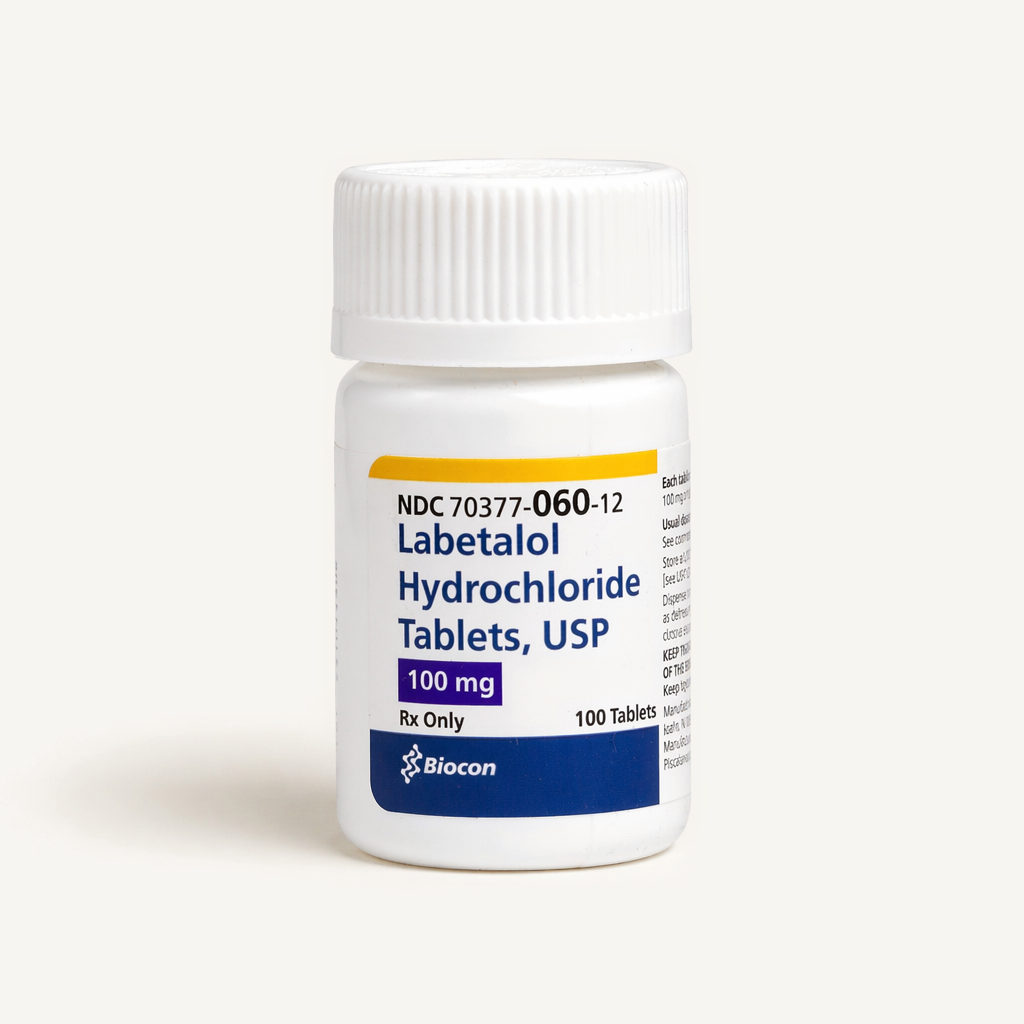
How It Works
Labetalol functions through a dual-action mechanism that impacts both the heart and the blood vessels. The medication blocks alpha-1 receptors. When these receptors are blocked, the blood vessels relax and widen. This process (vasodilation) reduces the resistance blood faces as it moves through the body, which lowers blood pressure.
At the same time, labetalol blocks beta receptors in the heart. This action slows heart rate and reduces the force with which the heart muscle contracts. By decreasing both the speed and the strength of the heartbeat, the medication ensures the heart does not have to work as hard to pump blood.
This combined effect of relaxed blood vessels and a lower heart rate leads to a reduction in overall blood pressure.
Most people notice the initial effects of labetalol within two hours of taking a dose. However, it usually takes several days of consistent use for the medication to reach its full therapeutic effect in the body.
| Quick Facts | |
|---|---|
| Common Brands | Trandate (discontinued) |
| Drug Class | Alpha/beta-adrenergic blocking agent |
| Generic Status | Generic version available |
| Availability | Prescription only |
Dosing
Labetalol is an oral tablet typically taken twice daily, though some providers may recommend a three-times-daily schedule. Taking the medication at the same time each day helps maintain consistent blood pressure control.
Standard guidelines suggest taking the tablet with water, and it can be taken with or without food. Because the effects of labetalol last about eight to twelve hours, twice-daily dosing is necessary to prevent blood pressure from rising between doses.
Labetalol tablets are available in several strengths:
- 100 mg
- 200 mg
- 300 mg
The typical starting dose for adults is 100 mg taken by mouth twice daily. If blood pressure remains high, a healthcare provider may raise the dose every two to three days.
Maintenance doses often range between 200 mg and 400 mg twice daily, though higher doses are sometimes used for severe cases. Tapering the medication slowly is required if the treatment needs to be stopped, as sudden discontinuation can be dangerous.
Note: Dosing information below is educational only. Your prescribing physician will determine your specific dose based on your individual health needs. Always follow your healthcare provider’s instructions for exact dosing.
Uses
FDA-Approved Uses
Labetalol is FDA-approved for the management of high blood pressure (hypertension) in adults and the IV formulation is approved for the treatment of severe high blood pressure or high blood pressure emergencies (severe hypertension or hypertensive emergencies).
Off-Label Uses
You may see labetalol prescribed for uses that are not “FDA-approved.” This is a common and legal practice called “off-label” prescribing, where a doctor uses their clinical judgment to prescribe a drug for a different (but well-researched) purpose. Providers typically recommend labetalol for the following conditions:
- Pregnancy-induced hypertension: Medical experts may use labetalol to treat high blood pressure in pregnant patients because of its established safety profile.
- Preeclampsia: The medication is commonly used to manage blood pressure in patients at risk for this serious pregnancy complication.
- Post-surgery blood pressure control: Labetalol may be used to manage sudden spikes in blood pressure following major surgical procedures.
Side Effects
Like all blood pressure medications, labetalol can cause side effects as the body adjusts to the treatment. Many common side effects are mild and tend to resolve as the body becomes accustomed to the medication. It is important to monitor how the body responds, especially during the first few days of treatment or after a dose increase.
Common Side Effects
- Dizziness or lightheadedness
- Fatigue or tiredness
- Nausea
- Scalp tingling or a “crawling” sensation
- Stuffy nose
- Headache
- Indigestion or heartburn
- Changes in taste
- Sexual dysfunction
Serious Side Effects
Serious side effects are rare, but it’s important to know what to look for if they do occur. Call your doctor if you experience:
- Slow heart rate (bradycardia): Symptoms may include extreme dizziness, fainting, chest pain, or feeling weak.
- Low blood pressure (hypotension): This may cause blurred vision, confusion, or a feeling of spinning when standing up.
- Worsening heart failure: Signs include shortness of breath, sudden weight gain, or swelling in the ankles, feet, or hands.
- Liver injury (hepatotoxicity): Symptoms may include yellowing of the skin or eyes (jaundice), dark urine, or pain in the upper right stomach.
- Breathing problems (bronchospasm): Tightness in the chest, wheezing, or difficulty catching your breath can occur.
- Severe allergic reaction: This may present as hives, skin rash, or swelling of the face, lips, and throat.
Call your doctor immediately if you experience any concerning or prolonged symptoms.
Pharmacist Tips
Stand Up Carefully
Moving slowly when rising from a sitting or lying position is recommended to prevent dizziness. This helps the body adjust to the blood pressure-lowering effects of labetalol.
Monitor Blood Sugar
Checking blood sugar more frequently is advised for those with diabetes. Labetalol can hide symptoms of low blood sugar, such as a fast heartbeat or tremors.
Avoid Stopping the Medication Suddenly
Do not stop using labetalol abruptly, as that can cause a dangerous spike in blood pressure and increase the risk of a heart attack.
Check Cold Medicines
Consult a pharmacist or your doctor before using over-the-counter cold products. Many decongestants contain ingredients like pseudoephedrine, which can raise blood pressure and counteract labetalol.
Limit Alcohol Intake
Avoiding or limiting alcohol is recommended while taking labetalol. Alcohol can increase the risk of dizziness and drowsiness, making the medication’s side effects feel more intense.
Report Lung Issues
If you have a history of asthma or COPD, tell your provider. Labetalol is a non-selective blocker and may occasionally cause the airways to tighten, making breathing more difficult.
Drug Interactions
Labetalol can interact with several other medications, which may alter its effectiveness or increase the risk of adverse reactions.
- Calcium channel blockers: Taking labetalol with drugs like diltiazem or verapamil can lead to a dangerously slow heart rate or heart block.
- Stomach acid reducers: Cimetidine may increase the levels of labetalol in the blood, which could lead to an excessive drop in blood pressure.
- Asthma inhalers: Medications such as albuterol or formoterol may not work as effectively when used alongside labetalol.
- Antidepressants: Tricyclic antidepressants like amitriptyline may interact with labetalol and increase the risk of tremors or other side effects.
- Nitroglycerin: Using these two medications together can cause blood pressure to drop significantly lower than intended.
- Diabetes medications: Labetalol can change how the body responds to insulin or oral diabetes drugs and may mask the warning signs of low blood sugar.
Always give your doctor and pharmacist a complete list of all your medications, vitamins, and supplements to check for potential interactions.
FAQs
How long does it usually take for labetalol to lower my blood pressure after swallowing?
Most patients begin to experience a reduction in blood pressure about two hours after taking the tablet. While the initial effect is rapid, the medication reaches its peak effectiveness after several days of consistent dosing.
Is it normal to experience a tingling or “crawling” sensation on my scalp when first starting this?
Yes, this is a documented side effect specific to labetalol. Many people describe it as a “pins and needles” feeling on the scalp. It is generally harmless and usually disappears as the body gets used to the treatment.
Why do I have to take this pill twice a day instead of just once in the morning?
The effects of labetalol typically last between eight and twelve hours in the system. Taking the medication twice daily helps blood pressure to remain stable throughout the day and night without significant spikes.
What is the difference between labetalol and a standard beta-blocker like metoprolol?
Metoprolol primarily blocks beta receptors, focusing on the heart. Labetalol blocks both alpha and beta receptors. This dual action allows labetalol to relax blood vessels directly while also slowing the heart.
Is it safe to take over-the-counter cold medicines containing pseudoephedrine while on labetalol?
Standard guidelines suggest avoiding pseudoephedrine because it constricts blood vessels and can raise blood pressure. This effect can oppose the work labetalol is doing, making your treatment less effective.
Why should you never stop taking labetalol abruptly without tapering off?
Stopping the medication suddenly can cause “rebound hypertension,” where blood pressure surges to dangerous levels. This sudden increase can put severe stress on the heart and may lead to chest pain or a heart attack.
Is it safe to drink alcohol while taking labetalol?
Alcohol can enhance the dizzying effects of blood pressure medication. Combining the two may lead to excessive drowsiness or fainting, so it is best to limit alcohol consumption while on this treatment.
Does labetalol interact with inhalers or make it harder to catch my breath?
Because labetalol is a non-selective blocker, it can sometimes cause the muscles in the airways to tighten. This may make rescue inhalers less effective and can be a concern for patients with a history of asthma.
Are generic labetalol tablets as effective as the original brand name Trandate?
Generic medications are required by the FDA to have the same active ingredient and strength as the brand-name version. Generic labetalol provides the same clinical benefits as Trandate and is the only version currently available.
Comparable Medications
Labetalol vs Metoprolol (Lopressor / Toprol XL), Methyldopa, or Nifedipine (Procardia XL)?
Metoprolol Succinate ER
From $24.99
Metoprolol is a selective beta blocker that primarily targets the heart to slow heart rate and reduce workload. Unlike labetalol, metoprolol does not have alpha-blocking properties to relax blood vessels directly.
Methyldopa
Methyldopa is commonly used to manage high blood pressure during pregnancy. Methyldopa works by acting on the central nervous system to reduce the signals that tighten blood vessels.
Nifedipine ER Tablets
From $34.99
Nifedipine is a calcium channel blocker that lowers blood pressure by relaxing vascular smooth muscle. Nifedipine does not affect heart rate in the same way as labetalol.
We Have Labetalol in Stock. Get Yours Today!
Important: Information on this page is for educational purposes only. Prescribing decisions are made by independent, licensed providers. TelyRx operates technology-enabled pharmacies and a telehealth platform that connects patients with licensed providers. Prescriptions, when provider-approved and issued, are filled and shipped by TelyRx-affiliated pharmacies. We do not employ physicians or make prescribing decisions. Learn more about our editorial standards here.