

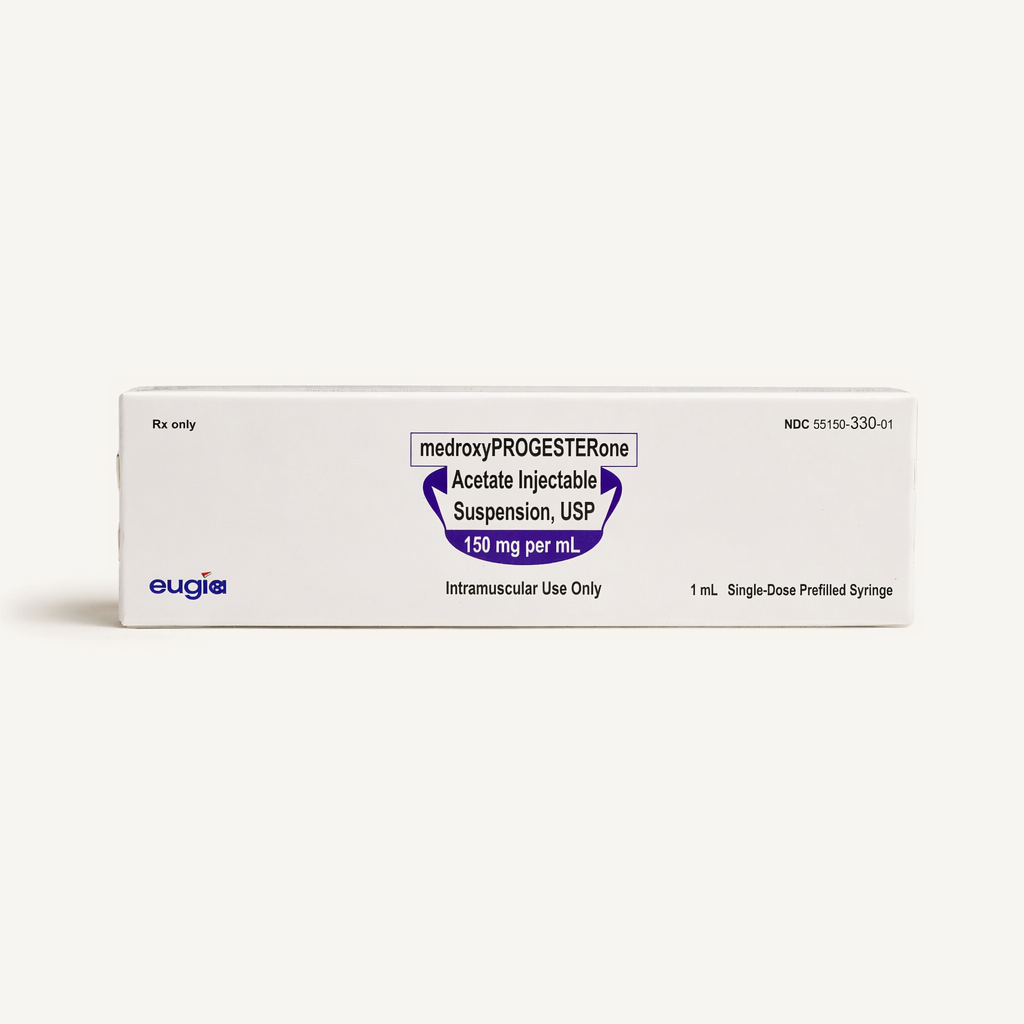
How It Works
Medroxyprogesterone belongs to a class of drugs called progestins. As a synthetic form of the hormone progesterone, it prevents pregnancy by:
- Suppressing ovulation, meaning it stops the ovaries from releasing an egg.
- Thickening the cervical mucus, which makes it difficult for sperm to reach the egg.
- Altering the lining of the uterus to prevent a fertilized egg from successfully implanting.
| Quick Facts | |
|---|---|
| Common Brands | Depo-Provera |
| Drug Class | Progestin |
| Generic Status | Generic is available |
| Availability | Prescription only |
Dosing
Providers typically recommend starting medroxyprogesterone during the first 5 days of a normal menstrual period, within the first 5 days postpartum, or 6 weeks after the delivery of a baby if breastfeeding. This helps ensure that you are not pregnant when you receive your first injection.
The dosing for medroxyprogesterone injection depends on why you’re taking it. For preventing pregnancy, the recommended dose is an intramuscular injection of 150 mg once every 3 months (13 weeks).
If a dose is given later than the recommended schedule, it is generally advised to use a backup method of birth control (like condoms) for at least a week after receiving the delayed injection.
Note: Dosing information below is educational only. Your prescribing physician will determine your specific dose based on your individual health needs. Always follow your healthcare provider’s instructions for exact dosing.
Uses
FDA-Approved Uses
Medroxyprogesterone prefilled syringe is FDA-approved to prevent pregnancy.
Off-Label Uses
You may see medroxyprogesterone prefilled syringes prescribed for uses that are not “FDA-approved.” This is a very common and legal practice called “off-label” prescribing, where a doctor uses their clinical judgment to prescribe a drug for a different (but well-researched) purpose.
Medroxyprogesterone prefilled syringe may be used off-label for menstrual suppression.
Side Effects
Like all medications, medroxyprogesterone injections can cause side effects. Some common side effects may improve over time as your body adjusts to the medication. Other side effects may be serious and require medical attention.
Common Side Effects
- Menstrual changes (e.g. irregular bleeding or spotting)
- Abdominal pain or discomfort
- Nausea
- Bloating
- Weight gain
- Dizziness
- Headache, including migraine
- Weakness
- Nervousness
- Decreased sex drive
- Fatigue
- Injection site reactions (e.g. pain, itching, redness, swelling, or skin dimpling)
- Breast pain or tenderness
- Acne
- Vaginal discharge or yeast infections
- Hair loss
Serious Side Effects
Serious side effects are rare, but it’s important to know what to look for if they do occur. Stop using medroxyprogesterone prefilled syringe and call your doctor immediately if you experience:
- Severe allergic reactions: Symptoms include swelling of the face, lips, tongue, or throat; difficulty breathing or swallowing; racing heart; severe rash or itching; and/or fever.
- Weakened bones: Long-term use of medroxyprogesterone can lead to a decrease in bone density (osteopenia) or osteoporosis, which can increase the risk of fractures.
- Blood clots: Medroxyprogesterone may increase the risk of life-threatening blood clots in the arteries, veins, lungs, eye, legs, or arms. A stroke or heart attack may also occur. Symptoms include sudden shortness of breath, chest pain, slurred speech, vision loss or changes, lightheadedness, coughing up blood, sweating, fast heartbeat, soreness when walking or standing, and sudden warmth or swelling in the leg or arm.
- Liver damage (hepatotoxicity): Medroxyprogesterone may cause liver damage. Symptoms include belly pain, light-colored stool, dark urine, fever, nausea, vomiting, loss of appetite, or yellowing of the skin or eyes (jaundice).
- Ectopic pregnancy: If pregnancy occurs while taking medroxyprogesterone, there is a higher risk of the egg implanting outside the uterus, which can be life-threatening or affect future fertility. Symptoms include vaginal bleeding or discharge, vomiting, severe stomach cramps, pain on one side of the body, dizziness, weakness, fever, chills, or pain in the shoulder, neck, or rectum.
- Depression: This medication may cause significant mood changes. Symptoms include new or worsening depression.
- Breast cancer risk: Medroxyprogesterone may increase your risk of breast cancer. Symptoms include new lumps in the breast or armpit, nipple changes, or changes in breast size, shape, texture, or temperature.
- Menstrual changes: Periods may become irregular, heavier, or longer when taking medroxyprogesterone. Spotting between periods may also occur. Sometimes, periods stop when taking medroxyprogesterone. Possible serious symptoms include persistent heavy bleeding or sudden increases in bleeding after spotting or absent periods.
- Seizures: Some people may experience seizures when taking medroxyprogesterone. Symptoms include muscle jerking or twitching, stiffening of the arms or legs, loss of consciousness, dizziness, anxiety, confusion, or a sense of dread.
- Injection site reactions: Medroxyprogesterone may cause mild reactions at the injection site. Symptoms of more serious reactions include pus, warmth, swelling, bruising, bleeding, or persistent pain at the injection site.
Call your doctor immediately if you experience any concerning or prolonged symptoms.
Pharmacist Tips
The Injection Must Be Given Every 3 Months
Track your injection appointments on a calendar or smartphone app to avoid missing an injection. If you miss an appointment, call your provider right away to reschedule. If your injection is delayed by a week or more, you’ll need to use a backup method (such as condoms) for up to 1 week after your rescheduled injection.
Menstrual Changes Are Expected
Medroxyprogesterone may cause changes to your period, including breakthrough bleeding, light or no periods, or heavier periods. It can take months for your period to stabilize after starting the medication. Talk to your doctor if you have any concerns.
Manage Possible Weight Gain
Weight gain is a common side effect of the medication. To minimize potential weight gain, healthcare professionals often suggest maintaining a balanced diet and incorporating daily exercise.
Long-Term Use Is Not Recommended
Due to the risk of calcium loss and weakened bones, it is not recommended to use this medroxyprogesterone for more than 2 years unless explicitly directed by a provider.
Perform Monthly Breast Self-Exams
Providers typically recommend performing monthly breast self-exams and maintaining regular pelvic and breast exams with your OBGYN while using this medication.
Medroxyprogesterone May Affect Blood Sugar Levels
If you have diabetes, ask your healthcare provider if you should check your levels more often or make any changes to your medications.
Medroxyprogesterone May Affect Some Lab Results
Tell your provider that you’re taking this medication before getting any bloodwork done.
Practice Safe Sex
Medroxyprogesterone injections do not protect against HIV or other sexually transmitted infections (STIs). Use barrier methods, such as condoms, to prevent STIs.
Store At Room Temperature
While medroxyprogesterone injections are usually administered during an in-office visit. Any solution that is stored at home should be kept at 68°F to 77°F (20°C to 25°C) in a cool, dry place away from light.
Tell Your Provider If You’re Pregnant Or Breastfeeding
Medroxyprogesterone should not be used during pregnancy. The medication passes into breast milk. Tell your healthcare provider if you are pregnant, breastfeeding, or planning to be, so they can recommend the safest plan.
Drug Interactions
Certain medications and substances can interact with medroxyprogesterone prefilled syringe, potentially altering how it works or increasing the risk of side effects. For example:
- Seizure medications: Drugs such as carbamazepine, phenytoin, phenobarbital, oxcarbazepine, and topiramate can interact with medroxyprogesterone.
- Antibiotics and antifungals: Medications taken to treat infections, such as rifampin or griseofulvin, may interact with medroxyprogesterone.
- Antiviral medications: Treatments including ritonavir, efavirenz, and nevirapine pose potential interaction risks.
- HIV/AIDS medications: Drugs like ritonavir and nevirapine may interact with medroxyprogesterone.
- Corticosteroids: Anti-inflammatory medicines like dexamethasone should be discussed with a provider.
- Bosentan: This medication can interact with medroxyprogesterone.
- St. John’s wort: This herbal supplement may interact with the medication’s effectiveness.
Always give your doctor and pharmacist a complete list of all your medications, vitamins, and supplements to check for potential interactions.
FAQs
How long does the medroxyprogesterone shot actually protect me from pregnancy after I get the injection?
Each injection provides contraceptive protection for up to three months (approximately 12 to 14 weeks) before the next dose is required.
Is it normal for my period to disappear while I am on this medication?
Yes, it is common. Clinical studies have shown that over half of users stop having menstrual periods after one year of treatment with medroxyprogesterone.
How many months does it usually take for my fertility to return if I want to get pregnant after stopping the shot?
Research indicates that it takes an average of 10 months to conceive after discontinuing the injections, although some people have become pregnant as early as 4 months.
Can using medroxyprogesterone make me feel unusually depressed, moody, or anxious?
Yes, mood changes, feelings of anxiety or nervousness, and depression are potential side effects of this medication.
Is it normal to experience unpredictable spotting or brown discharge during the first few months?
Yes, it is generally accepted that many people will experience irregular bleeding, light spotting, or changes in discharge within the first year of starting medroxyprogesterone or Depo-Provera.
Why do doctors recommend taking calcium and vitamin D supplements while on this drug?
Medroxyprogesterone may cause calcium loss in bones, leading to decreased bone density (osteopenia) and a higher risk for osteoporosis. Your provider may recommend supplementing with calcium and vitamin D while taking this medication.
Can I safely use medroxyprogesterone for birth control if I am breastfeeding my baby?
The medication does pass into breast milk. Providers typically evaluate individual situations to determine if it is appropriate to use while breastfeeding.
Will taking medroxyprogesterone help stop unusually heavy menstrual bleeding?
Yes, for many people, medroxyprogesterone leads to lighter periods or causes them to stop over time.
Does this medication increase my risk of developing blood clots the way estrogen pills do?
Yes, using medroxyprogesterone can increase the risk of developing dangerous blood clots in the arteries or veins, which could lead to a stroke, heart attack, or pulmonary embolism.
Can I stay on the Depo shot for more than 2 years?
Due to the risk of weakened bones and calcium loss, it is generally not recommended to use this medication for longer than 2 years unless directed by a healthcare provider who monitors your bone health.
Will medroxyprogesterone make my acne worse or cause unusual facial hair growth?
Acne, pimples, and skin blemishes have all been reported as potential side effects of this medication. Hair loss is another potential side effect of medroxyprogesterone.
Is it safe to take ibuprofen for cramping while using medroxyprogesterone?
Ibuprofen is not known to interact directly with medroxyprogesterone, so it is generally considered safe to take for cramping. However, it’s best to consult with a healthcare provider first to avoid any potential interactions with other medications you may be taking.
Does this medication interact with certain anti-infectives?
Yes, the medroxyprogesterone injection can interact with certain antibiotics, including rifampin and griseofulvin.
Comparable Medications
Medroxyprogesterone Prefilled Syringe, Sprintec, Etonogestrel Implant (Nexplanon), Levonorgestrel IUD, Ethinyl Estradiol & Etonogestrel Vaginal Ring, Or Micronized Progesterone (Prometrium)?
There are several medications that your doctor can prescribe in place of medroxyprogesterone prefilled syringe. Here are a few possible alternatives below.
Sprintec
A daily combined oral contraceptive pill used to prevent pregnancy.
Etonogestrel implant
A birth control implant placed in the arm that prevents pregnancy for up to 5 years.
Levonorgestrel IUD
A long-acting intrauterine device used to treat heavy periods and prevent pregnancy for up to 8 years, depending on the product.
A monthly contraceptive ring that is placed in the vagina for 3 weeks.
Micronized progesterone
A daily oral medication used to treat irregular menstrual cycles and prevent the uterine lining from becoming too thick in postmenopausal women taking estrogen.
We Have Medroxyprogesterone Prefilled Syringe in Stock. Get Yours Today!
Important: Information on this page is for educational purposes only. Prescribing decisions are made by independent, licensed providers. TelyRx operates technology-enabled pharmacies and a telehealth platform that connects patients with licensed providers. Prescriptions, when provider-approved and issued, are filled and shipped by TelyRx-affiliated pharmacies. We do not employ physicians or make prescribing decisions. Learn more about our editorial standards here.