

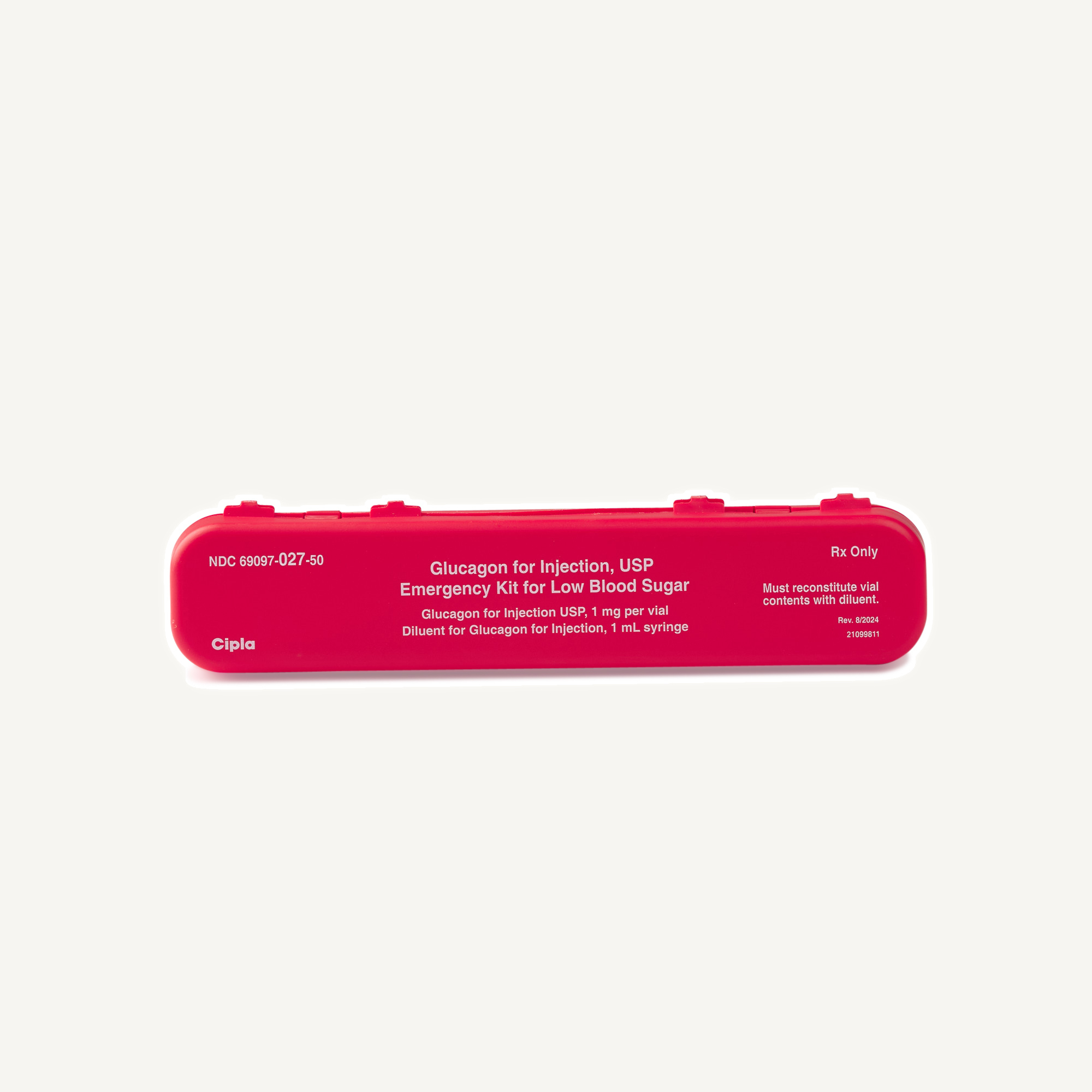
How It Works
To understand how glucagon works, it helps to think of your liver as an energy storage tank. When you eat, your body stores some of that sugar as glycogen for later use.
Glucagon acts as the key that unlocks that storage tank through the following process:
- Liver signaling: Once the medication is administered, it reaches the liver and binds to specific receptors.
- Glucose release: These sensors tell the liver to convert its stored energy (glycogen) back into usable sugar (glucose).
- Rapid recovery: The liver flushes this sugar into the bloodstream, raising blood glucose levels quickly, usually within 10 to 15 minutes.
Because it relies on these internal stores, glucagon may be less effective if a person has not eaten for a long time or has certain liver conditions.
| Quick Facts | |
|---|---|
| Common Brands | Baqsimi (nasal), Gvoke (injectable), Zegalogue (injectable), GlucaGen (emergency kit) |
| Drug Class | Anti-hypoglycemic agent / glycogenolytic agent |
| Generic Status | Generic version available for some injectable forms |
| Availability | Prescription only |
Dosing
Dosing for glucagon varies by device:
- Standard dose: Most emergency kits and auto-injectors provide a 1 mg dose.
- Nasal dose: Baqsimi provides a single 3 mg dose in one spray.
- Wait and repeat: If the person does not wake up or their blood sugar does not rise after 15 minutes, providers typically recommend giving a second dose while waiting for emergency responders to arrive.
Administration basics:
- Traditional kits: They typically require you to manually mix a liquid into a powder before drawing it into a syringe.
- Auto-injectors: Work like an EpiPen—you can press the device against the skin.
- Nasal spray: Is puffed into a single nostril. The person does not need to be conscious or breathe deeply for it to work.
Note: Dosing information below is educational only. Your prescribing physician will determine your specific dose based on your individual health needs. Always follow your healthcare provider’s instructions for exact dosing.
Uses
FDA-Approved Uses
The FDA approves glucagon for:
- Severe hypoglycemia: Emergency treatment of dangerously low blood sugar in people with diabetes.
- Diagnostic aid: Temporarily inhibiting the movement of the digestive tract during radiologic exams.
Off-Label Uses
You may see glucagon prescribed for uses that are not FDA-approved. This is a common and legal practice called off-label prescribing, where a doctor uses their clinical judgment to prescribe a drug for a different (but well-researched) purpose.
Glucagon may be prescribed off-label for the following conditions:
- Beta-blocker or calcium channel blocker overdose: In emergency rooms, high doses of glucagon are sometimes used to restart a heart that specific blood pressure medications have slowed.
- Food bolus obstruction: Occasionally, doctors use glucagon to help relax the esophagus if a piece of food becomes lodged.
Side Effects
Glucagon is a powerful hormone, and the body often responds by quickly adjusting to rising blood sugar levels.
Common Side Effects
- Nausea and vomiting (common upon waking)
- Headache
- Fast heartbeat or pounding in the ears
- Redness or swelling at the injection site
- Temporary skin rash or itchiness
Serious Side Effects
Serious side effects are rare, but it’s important to know what to look for if they do occur. It’s generally accepted that you stop taking the medication and immediately call the doctor if you experience any of the following symptoms:
- Severe allergic reaction: It is generally advised to watch for hives, facial or throat swelling, or difficulty breathing.
- Extreme blood pressure changes: In people with specific rare tumors (like a pheochromocytoma), glucagon can cause blood pressure to skyrocket.
- Rebound low blood sugar: In rare cases, glucagon can cause the body to release too much insulin, causing sugar to drop again shortly after treatment.
Call your doctor immediately if you experience any concerning or prolonged symptoms.
Pharmacist Tips
The Side Rule
It is generally advised to always roll the unconscious person onto their side after giving glucagon. Because nausea and vomiting are common side effects, this prevents the person from choking.
Check The Date
Glucagon kits have a relatively short shelf life (often 12–24 months). Providers typically suggest checking your kit every few months and replacing it before it expires.
Train Your Circle
Since you cannot give yourself glucagon if you are unconscious, standard guidelines generally advise teaching family, friends, and coworkers how to use your specific device.
Don’t Save It
Traditional kits that require mixing must be used immediately after the powder and liquid are combined. Any leftover liquid must be thrown away.
Post-Rescue Care
Once the person is awake and able to swallow, it is generally accepted that they should eat a fast-acting sugar (such as juice) followed by a long-acting snack (such as crackers with peanut butter) to keep their blood sugar levels stable.
Call 911
It is generally advisable to call emergency medical services as soon as glucagon is administered, even if the person wakes up feeling fine.
Drug Interactions
Glucagon can interact with other medications, potentially changing how well it works or increasing the risk of side effects.
Let your doctor know if you take:
- Beta-blockers: These medications can reduce glucagon’s effectiveness in raising blood sugar and may temporarily increase blood pressure or heart rate.
- Warfarin: Glucagon may increase warfarin’s blood-thinning effect, increasing the risk of bleeding if used frequently.
- Insulin: While they work in opposite ways, using them together in a non-emergency could cause unpredictable blood sugar swings.
Always give your doctor and pharmacist a complete list of all your medications, vitamins, and supplements to check for potential interactions.
FAQs
How exactly do I use the emergency kit with the vial of powder and liquid syringe?
It is generally advised that you must first push the liquid from the syringe into the vial containing the powder. Standard guidelines recommend shaking the vial gently until the liquid is clear. You can draw the mixed liquid back into the syringe and inject it into the thigh, arm, or buttock muscle.
Is the nasal powder spray just as effective as the traditional needle injection?
Yes. Clinical studies have shown that the nasal powder is as effective as an injection in raising blood sugar levels in an emergency.
How long does it usually take for glucagon to bring blood sugar back to a safe level?
Most people begin to wake up or show improvement within 10 to 15 minutes of receiving the dose.
Why does this medication commonly cause nausea and vomiting after the person wakes up?
The sudden surge of sugar and elevated hormone levels can irritate the stomach as the person regains consciousness.
Where is the most effective place on the body to inject liquid glucagon?
The large muscles of the outer thigh or the upper arm are the best spots because they allow the medication to be absorbed quickly.
Do these emergency kits need to be stored in the refrigerator?
It is generally accepted that most modern glucagon products should be stored at room temperature. Standard guidelines recommend always checking your specific package for storage rules.
Can I practice using the glucagon auto-injector beforehand?
It is generally advised that you should never practice with a real device, as they are single-use only. Most manufacturers provide trainers without a needle for practicing the motion.
How long are these emergency rescue devices good for?
The expiration date is found on the outside of the box. Most devices are good for 1 to 2 years from the date of manufacture.
Is it safe or effective to use expired glucagon if it is the only thing I have?
Potency decreases over time. It is generally advised to replace your device before it expires to ensure it works when needed.
Can I use a mini-dose of glucagon to treat mild low blood sugar if I feel too nauseous?
It is generally accepted that you should only do this if your doctor has given you specific instructions and a special dosing scale for when you are sick.
Does glucagon still work effectively if the person has been drinking alcohol?
Alcohol prevents the liver from releasing stored sugar. Glucagon may not work well if the person has consumed significant amounts of alcohol.
Do I have to roll the person onto their side immediately after giving the dose?
Yes. Rolling them into the recovery position is essential to keep their airway clear in case they vomit.
Is it safe to use this rescue medication if the patient is currently pregnant?
Yes. Glucagon is generally considered safe for use during pregnancy, as severe low blood sugar is a greater risk than the medication itself.
Comparable Medications
Baqsimi vs. Gvoke/Zegalogue
Below are some potential alternatives to glucagon:
Baqsimi (glucagon nasal powder)
A needle-free option, it is a small device you insert into a nostril and click to activate. It is often preferred for caregivers who are afraid of needles or for use in schools.
Gvoke / Zegalogue
These are ready-to-use injectables. Unlike the old kits that required mixing a powder with a liquid, these come as pre-filled syringes or auto-injectors. They are much faster and easier to use than traditional kits.
Traditional glucagon kits
These are often the least expensive option but the most difficult to use. They require several steps for manual mixing of the medication. They are generally being replaced by the newer, more user-friendly options.
We Have Glucagon in Stock. Get Yours Today!
Important: Information on this page is for educational purposes only. Prescribing decisions are made by independent, licensed providers. TelyRx operates technology-enabled pharmacies and a telehealth platform that connects patients with licensed providers. Prescriptions, when provider-approved and issued, are filled and shipped by TelyRx-affiliated pharmacies. We do not employ physicians or make prescribing decisions. Learn more about our editorial standards here.