

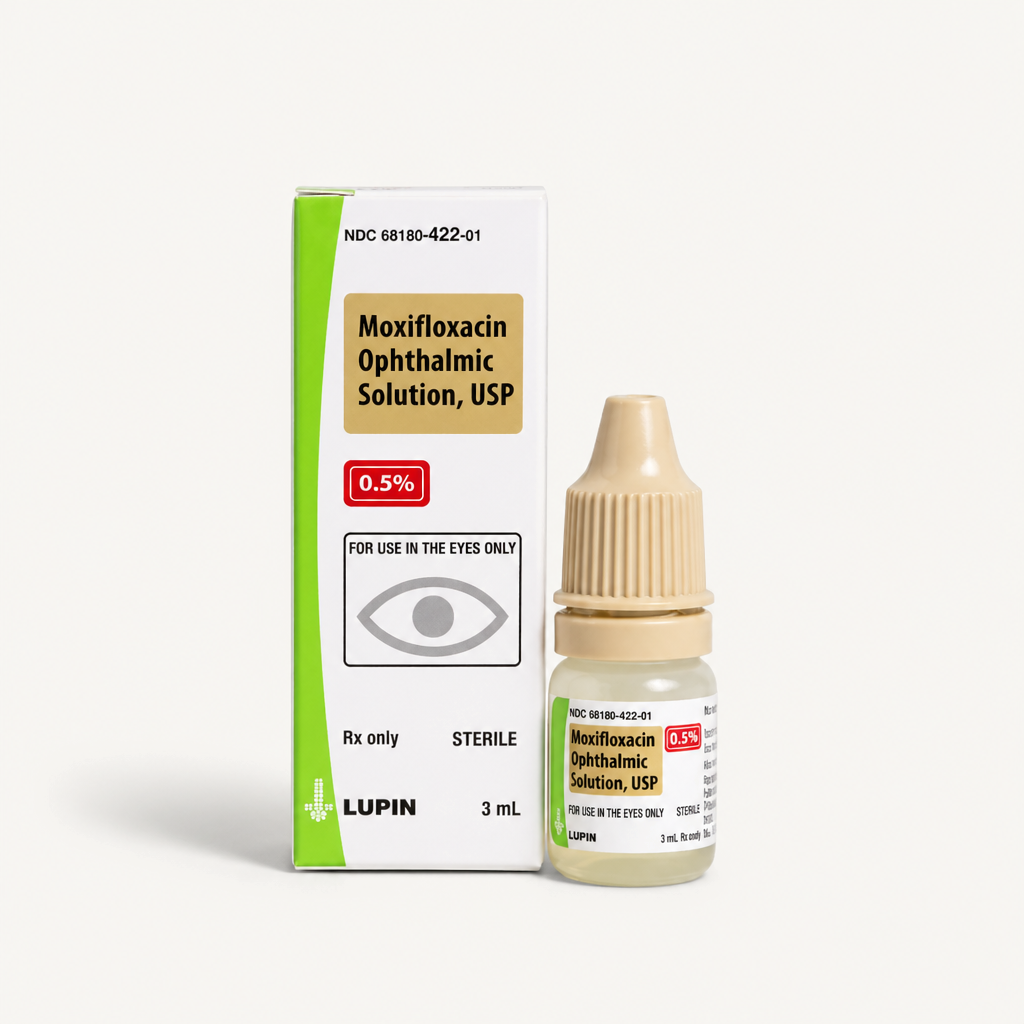
How It Works
Moxifloxacin works through the following processes:
- Blocking bacterial DNA repair: The medication stops specific proteins that bacteria use to fix their genetic material.
- Stopping growth: By preventing the bacteria from repairing themselves, the medication prevents the germs from spreading or creating new cells.
- Eliminating the infection: Without the ability to grow, the bacteria dies off, allowing your body’s natural defenses to clear away the redness and swelling.
By stopping the bacteria at the source, moxifloxacin helps your eyes return to their normal state within days of starting treatment.
| Quick Facts | |
|---|---|
| Common Brands | Vigamox, Moxeza |
| Drug Class | Fluoroquinolone antibiotic |
| Generic Status | Generic version available |
| Availability | Prescription only |
Dosing
The success of moxifloxacin depends on completing the full course of treatment, even if your eyes start to look and feel better after just a few doses.
- Standard dosage: Providers typically recommend instilling one drop into the affected eye(s) three times a day.
- Duration: The standard course of treatment is usually 7 days.
- Application technique: It is generally advised to tilt your head back and look up. Pull your lower eyelid down to make a small pocket. You can squeeze one drop into this pocket.
- Absorption: After applying the drop, providers typically advise closing your eye and pressing a finger against the inside corner (near the nose) for about one minute. This helps keep the medicine in the eye and prevents it from draining away.
- Avoiding contamination: It is generally accepted not to let the dropper tip touch your eye, eyelashes, or fingers. This prevents germs from getting inside the bottle.
Note: The dosing information below is for educational purposes only. Your prescribing physician will determine your specific dose based on your individual health needs. Always follow your healthcare provider’s instructions for exact dosing.
Uses
FDA-Approved Uses
The FDA approves moxifloxacin for bacterial conjunctivitis, a type of pink eye caused by susceptible strains of bacteria.
Off-Label Uses
You may see moxifloxacin prescribed for uses that are not FDA-approved. This is a common and legal practice called off-label prescribing, where a doctor uses their clinical judgment to prescribe a drug for a different (but well-researched) purpose.
Moxifloxacin may be prescribed off-label for the following conditions:
- Cataract surgery prophylaxis: Surgeons often prescribe these drops before and after eye surgery to prevent serious infections.
- Corneal abrasions: It may be used to prevent infection after a scratch or injury to the eye’s surface.
- Ear infections: In some cases, healthcare providers may use these ear drops to treat specific bacterial infections of the ear canal.
Side Effects
Most people tolerate moxifloxacin well, and side effects are usually limited to the eye itself.
Common Side Effects
- Temporary blurred vision immediately after use
- Dry or watery eyes
- A mild stinging or burning sensation
- Redness or itching of the eye
- A metallic or bitter taste in the mouth (as the drops drain into the throat)
Serious Side Effects
Serious side effects are rare, but it’s important to know what to look for if they do occur. It’s generally accepted that you stop taking the medication and immediately call the doctor if you experience any of the following symptoms:
- Severe allergic reactions: It is generally advisable to seek immediate medical attention if you experience hives, facial or throat swelling, or difficulty breathing.
- Vision changes: Standard guidelines recommend contacting your doctor if you experience sudden eye pain or a significant decrease in vision.
- New infections: Using antibiotics for too long can sometimes lead to a fungal eye infection.
Call your doctor immediately if you experience any concerning or prolonged symptoms.
Pharmacist Tips
Don’t Share
It is generally advised never to share your eye drops with anyone else, as this is the fastest way to spread pink eye.
Ditch The Contacts
Providers typically advise against wearing contact lenses while you have an active eye infection. Standard guidelines suggest waiting until you have finished the full course of medication and your eyes are no longer red before putting lenses back in.
Throw Away Old Lenses
Bacteria can live on your contact lenses. It is generally recommended to throw away the pair you were wearing when the infection started and open a fresh pair once you have finished treating the infection.
Wait Between Drops
If you use other eye drops (such as artificial tears), it is generally advisable to wait at least 5 minutes after using moxifloxacin before applying the next drop.
Room Temperature Storage
Providers generally advise keeping the bottle at room temperature. There is no need to refrigerate these drops, but it is best to keep them away from direct heat or sunlight.
Check The Date
Standard guidelines do not recommend using these drops past their expiration date or more than 28 days after opening, as bacteria can begin to grow inside the bottle.
Drug Interactions
While only a small amount of the medication enters your bloodstream, it is still important to be aware of how it interacts with other products.
Let your doctor know if you take any of the following:
- Other eye products: Using multiple types of antibiotic drops simultaneously is usually not recommended unless directed by a specialist.
- Oral medications: It is generally advisable to inform your doctor if you take blood thinners such as warfarin, as some fluoroquinolones can increase their effects. However, this is rare with eye drops.
- Alcohol: While there is no direct interaction, heavy drinking can slow your body’s ability to fight off an infection.
Always give your doctor and pharmacist a complete list of all your medications, vitamins, and supplements to check for potential interactions.
FAQs
How long does it usually take for moxifloxacin to clear up a pink eye infection?
Most people notice their symptoms start to improve within 24 to 48 hours. However, it is generally accepted that you must continue the drops for the full 7 days to make sure the infection is gone.
Can I use these drops if my eyes are just red and itchy from seasonal allergies?
No. Moxifloxacin is an antibiotic meant to kill bacteria. It will not help with redness or itching caused by seasonal allergies. You would need an antihistamine eye drop for those symptoms.
How long should I wait before putting my contact lenses back in after finishing this prescription?
It is generally advised to wait until you have finished the entire 7-day prescription and your eyes have been clear and white for at least 24 hours.
Is it normal to experience a bitter or metallic taste in the back of my throat after using these drops?
Yes. Your tear ducts drain into the back of your nose and throat. It is common for a small amount of the medication to travel this path, causing a metallic or bitter taste.
Is it safe to keep moxifloxacin at room temperature?
Yes. It is generally accepted that moxifloxacin should be stored at room temperature (between 59°F and 77°F). Standard guidelines recommend keeping the bottle tightly closed and in a dry place.
Can I use this antibiotic drop to treat a stye near my eyelid?
It is generally accepted that you should only do this if your doctor specifically prescribes it. Blocked oil glands often cause styes, and while they involve bacteria, they usually require warm compresses rather than antibiotic eye drops.
How long should I wait between using moxifloxacin and other eye drops?
Standard guidelines suggest waiting at least 5 minutes between different types of eye drops to ensure each is absorbed and not washed out by the next.
Will this medication help if I have pink eye from a virus rather than bacteria?
No. Like all antibiotics, moxifloxacin only kills bacteria. Viral pink eye (the most common type) must usually run its course, though your doctor might prescribe drops to prevent a secondary bacterial infection.
Can I use artificial tears while I am using moxifloxacin?
Yes, but providers advise spacing them out. It is generally accepted to use moxifloxacin first, wait 5 to 10 minutes, and then use your artificial tears for comfort.
Is it safe to use moxifloxacin if I am currently pregnant or breastfeeding?
Standard guidelines suggest that because a small amount of the medication is absorbed into the body, the risk is low. However, it is generally accepted that you should always consult your provider before using any medication during pregnancy or while nursing.
Can I save the leftover drops for later use?
No. Once the bottle has been open for 28 days, standard guidelines advise discarding it to avoid bacterial contamination. Providers do not recommend using leftover antibiotics for a new infection without a doctor’s exam.
Comparable Medications
Ciprofloxacin, Erythromycin, or TobraDex?
Below are some potential alternatives to moxifloxacin:
Ciprofloxacin Eye Drops
From $48.99
Another fluoroquinolone antibiotic used for pink eye. Moxifloxacin is a newer generation of this class and often requires fewer daily doses than ciprofloxacin.
Erythromycin Ophthalmic Ointment
From $36.99
While effective, the ointment form causes blurring of vision for several minutes after use, whereas moxifloxacin drops are generally clearer.
TobraDex
A combination product containing an antibiotic (tobramycin) and a steroid (dexamethasone). While moxifloxacin only treats the infection, TobraDex also reduces severe swelling and is typically reserved for more complex inflammatory cases.
We Have Moxifloxacin in Stock. Get Yours Today!
Important: Information on this page is for educational purposes only. Prescribing decisions are made by independent, licensed providers. TelyRx operates technology-enabled pharmacies and a telehealth platform that connects patients with licensed providers. Prescriptions, when provider-approved and issued, are filled and shipped by TelyRx-affiliated pharmacies. We do not employ physicians or make prescribing decisions. Learn more about our editorial standards here.