

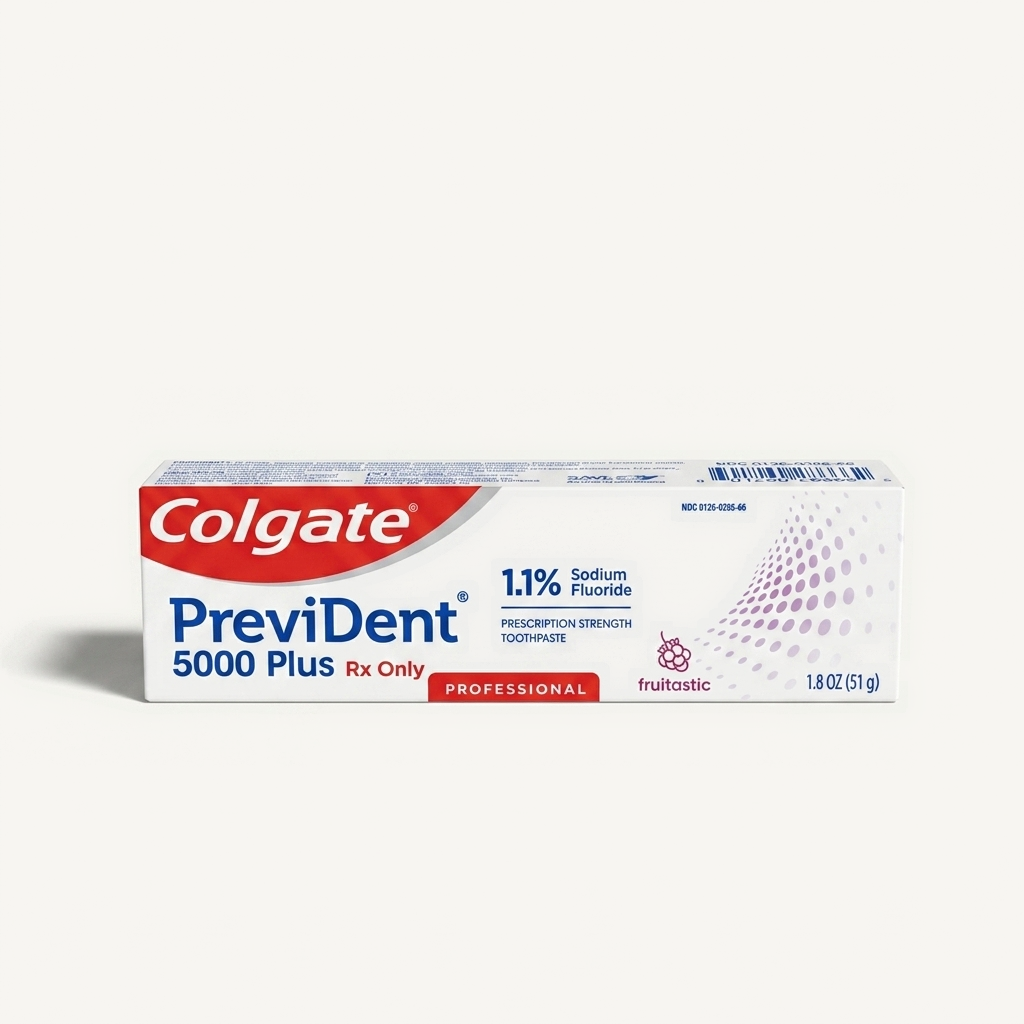
How It Works
To understand how PreviDent 5000 protects your teeth, it helps to think of your enamel as a shield that is constantly under attack. Every day, the bacteria in your mouth create acid that softens this shield.
PreviDent 5000 helps protect teeth through a few steps:
- Rebuilding the shield: When you brush, the high levels of fluoride act like a repair kit. They fill in tiny, microscopic weak spots in your enamel before they can turn into cavities.
- Making teeth acid-proof: The new surface created by the fluoride is tougher than normal tooth enamel.
- Slowing down germs: The concentrated fluoride makes it difficult for plaque bacteria to create the harmful acid that causes decay.
For people with sensitive teeth, some versions of PreviDent also include an ingredient that alters the tiny nerve pathways inside the tooth. This helps stop the sharp pain you might feel when drinking ice water or hot coffee.
| Quick Facts | |
|---|---|
| Common Brands | PreviDent 5000 Booster Plus, PreviDent 5000 Enamel Protect, PreviDent 5000 Sensitive |
| Drug Class | Dental fluoride |
| Generic Status | Generic version available |
| Availability | Prescription only |
Dosing
PreviDent 5000 is used in place of your regular toothpaste. For it to work correctly, the fluoride needs time to stay in contact with your teeth.
- Frequency: Most dentists recommend using it once or twice a day.
- Best time to use: If you use it once a day, the generally accepted best time is right before bed. This allows the fluoride to sit on your teeth all night while you sleep.
- Amount: It is generally advised to use a thin ribbon of paste on a soft-bristle toothbrush.
- Technique: Standard guidelines typically recommend brushing thoroughly for at least two minutes to ensure all surfaces are covered.
- The no-rinse rule: After brushing, providers generally advise thoroughly spitting out the paste, but do not rinse your mouth with water. Standard guidelines suggest waiting at least 30 minutes before eating or drinking anything.
Note: Dosing information below is educational only. Your prescribing physician will determine your specific dose based on your individual health needs. Always follow your healthcare provider’s instructions for exact dosing.
Uses
FDA-Approved Uses
The FDA approves PreviDent 5000 toothpaste for:
- Prevention of cavities: Reducing the risk of new tooth decay in high-risk patients.
- Sensitivity relief: Managing pain from sensitive teeth (in specific formulas).
Off-Label Uses
You may see PreviDent 5000 prescribed for uses that are not FDA-approved. This is a common and legal practice called off-label prescribing, where a doctor uses their clinical judgment to prescribe a drug for a different (but well-researched) purpose.
PreviDent 5000 toothpaste may be prescribed for the following conditions:
- Reversing white spots: Dentists may use it to fix chalky white marks on teeth that appear after braces are removed.
- Dry mouth protection: It is commonly used for patients who have lost saliva flow due to certain health conditions or medications.
Side Effects
PreviDent 5000 is generally safe, but some mild reactions in the mouth are possible.
Common Side Effects
- Mild gum irritation
- A slight change in how things taste
- Temporary mouth soreness
Serious Side Effects
Serious side effects are rare, but it’s important to know what to look for if they do occur. It’s generally accepted that you stop taking the medication and immediately call the doctor if you experience any of the following symptoms:
- Fluoride toxicity: This occurs if a large amount of paste is accidentally swallowed. Symptoms include nausea, stomach pain, or tremors.
- Allergic reactions: It is generally advised to seek help if you notice swelling of the tongue or lips, or if you have trouble breathing.
Call your doctor immediately if you experience any concerning or prolonged symptoms.
Pharmacist Tips
Spit, Don’t Rinse
Do not rinse your mouth after brushing. Rinsing washes away the fluoride before it has a chance to soak into your teeth. Instead, thoroughly spit the toothpaste out but do not follow with water.
Wait To Use Mouthwash
If you like using mouthwash, providers typically advise using it at a different time of day. Using it right after PreviDent will rinse the medicine away.
Be Patient With Sensitivity
If you are using this for sensitive teeth, it may take 2 to 4 weeks of daily use before you feel a significant difference in sensitivity reduction.
Storage
Standard guidelines usually recommend keeping the tube at room temperature and ensuring the cap is on tightly so the paste doesn’t dry out.
Drug Interactions
While PreviDent 5000 is a topical treatment applied only to the teeth, it can still interact with certain substances or other fluoride treatments you may be using. Below are potential drug interactions for PreviDent 5000 toothpaste:
- Calcium and dairy: Eating cheese or drinking milk immediately after brushing can reduce the effectiveness of fluoride. Waiting for at least 30 minutes after brushing before consuming dairy can help.
- Other fluoride products: It is generally advised to tell your dentist if you are already taking fluoride drops or pills to make sure you aren’t getting too much.
Always give your doctor and pharmacist a complete list of all your medications, vitamins, and supplements to check for potential interactions.
FAQs
Why is this toothpaste strictly prescription-only?
Because it contains five times as much fluoride as regular toothpaste, it is considered a medication. A healthcare provider needs to monitor toothpaste use to ensure it is necessary for your health and used safely.
Should I rinse my mouth out with water after brushing with PreviDent 5000 Booster Plus?
No. It is generally advised that you should spit out the extra paste, but avoid rinsing with water for 30 minutes. Rinsing removes the fluoride that needs to sit on your enamel to strengthen it.
Do I use my regular toothpaste first and then this, or does this replace my normal toothpaste?
No. PreviDent 5000 replaces your normal toothpaste. It is generally accepted that you only need to use one.
Can I use mouthwash right after I finish brushing with this?
Standard guidelines typically suggest waiting at least 30 minutes. If you use mouthwash immediately, it will wash away the concentrated fluoride.
Will using PreviDent 5000 reverse a cavity I already have?
It can help address early signs of decay, such as white spots. However, if you already have a cavity in your tooth, the toothpaste cannot regrow the tooth. You will still need further dental care, such as a filling.
Can I use PreviDent 5000 Booster Plus in the morning?
Yes, it is generally accepted that you can use it in the morning and at night. However, the nighttime dose is the most important because your mouth is drier while you sleep, making your teeth more vulnerable.
Why did my dentist prescribe this after putting my braces or Invisalign attachments on?
Braces can trap food and bacteria against your teeth. PreviDent helps prevent permanent stains or cavities from forming around your brackets.
Can I eat a snack or drink a glass of water after using this?
It is generally advised to wait at least 30 minutes. If you eat or drink too soon, the fluoride won’t have enough time to bond to your teeth.
Will this prescription toothpaste stop my tooth pain when I drink ice water?
If you use the sensitive version, it contains medicine designed to block pain signals from cold or heat.
Can using prescription fluoride cause thyroid problems or other health issues?
When used as directed (brushed on and spit out), there is no evidence that it causes systemic health problems. Most concerns about fluoride are related to drinking or swallowing large amounts over many years.
Can I use PreviDent 5000 Booster Plus if I have porcelain crowns, veneers, or bridges?
Yes. While it won’t change the porcelain, it protects the natural tooth structure where the crown meets your gum, which is a common spot for new cavities.
How long will I have to use this toothpaste?
Some people use it only for a set time, such as while they have braces. Others with chronic dry mouth may use it permanently to maintain their dental health.
Comparable Medications
Regular Colgate, Clinpro 5000, or Gel-Kam?
Your doctor may recommend an alternative to PreviDent 5000 toothpaste if there are concerns about drug interactions.
Possible alternatives to PreviDent include:
Regular Colgate
Standard toothpastes can help with daily cleaning but contain a smaller amount of sodium fluoride (about 0.24%). PreviDent 5000 contains 1.1% sodium fluoride, making it stronger for people prone to cavities.
Clinpro 5000
This is another prescription toothpaste similar to PreviDent. Both have the same amount of fluoride. Some people prefer the taste or feel of one over the other, but they both offer similar protection.
Gel-Kam
This over-the-counter gel helps with sensitivity and gum health. It has less fluoride than PreviDent 5000 and is usually used as a supplement rather than a replacement for your toothpaste.
We Have PreviDent 5000 Toothpaste in Stock. Get Yours Today!
Important: Information on this page is for educational purposes only. Prescribing decisions are made by independent, licensed providers. TelyRx operates technology-enabled pharmacies and a telehealth platform that connects patients with licensed providers. Prescriptions, when provider-approved and issued, are filled and shipped by TelyRx-affiliated pharmacies. We do not employ physicians or make prescribing decisions. Learn more about our editorial standards here.