

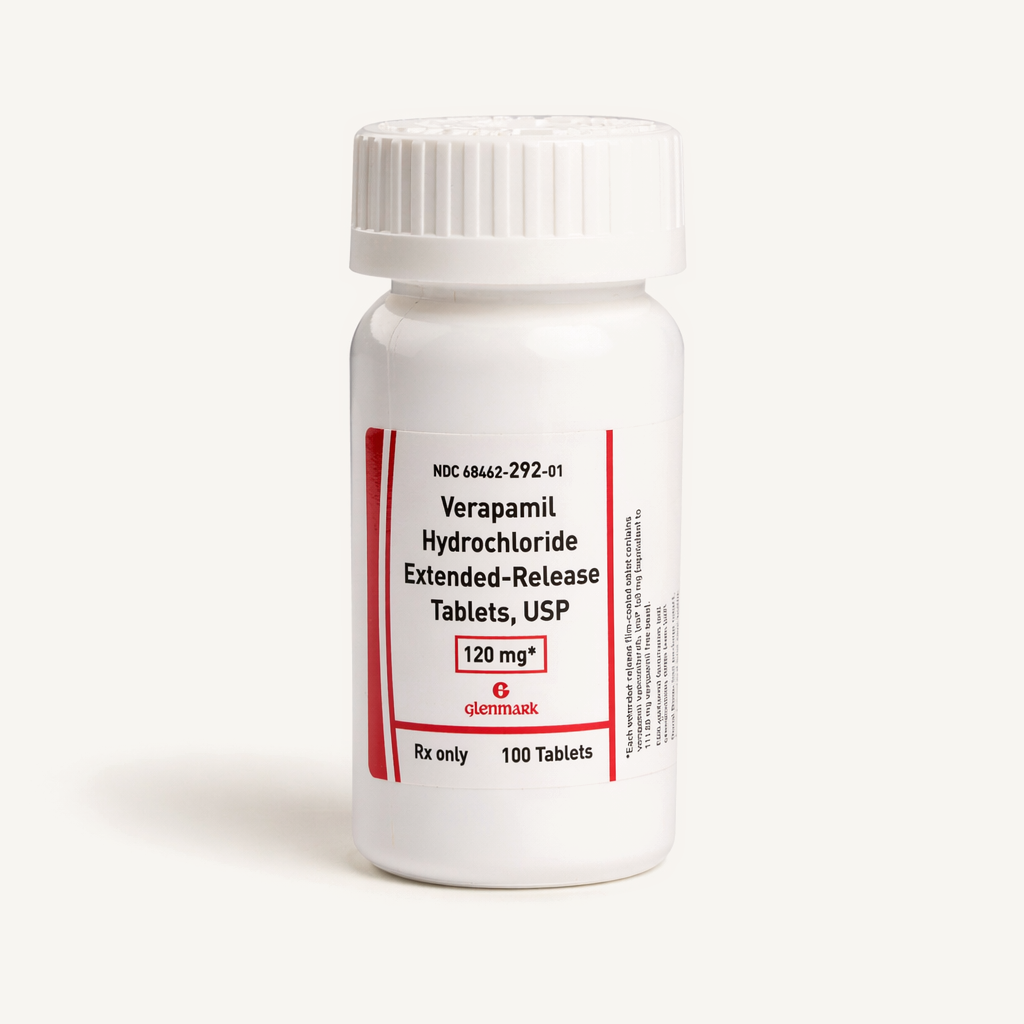
How It Works
Verapamil works by preventing calcium ions from entering the arterial walls, allowing blood vessels to relax and widen. This creates more space for blood to flow, reducing blood pressuring and decreasing the heart’s workload.
Verapamil also slows the electrical impulses that travel through the sinoatrial and atrioventricular nodes, helping to correct irregular heart rhythms and reducing the chest pain associated with angina.
| Quick Facts | |
|---|---|
| Common Brands | Calan, Veralan, Isoptin, Covera-HS |
| Drug Class | Calcium channel blocker (non-dihydropyridine) |
| Generic Status | Generic version available |
| Availability | Prescription only |
Dosing
Verapamil dosing is individualized, based on the condition being treated and the patient’s response to their initial dose.
- High blood pressure (hypertension): Providers typically prescribe immediate-release verapamil at a starting dose of 80 mg three times per day. For extended-release tablets, hypertension patients usually take 180 mg to 240 mg once per day.
- Chest pain (angina): Standard guidelines suggest a daily dose of 240 mg to 480 mg, divided into three or four immediate-release tablets taken throughout the day.
- Heart rhythm disorders (arrhythmia): Standard verapamil dosage for treating arrhythmia typically ranges from 240 mg to 320 mg per day, split into multiple daily doses to maintain a steady effect on the heart’s electrical system.
- Special populations: Providers generally recommend lower doses for elderly patients and people with impaired liver function, as the medication remains in their systems longer.
Note: Dosing information below is educational only. Your prescribing physician will determine your specific dose based on your individual health needs. Always follow your healthcare provider’s instructions for exact dosing.
Uses
FDA-Approved Uses
Verapamil is FDA-approved for the following cardiovascular uses:
- Hypertension management: To lower blood pressure and reduce the risk of stroke and other secondary events.
- Angina pectoris: To manage chronic stable angina, chronic unstable angina, and Prinzmetal’s (variant) angina.
- Supraventricular tachyarrhythmias: To prevent and treat rapid heart rhythms originating in the ventricles.
- Atrial fibrillation/flutter: To control the ventricular rate, or the speed at which lower ventricles pump blood, in patients with these irregular rhythms.
Off-Label Uses
You may see verapamil prescribed for uses that are not “FDA-approved.” This is a very common and legal practice called “off-label” prescribing, where a doctor uses their clinical judgment to prescribe a drug for a different (but well-researched) purpose.
Common off-label uses for verapamil currently found in clinical practice and research include:
- Cluster headache prevention: While not FDA-approved to control chronic and episodic cluster headaches, verapamil is commonly prescribed off-label as first-line treatment. Research suggests the drug works by stabilizing blood vessels in the brain.
- Migraine prophylaxis: Some providers recommend verapamil for people experiencing migraines who have not responded well to other types of preventative medication.
- Hypertrophic cardiomyopathy: In some cases, providers may recommend verapamil off-label to improve blood flow for patients with thickened heart muscles.
- Raynaud’s phenomenon: Because verapamil dilates blood vessels, doctors may prescribe the drug to improve blood flow to the fingers and toes in people with Raynaud’s.
Side Effects
Like other medications that affect heart function and circulation, verapamil can cause side effects. This is especially true during the early stages of treatment as the patient’s body adapts to the new medication.
Common Side Effects
Common side effects from taking verapamil include:
- Constipation
- Dizziness and lightheadedness
- Headache
- Swelling of the ankles and feet due to fluid retention (edema)
- Fatigue
Serious Side Effects
Serious side effects are rare, but it’s important to know what to look for if they do occur. Serious side effects from taking verapamil can include:
- evere hypotension: As verapamil reduces blood pressure, some people may experience a dangerous drop signaling hypotension. This can lead to symptoms like fainting and confusion.
- Heart block or bradycardia: Verapamil can alter the heartbeat to an excessively slow or irregular degree, leading to feelings of weakness.
- Liver dysfunction: Verapamil is processed through the liver, so the medication can cause strain and lead to liver dysfunction. Signs and symptoms include elevated liver enzymes and jaundice (yellowing) of the skin and eyes.
- Worsening heart failure: In patients with pre-existing heart weakness, verapamil can sometimes make it harder for the heart to effectively pump blood.
- Severe allergic reaction: As with many types of medication, verapamil can trigger anaphylaxis in people who are allergic to one or more of the medication’s ingredients.
Call your doctor immediately if you experience any concerning or prolonged symptoms.
Pharmacist Tips
Cut Out The Grapefruit
Grapefruit contains compounds that block enzymes responsible for breaking down verapamil. Eating grapefruit or drinking grapefruit juice while taking verapamil can lead to dangerously high levels of the drug in your system and increase the risk of severe side effects.
The Food Factor
Per standard guidelines, patients can take immediate-release verapamil tablets with or without food. However, a meal or light snack is recommended with the extended-release tablet to ensure the medication’s release is correctly timed.
Hydration Is Key
Constipation is a common side effect of taking verapamil. Patients can help mitigate this issue by increasing fiber in their diet and drinking water throughout the day.
Swallow ER Tablets Whole
Standard guidelines advise against crushing or chewing extended-release verapamil tablets. They are designed to slowly trickle into your system over a 24-hour cycle, so breaking the tablet can interfere with the timing mechanism and affect the drug’s efficacy.
Check Your Pulse
Verapamil slows the heart rate, so routine pulse checks are recommended. If your resting heart rate falls below 50 to 60 beats per minute, it is advised to contact your provider.
Limit Your Drinking
Alcohol can enhance the effects of verapamil and cause a steeper drop in blood pressure than intended. This may lead to dizziness, and increases your risk of fainting or being injured in a fall.
Drug Interactions
Verapamil is processed with the same liver enzymes as many other types of medication, so the list of known interactions is extensive. The most notable interactions with verapamil include:
- Beta-blockers: Taking beta-blockers like metoprolol or atenolol alongside verapamil can compound the effects of both, potentially leading to a dangerously slow heart rate or heart block. Per clinical guidelines, this combination requires close medical supervision.
- Statin medications: Verapamil can increase the level of certain cholesterol medications in your blood, including statin medications like simvastatin and atorvastatin. This in turn can elevate the risk of muscle pain and liver issues.
- Digoxin: Verapamil may increase the concentration of digoxin heart medication in your body, which can lead to digoxin toxicity.
- Grapefruit/grapefruit juice: As mentioned in the Pharmacist Tips, grapefruit juice contains compounds that block the enzymes responsible for breaking down verapamil. This can lead to excessively high levels of the medication in your body.
- Anticonvulsants: Anticonvulsant medications like carbamazepine and phenobarbital can speed up the metabolism of verapamil, making the latter less effective.
Always give your doctor and pharmacist a complete list of all your medications, vitamins, and supplements to check for potential interactions.
FAQs
Why should I never drink grapefruit juice with this medication?
Grapefruit juice contains compounds that block the enzyme CYP3A4, which is responsible for breaking down verapamil in your gut. If the enzyme doesn’t work, your body can absorb more of the drug than intended. This may lead to dangerous drops in heart rate and blood pressure.
Is it true that verapamil ER can stop severe cluster headaches and migraines?
Yes, verapamil ER can stop severe cluster headaches and migraine. While verapamil is primarily considered a heart drug, providers often prescribe it off-label to treat cluster headaches and prevent the onset of migraines.
What is the best time of day to take my verapamil ER pill?
For blood pressure, providers often recommend taking verapamil ER in the morning with breakfast to help ensure coverage throughout the day. However, some forms of the drug are intended for evening dosage and patients are advised to follow their provider’s dosing instructions.
Can I take a beta-blocker at the same time as this?
Providers generally avoid prescribing verapamil and a beta-blocker for patients at the same time, as this combination is potentially dangerous and requires close medical supervision. Both drugs decrease the heart rate and reduce its pumping force, so taking them together can lead to dangerous complications like heart block.
Can I take verapamil ER on an empty stomach?
Taking verapamil ER on an empty stomach is not recommended. Timing your dose with a meal or snack can help the medication release as intended and prevent an upset stomach.
Is it normal for my resting heart rate to drop after starting this?
Yes, it is normal for your resting heart rate to drop after starting verapamil. One of the drug’s primary goals is to slow the heart rate in order to help the heart pump more efficiently. That said, you are advised to contact your provider if your resting heart rate drops below 50 to 60 beats per minute.
Is there a difference between brand name Calan SR and generic verapamil ER?
Calan SR and generic verapamil ER share the same active ingredient and produce the same effect in the body with an extended-release timing mechanism. However, they may differ in terms of cost, as generic medications are typically priced lower than their brand-name counterparts.
Will taking this medication make my ankles and feet swell up?
Swelling in the ankles and feet, also known as edema, is a common side effect of taking verapamil and other calcium channel blockers. This can occur because the medication causes blood vessels to relax, and this can lead to fluid leaking into surrounding tissues. Elevating the feet can help alleviate the swelling.
What happens if I completely forget my morning dose?
If you miss a morning dose of verapamil, standard guidelines advise to take the tablet as soon as you remember. However, if it is almost time for the next dose, guidelines recommend skipping the missed one and caution against taking two doses at once, as this can lead to a dangerous drop in blood pressure.
Is it safe to use verapamil ER if I am currently pregnant or trying to conceive?
The effects of verapamil on pregnancy are not fully known, so risk cannot be ruled out. If you are pregnant or trying to conceive, your provider or OB/GYN can provide guidance about which drugs are safe for you to take.
Does this medicine interact with cholesterol medications?
Yes, verapamil is known to interact with statin cholesterol medications like simvastatin and atorvastatin. Specifically, it increases the concentration of statin in your blood. Your doctor may need to adjust your statin dosage before you begin taking verapamil.
What should I avoid while taking verapamil ER?
Beyond grapefruit juice and excessive amounts of alcohol, patients who take verapamil ER are advised to avoid abruptly quitting the medication. Quitting cold turkey can lead to a dangerous rebound in high blood pressure or chest pain.
Comparable Medications
Verapamil, Diltiazem, Amlodipine, Propranolol, or Topiramate?
Verapamil is a prescription-strength calcium channel blocker primarily used to lower blood pressure, stabilize heart rate, and improve overall heart health. Other medications with different profiles can also treat these issues, so your doctor may recommend an alternative to verapamil based on factors like your age, medical history, and severity of symptoms. Verapamil alternatives include:
Diltiazem ER (CD) Capsules
From $37.99
Sold under the brand name Cardizem CD, diltiazem — like verapamil — is a non-dihydropyridine calcium channel blocker. While they share similar efficacy rates, verapamil generally has a stronger effect on slowing the heart's electrical conduction and heart rate. Diltiazem, on the other hand, is less likely to cause constipation.
Amlodipine
From $27.99
Amlodipine is a dihydropyridine calcium channel blocker, so it works primarily in the blood vessels and has little to no effect on heart rate. As such, amlodipine is considered a "pure" blood pressure medication, whereas providers may prefer verapamil for patients who need to control their heart rate.
Propranolol
From $24.99
Propranolol, sold under the brand name Inderal, is a beta-blocker often used to treat high blood pressure and migraines. Unlike verapamil, which works in calcium channels, propranolol targets adrenaline receptors to achieve its therapeutic objective. Beta-blockers like propranolol can cause bronchospasm, or coughing spasms, in people with asthma, whereas verapamil is gentler on the lungs.
Topiramate ER Capsules
From $199.99
Topiramate is an anti-seizure medication intended to calm overactive nerves that many providers also recommend for migraine prevention. However, verapamil is generally considered more effective for treating cluster headaches.
We Have Verapamil in Stock. Get Yours Today!
Important: Information on this page is for educational purposes only. Prescribing decisions are made by independent, licensed providers. TelyRx operates technology-enabled pharmacies and a telehealth platform that connects patients with licensed providers. Prescriptions, when provider-approved and issued, are filled and shipped by TelyRx-affiliated pharmacies. We do not employ physicians or make prescribing decisions. Learn more about our editorial standards here.