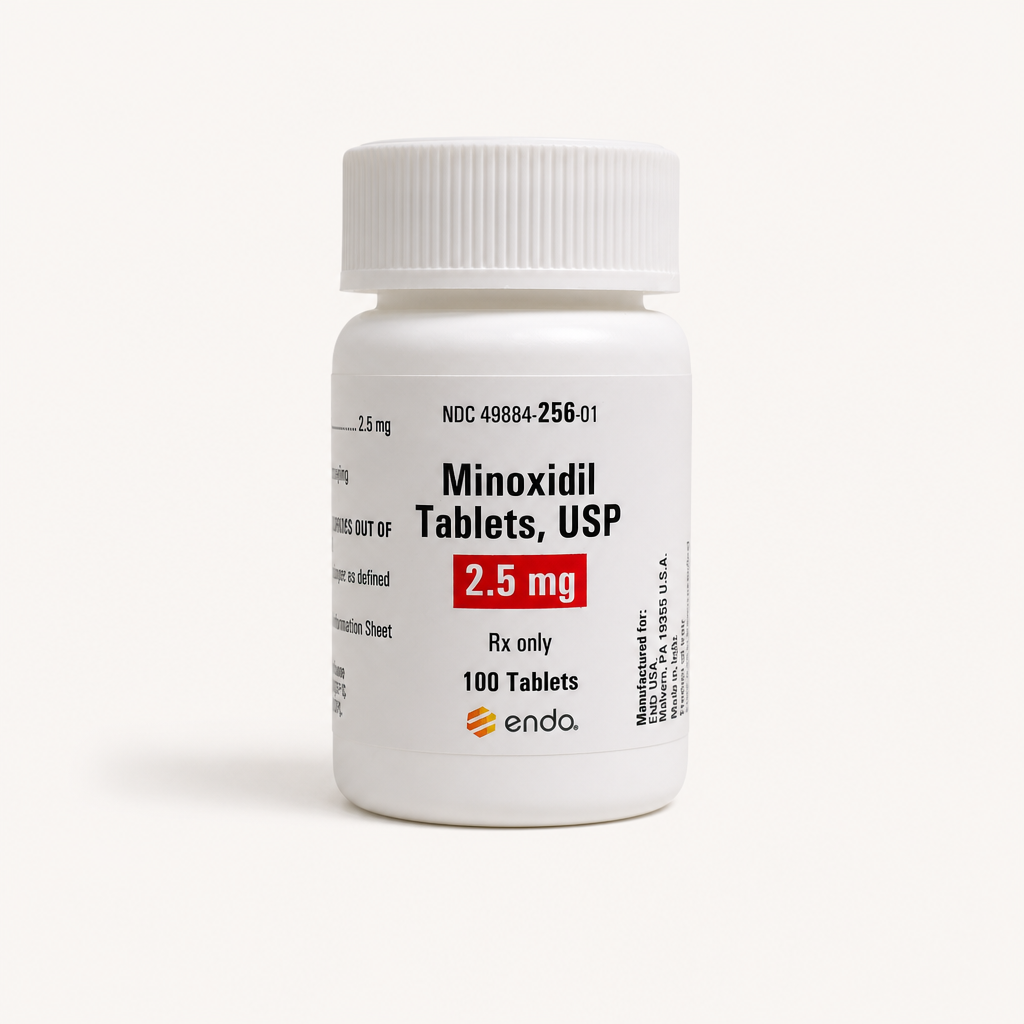
How It Works
Minoxidil belongs to a class of drugs known as vasodilators. It acts on potassium channels in blood vessels, causing them to relax and widen. This eases blood flow and reduces blood pressure.
| Quick Facts | |
|---|---|
| Common Brands | Loniten, Minodyl |
| Drug Class | Antihypertensive, vasodilator |
| Generic Status | Generic is available |
| Availability | Prescription only |
Dosing
According to standard guidelines, the typical starting dose of oral minoxidil is 5 mg taken by mouth once a day.
Providers typically adjust the dose over time, with most patients eventually taking between 10 mg and 40 mg per day. Depending on your doctor’s guidance, this can be taken as a single dose or divided into smaller doses throughout the day.
Note: Dosing information below is educational only. Your prescribing physician will determine your specific dose based on your individual health needs. Always follow your healthcare provider’s instructions for exact dosing.
Uses
FDA-Approved Uses
Oral minoxidil is FDA-approved to treat high blood pressure that is causing symptoms or has not been controlled by other blood pressure medications.
Off-Label Uses
You may see minoxidil prescribed for uses that are not “FDA-approved.” This is a common and legal practice called “off-label” prescribing, where a doctor uses their clinical judgment to prescribe a drug for a different (but well-researched) purpose.
Oral minoxidil is sometimes prescribed off-label at low dosages to treat hair loss. Studies suggest it can help stimulate blood flow to hair follicles and encourage hair growth.
Side Effects
Like all medications, minoxidil can cause side effects. Some common side effects may improve over time as your body adjusts to the medication. Other side effects may be serious and require medical attention.
Common Side Effects
- Nausea and vomiting
- Fluid retention and swelling
- Fast heartbeat
- Growth and darkening of body hair
- Headache
- Dizziness or lightheadedness
- Fatigue
- Flushing
- Skin rash or itching
- Breast tenderness
Serious Side Effects
Serious side effects are rare, but it’s important to know what to look for if they do occur.
- Heart failure: Minoxidil can cause the body to retain salt and fluid, increasing the risk of heart failure. Signs of heart failure include shortness of breath, swelling in the feet or ankles, and rapid weight gain.
- Chest pain: Because minoxidil can cause a rapid heartbeat, patients may experience new or worsened chest pain (angina), which can sometimes be a symptom of a heart attack.
- Pericarditis/pericardial effusion: These are rare conditions involving swelling or fluid buildup around the lining of the heart, which can cause chest pain, trouble breathing, or a painful cough.
- Low blood pressure: Blood pressure dropping too quickly can cause dizziness, fainting, or confusion.
- Severe allergic reactions: In rare cases, minoxidil can provoke allergic reactions. Signs can include hives, breathing problems, swelling of the face, lips, or throat, and a racing heartbeat.
Call your doctor immediately if you experience any concerning or prolonged symptoms.
Pharmacist Tips
Establish A Daily Routine
Providers typically recommend taking minoxidil at the same time each day to help the medication control your blood pressure.
Skip Missed Doses
If you forget to take your medication, it is generally accepted that you should skip the missed dose and wait until your next scheduled dose rather than doubling up to compensate.
Monitor Your Weight Daily
Standard guidelines suggest weighing yourself every day to check for rapid weight gain. Contact your doctor if you have gained 5 or more pounds over a short period as this can be a sign of fluid retention and possible heart failure.
Track Your Heart Rate
Providers typically advise keeping a close eye on your blood pressure and pulse at home. Contact your care team if your heart rate exceeds your resting heart rate by 20 beats per minute or more.
Follow A Low-Sodium Diet
Doctors commonly recommend eating a low-sodium diet while taking minoxidil to reduce blood pressure and minimize fluid retention.
Expect Hair Growth Changes
Providers note that you may experience longer, thicker, or darker body and facial hair within a few weeks to a few months of starting treatment with minoxidil.
Do Not Stop Abruptly
Guidelines indicate that you should not suddenly stop taking this medication without first consulting your provider. Stopping this medication abruptly can cause your blood pressure to quickly rebound to high levels.
Drug Interactions
Certain medications and substances can interact with minoxidil, potentially altering how it works or increasing the risk of side effects.
- Blood pressure medications: Taking this drug with other blood pressure treatments can cause your blood pressure to drop too low.
- Heart medications: Drugs used for chest pain or other heart conditions may interact with minoxidil and require your doctor to adjust your dose or monitor you closely.
- Alcohol: Providers suggest that drinking alcohol while taking this medication can increase your risk of dizziness and lightheadedness.
Always give your doctor and pharmacist a complete list of all your medications, vitamins, and supplements to check for potential interactions.
FAQs
What is the difference between the topical liquid and taking a daily minoxidil pill?
The daily minoxidil pill is FDA-approved to treat severe high blood pressure, while the topical formulations are used for hair loss. The oral pill is sometimes used off-label for hair loss, but it works systemically rather than at the site of application.
Comparable Medications
Extended-Release Minoxidil
Extended-release minoxidil
This is a different formulation of minoxidil that provides a slower, sustained release of the medication compared to standard immediate-release tablets.
We Have Minoxidil in Stock. Get Yours Today!
Important: Information on this page is for educational purposes only. Prescribing decisions are made by independent, licensed providers. TelyRx operates technology-enabled pharmacies and a telehealth platform that connects patients with licensed providers. Prescriptions, when provider-approved and issued, are filled and shipped by TelyRx-affiliated pharmacies. We do not employ physicians or make prescribing decisions. Learn more about our editorial standards here.