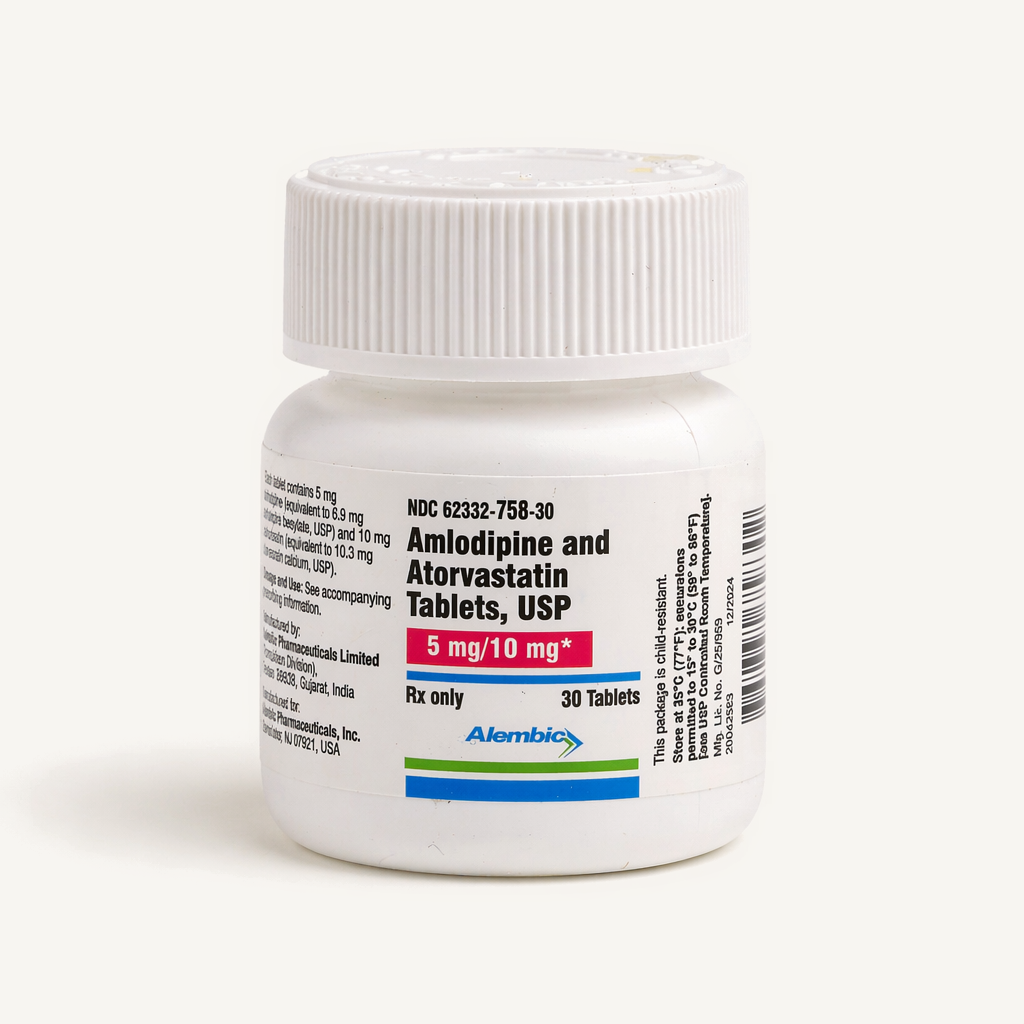
How It Works
Amlodipine-atorvastatin works by combining two medications into a single tablet:
- Amlodipine: This calcium channel blocker (CCB) works by relaxing the blood vessels so blood can flow through them more easily. This lowers blood pressure and reduces the physical strain on the heart. It also helps prevent chest pain (angina).
- Atorvastatin: This statin medication lowers cholesterol levels by reducing the amount of cholesterol produced by the liver. It also increases the breakdown of “bad” low-density lipoprotein (LDL) cholesterol and triglycerides, while increasing “good” high-density lipoprotein (HDL) cholesterol.
| Quick Facts | |
|---|---|
| Common Brands | Caduet |
| Drug Class | Dihydropyridine calcium channel blocker and HMG-CoA reductase inhibitor, statin, lipid-lowering agent |
| Generic Status | Generic is available |
| Availability | Prescription only |
Dosing
Amlodipine-atorvastatin is available in various dosage strengths. Each tablet contains either 2.5 mg, 5 mg, or 10 mg of amlodipine and 10 mg, 20 mg, 40 mg, or 80 mg of atorvastatin.
The recommended starting dosage is 5 mg of amlodipine and 10 mg of atorvastatin taken by mouth once daily. Healthcare providers may adjust the dose to find the most effective and safe dosage.
The maximum dosage is 10 mg of amlodipine and 80 mg of atorvastatin taken by mouth once daily.
Note: Dosing information below is educational only. Your prescribing physician will determine your specific dose based on your individual health needs. Always follow your healthcare provider’s instructions for exact dosing.
Uses
FDA-Approved Uses
Amlodipine-atorvastatin is FDA-approved for certain cardiovascular risk-reduction indications and for the treatment of conditions including:
- High blood pressure (hypertension)
- High cholesterol
- Coronary artery disease (a type of heart disease)
- Angina (a type of chest pain)
Off-Label Uses
You may see amlodipine-atorvastatin prescribed for uses that are not “FDA-approved.” This is a very common and legal practice called “off-label” prescribing, where a doctor uses their clinical judgment to prescribe a drug for a different (but well-researched) purpose.
There are currently no common off-label uses for amlodipine-atorvastatin.
Side Effects
Like all medications, amlodipine-atorvastatin can cause side effects. Some common side effects may improve over time as your body adjusts to the medication. Other side effects may be serious and require medical attention.
Common Side Effects
- Swelling (edema) in the legs, ankles, hands, or feet
- Common cold symptoms
- Joint stiffness or pain
- Diarrhea
- Pain in the hands or feet
- Urinary tract infection (UTI)
- Dizziness or lightheadedness
- Nausea
- Headache
- Facial flushing or redness
Serious Side Effects
Serious side effects are rare, but it’s important to know what to look for if they do occur. Stop using amlodipine-atorvastatin and call your doctor immediately if you experience:
- Severe allergic reactions: Symptoms include swelling of the face, lips, tongue, or throat; difficulty breathing or swallowing; racing heart; severe rash or itching; and/or fever.
- Muscle problems: Amlodipine-atorvastatin can cause muscle tenderness (myopathy) or breakdown (rhabdomyolysis). Symptoms include unexplained muscle pain or weakness, muscle cramps, dark urine, fever, stomach pain, nausea, vomiting, and low energy levels.
- Liver damage (hepatotoxicity): Liver problems may occur when taking amlodipine-atorvastatin. Symptoms include belly pain, nausea, fever, unusual tiredness, itching, loss of appetite, dark urine, pale stools, and yellowing of the eyes or skin (jaundice).
- Heart attack or chest pain: When first starting amlodipine-atorvastatin or increasing the dose, it’s possible to experience a heart attack or worsening chest pain. This risk may be higher in people with severe obstructive coronary artery disease. Symptoms include severe chest pain or pressure, unusual tiredness, cold sweats, sudden dizziness, heartburn, and discomfort spreading to the jaw, neck, back, shoulder, or arm.
- Low blood pressure (hypotension): Amlodipine-atorvastatin may cause blood pressure to occasionally drop too low, especially when changing postures from sitting or lying down to standing. Symptoms include dizziness, fainting, feeling weak, and confusion.
- High blood sugar (hyperglycemia): This medication may elevate blood sugar levels. If you have diabetes, your provider may adjust your treatment regimen. Symptoms include increased thirst or urination, blurry vision, and unusual weakness.
Call your doctor immediately if you experience any concerning or prolonged symptoms.
Pharmacist Tips
Swallow Tablets Whole
Do not break, crush, or chew the medication. Amlodipine-atorvastatin can be taken with or without food.
Take Your Dose Consistently
The tablet can be taken at any time of the day as long as it is consistently taken at that same time each day.
Follow A Balanced Diet
The medication works best when paired with a balanced, cholesterol-lowering diet.
Avoid Grapefruit Or Grapefruit Juice
Consuming large amounts of grapefruit or grapefruit juice (1.2 liters or more per day) can increase the amount of medication in the bloodstream and the risk of side effects.
Be Patient
Blood pressure improvements are usually observed after about 1 week, but it can take 6–8 weeks to experience the medication’s full effects on cholesterol levels. Your provider may order lab tests to check your cholesterol levels and liver function.
Talk To Your Doctor About Swelling
Swelling (edema) in the extremities is a common side effect of amlodipine-atorvastatin, and women are more likely to experience this than men. If it becomes bothersome, your provider may recommend alternative treatment.
Limit Or Avoid Alcohol
Heavy drinking (more than 2 glasses per day) is not recommended when taking amlodipine-atorvastatin, as it can increase the risk of serious side effects, including liver damage.
Store At Room Temperature
Amlodipine-atorvastatin should be stored at 68°F to 77°F (20°C to 25°C) in a cool, dry place away from light.
Tell Your Provider If You’re Pregnant Or Breastfeeding
Amlodipine-atorvastatin can harm an unborn baby. The medication also passes into breast milk. Tell your healthcare provider if you are pregnant, breastfeeding, or planning to be, so they can recommend a safer alternative.
Try To Avoid Missing A Dose
If you miss a dose of amlodipine-atorvastatin, take it as soon as you remember, unless it has been more than 12 hours since your last dose. In that case, skip the missed dose and take your next dose at the usual time. Do not take double or extra doses of amlodipine-atorvastatin to make up for a missed one.
Drug Interactions
Certain medications and substances can interact with amlodipine-atorvastatin, potentially altering how it works or increasing the risk of side effects. For example:
- Antifungals: Drugs that treat fungal infections, such as ketoconazole, itraconazole, posaconazole, or voriconazole, can interact with amlodipine-atorvastatin.
- Certain antibiotics: Some medications that treat bacterial infections, such as erythromycin or clarithromycin, should not be taken with amlodipine-atrovastatin.
- Phosphodiesterase-5 (PDE-5) inhibitors: Amlodipine-atorvastatin may interact with sildenafil and similar medications used for erectile dysfunction or pulmonary arterial hypertension.
- Other cholesterol medications: Niacin, gemfibrozil, fenofibrate, and fenofibric acid should not be taken with amlodipine-atorvastatin.
- Other blood pressure or heart medications: Diltiazem and digoxin can interact with amlodipine-atorvastatin.
- Birth control pills: Amlodipine-atorvastatin may interact with oral contraceptives.
- HIV/AIDS or hepatitis medications: Drugs like ritonavir, darunavir, letermovir, and elbasvir can interact with amlodipine-atorvastatin.
- Cyclosporine or tacrolimus: Amlodipine-atrovastatin may interact with these immunosuppressant medications.
- Colchicine: This medication should not be taken with amlodipine-atorvastatin.
- Rifampin: This medication may interact with amlodipine-atorvastatin.
- Grapefruit or grapefruit juice: This food can increase the risk of side effects on amlodipine-atorvastatin.
- Alcohol: Drinking alcohol while taking this medication may lead to muscle or liver problems.
Always give your doctor and pharmacist a complete list of all your medications, vitamins, and supplements to check for potential interactions.
FAQs
Is it normal to experience swelling in my ankles or puffiness in my feet after starting this pill?
Yes, swelling (edema) in the legs, ankles, feet, and hands is a common side effect of amlodipine-atorvastatin. This swelling may be more common in women or people with kidney disease or congestive heart failure.
Can taking amlodipine-atorvastatin cause me to feel dizzy, lightheaded, or faint when I stand up quickly out of bed?
Yes. The medication lowers blood pressure, which can lead to temporary dizziness or lightheadedness when changing positions quickly (such as moving from a sitting or lying position to standing). This is a common early reaction as the body adjusts to reduced blood pressure levels. Providers typically advise patients to change positions slowly.
Is it safe to take over-the-counter pain relievers if my muscles start aching?
Unexplained muscle aches, weakness, or tenderness while taking this medication can be a symptom of a more serious problem. Instead of taking over-the-counter pain relievers, it’s recommended to seek medical attention right away.
What should I do if I forget my daily dose – should I double up the next time I take it?
If a dose is missed, it should be taken as soon as it is remembered. However, if your next scheduled dose is less than 12 hours away, you can skip the missed dose and take your next dose at the regular time. Never take double or extra doses of amlodipine-atorvastatin to make up for a missed one.
Will amlodipine-atorvastatin clear out the existing plaque in my arteries, or does it just prevent new plaque from forming?
The atorvastatin component lowers blood cholesterol by decreasing cholesterol production in the liver and increasing the breakdown of bad cholesterol. This may help prevent new plaque from forming and reduce the size of existing plaques, but it does not generally clear out all existing plaques in the arteries.
Does taking this medication cause unusual fatigue or a sudden lack of energy during workouts?
Unusual fatigue or low energy during exercise could be a warning sign of more serious complications of amlodipine-atrovastatin, such as muscle injury (rhabdomyolysis) or liver damage. It is recommended to seek medical attention right away if you experience these symptoms.
Will I experience a rebound spike in blood pressure if I run out of pills and stop taking this?
People are typically instructed to keep taking the medication continuously unless their doctor explicitly tells them to stop. Abrupt discontinuation of blood pressure medication may cause a rebound spike in blood pressure.
Are the generic amlodipine-atorvastatin tablets as effective as brand name Caduet?
Yes. The generic combination of amlodipine and atorvastatin and brand name Caduet contain the same active ingredients and are used to treat the same conditions.
Does taking a daily calcium channel blocker alongside amlodipine-atorvastatin cause constipation or severe stomach upset?
Amlodipine-atorvastatin already contains amlodipine, which is a calcium channel blocker. Taking additional blood pressure medications concurrently without a provider’s guidance can lead to interactions or worsen side effects. The medication itself is known to cause gastrointestinal side effects, including stomach pain, nausea, indigestion, and diarrhea.
Does amlodipine-atorvastatin have dangerous drug or food interactions?
Yes. Consuming large amounts of grapefruit, grapefruit juice, or alcohol is not recommended while taking amlodipine-atorvastatin. It also interacts with various medications, including certain antibiotics, antivirals, antifungals, immunosuppressants, and other cholesterol-lowering drugs.
Comparable Medications
Amlodipine-atorvastatin, amlodipine-benazepril (Lotrel), rosuvastatin + amlodipine, or amlodipine-valsartan-HCTZ (Exforge HCT)?
There are several medications that your doctor can prescribe in place of amlodipine-atorvastatin. Here are a few possible alternatives below.
Amlodipine/Benazepril Capsules
From $37.99
A combination calcium channel blocker (CCB) and angiotensin converting enzyme (ACE) inhibitor used to treat high blood pressure (hypertension).
Rosuvastatin + amlodipine
A statin medication and calcium channel blocker (CCB) that may be taken together to reduce the risk of heart attack or stroke and to treat high cholesterol, high blood pressure (hypertension), and chest pain (angina).
Amlodipine / Valsartan / HCTZ Tablets
From $289.99
A combination calcium channel blocker (CCB), diuretic (“water pill”), and angiotensin II receptor agonist (ARB) used to treat high blood pressure (hypertension).
We Have Amlodipine in Stock. Get Yours Today!
Important: Information on this page is for educational purposes only. Prescribing decisions are made by independent, licensed providers. TelyRx operates technology-enabled pharmacies and a telehealth platform that connects patients with licensed providers. Prescriptions, when provider-approved and issued, are filled and shipped by TelyRx-affiliated pharmacies. We do not employ physicians or make prescribing decisions. Learn more about our editorial standards here.